The International Cricket Council (ICC) on Thursday announced one of the biggest format changes in the history of the tournament (2027) with only a little more than a year to go before the ICC Men's Cricket World Cup 2027. The 2027 edition will be hosted jointly by South Africa, Zimbabwe and Namibia and will have 14 teams and a three-stage round-robin format before the semi-finals and final.
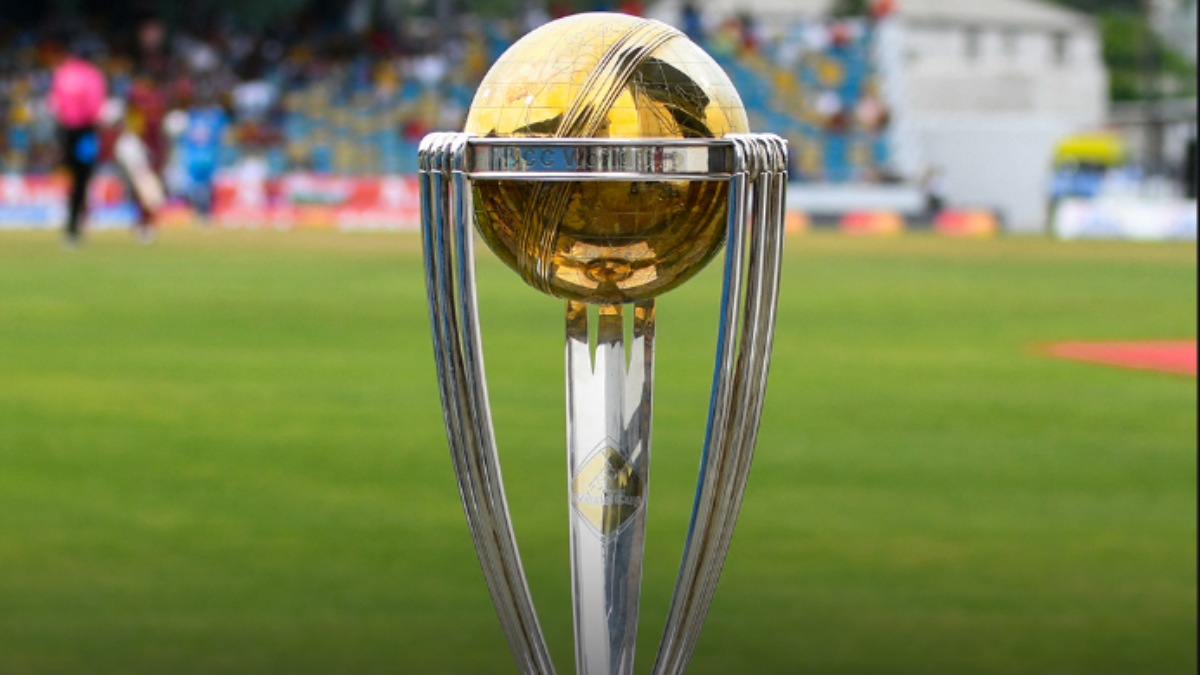
The new approach is to make every game count, to grow the game for young cricket nations and opportunities for young cricket nations. And in the process it’s something that is also out of the old world of World Cup formats and could change how teams approach the tournament.
The return of 14-Team World Cup.
The World Cup expanded to 14 teams for the first time since 2015 after the ICC restricted participation to just 10 teams in the 2019 and 2023 editions. Players, former cricketers and Associate countries protested that it diminished the global relevance of cricket’s big event.
Based on this, the ICC is attempting to balance quality with international participation with a 14-team format.
However, not all 14 teams will enter the main competition directly.
A New Qualification Twist
One of the most important aspects of the 2027 World Cup is a preliminary "Super Series" going to be introduced.
According to the ICC, teams ranked 12th, 13th and 14th before the tournament will first compete in this mini-league. Only one team will qualify for the main tournament, while the other two will be eliminated before the group stage starts.
This effectively sets up a qualification playoff right before the World Cup and puts pressure on lower-ranked Full Members and Associate countries.
Group stage: Two groups of six
After the preliminary stage has ended, the tournament will move into the second phase.
The remaining 12 teams will be divided into two groups of six, and each team will play every other team in its group once.
Each group will have 15 matches, leading to 30 matches in both groups.
In comparison to previous World Cups, qualification will not simply be based on winning between the top two or three.
The top three teams from each group will automatically qualify for the next phase and the best fourth-placed team from the two groups will also advance.
This creates a seven-team "Super 7" stage.
Super 7: a completely new concept
The Super 7 is perhaps the biggest innovation in the tournament.
Instead of carrying forward points like the Super Six format used during the 1999 and 2003 World Cups, all seven teams will play one another in another full round-robin league.
That means:
Every team plays six more matches. A total of 21 games will be played in this stage. The top four teams will go to semi-finals.
And teams that had qualified from the same first-round group will meet again in the Super 7.
That means two teams might meet each other:
Once in the group stage. Again in the Super 7. Once more in either the semi-final or final.
Therefore, two rivals could meet three times in the same World Cup.
Nearly 60 Matches
Including…
- Super Series
- Group Stage
- Super 7
- Semi-finals
- Final
The tournament will have almost 60 games expected to be played and will also constitute one of the longest and most competitive editions in World Cup history.
What is the reason for an ICC format change?
The ICC says the new format is well structured so that every stage of the competition is of great importance.
One criticism of the previous tournaments was that teams qualified early, so later group matches would be less important.
Under the new system:
Lower-ranked teams must survive the Super Series. Each game in the group stage determines qualification. The Super 7 ensures the world's best teams can continue to play each other before the knockout rounds.
The governing body hopes that this will make competition more intense and maintain fan interest throughout the tournament.
Historical Context
Over the years the World Cup has undergone many format changes.
1992: Round-robin league with semi-finals 1996: Two groups before knockout games 1999 and 2003: Super Six format. 2007: Four groups followed by Super Eight 2011 and 2015: Two groups of seven with quarter-finals. 2019 & 2023: Ten-team single league where every team played every other side.
For the 2027 edition, the format combines elements from the different editions but introduces a completely new Super 7 stage.
Benefits and Challenges
The new structure has several advantages.
The emerging teams have more chances to be included in the larger tournament and the top teams are guaranteed more games against quality opposition. Broadcasters also benefit from more marquee matches involving cricket’s biggest countries.
The format is not without its criticisms, some analysts say repeating matches between the same teams could diminish the excitement of knockout games. The scheduling will put players—even fast bowlers—in a physically demanding position for longer durations.
There are already fears teams qualifying through the preliminary Super Series may already be at a disadvantage having played extra matches before the main event starts.
Looking Ahead
With South Africa, Zimbabwe and Namibia coming together to co-host their first ICC Men’s Cricket World Cup together, this tournament will be unlike any other one before. The 14-team field, multiple round-robin stages and a bigger schedule also illustrate the ICC’s bid for competitiveness and inclusivity.
If successful, the 2027 World Cup could transform the future of world ODI tournaments. But whether the bold new format will create more drama or just more cricket will only be clear when the world’s best teams take the field in Africa in 2027.