
Zimbabwe became the first team in Test cricket history to score more than 500 runs in both innings of a match when they achieved it in their first Test against Afghanistan at Sharjah Cricket Stadium in the United Arab Emirates (November 5–9, 2026). In a game played entirely by batters, Zimbabwe scored 504 in their first innings before producing another stellar performance to finish on 523 for five wickets in their second.
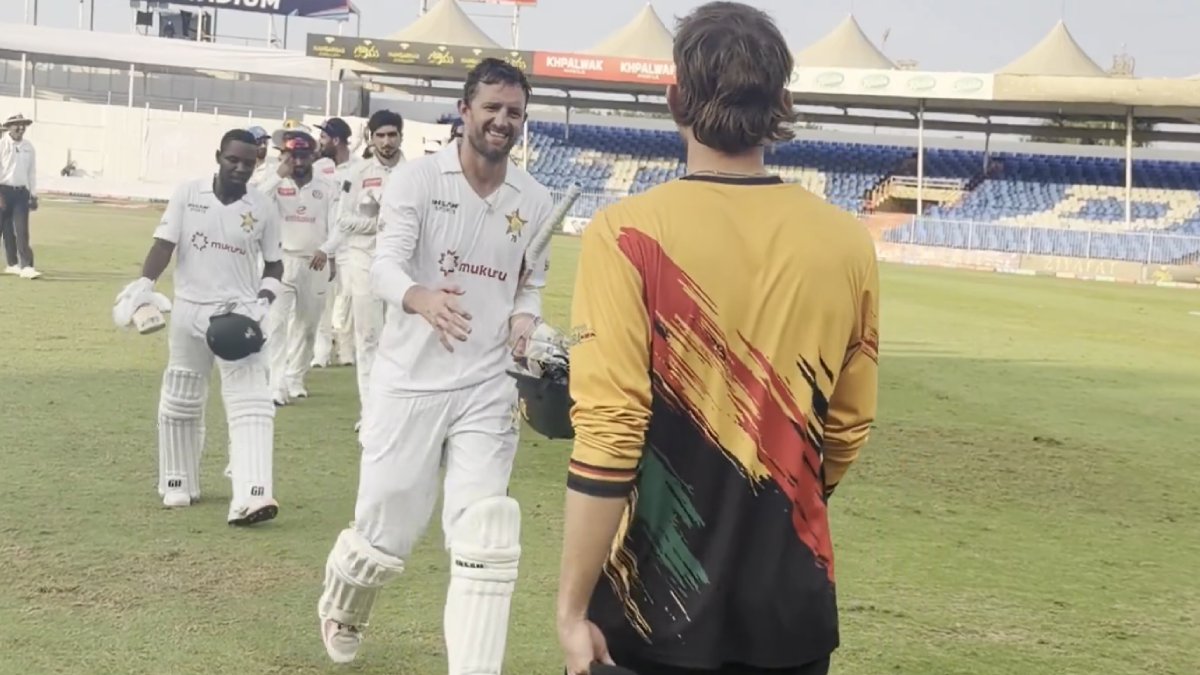
No team had ever crossed the 500-run mark in both innings of a Test match in the format’s 149 years of existence, and even though the five-day encounter ended in a draw, Zimbabwe’s batting brilliance meant that the match would be remembered as one of the great ones in international cricket.
Zimbabwe's first innings total of 504 set the platform for the record-breaking performance. Having won the toss and elected to bat, Zimbabwe batters put up a good total as Brendan Taylor and Brian Bennett dominated the innings. Taylor scored 131 runs while Bennett made 128, so Zimbabwe had two big tons in the innings, which helped them cross the 500-run mark and put pressure on Afghanistan's bowling attack.
Afghanistan came out all guns blazing, batting-wise, scoring 514 in their first innings and taking a narrow lead of 10 runs. Rahmat Shah (173), Rahmanullah Zadran (113) and Sediqullah Atal (105) also scored three centuries in the Afghan batting lineup. Strong performances from both teams turned the match into a high-scoring contest, with the batters largely dominating the bowlers.
Zimbabwe’s second innings was the moment of the match, though. Having lost 10 runs behind overnight, the visitors came out to bat with the intention of making a big total and avoiding defeat, and they ended up 523 for five after batting for 122.1 overs. Veteran batter Craig Ervine produced one of the most memorable individual performances of the game as he made an unbeaten double century.
He stayed at the crease until the end, scoring 206 off 279 balls (23 boundaries, two sixes); it was one of the best individual knocks in Test cricket history and helped Zimbabwe get over the 500-run mark for the second time. At 41 years and 82 days, Ervine also became only the third player in Test cricket history to score a double century (the other two being South Africa’s Eric Rowan and England’s Jack Hobbs).
Another major highlight of Zimbabwe’s second innings was Wessly Madhevere’s maiden Test century. Madhevere remained not out on 100 and, with Ervine, extended Zimbabwe’s total further. They put together an unbeaten partnership of 208 runs for the sixth wicket, which was Zimbabwe’s highest partnership for that wicket in Test cricket so far. Their partnership prevented Afghanistan from taking any more wickets and allowed Zimbabwe to score through the final day.
Madhevere’s century was a personal milestone, but Ervine’s double hundred made it another historic achievement for the team as they broke record after record. With both batters not out, Zimbabwe finished their innings at 523 for five, officially completing the unprecedented feat of scoring more than 500 runs in both innings of a Test match.
The match also produced several individual milestones for Afghanistan. Rahmat Shah made 173 runs for his team's highest score and Rahmanullah Zadran got a Test debut century; Sediqullah Atal scored a hundred too, so Afghanistan's first innings response was particularly strong.
Zimbabwe bowlers had to work hard to get rid of the Afghan batting line-up, with Newman Nyamhuri taking five wickets for only 82 runs. Brendan Taylor (131 in first innings, 82 in second) was named Player of the Match for his valuable contribution with the bat. Both teams showed quality of batting on display over the five days in Sharjah.
Although there was extraordinary run-scoring, neither team won. Afghanistan had 514 on first innings, but Zimbabwe’s second-innings resistance meant the hosts didn’t get another chance to chase a target, and on the final day Zimbabwe batted again, with Ervine and Madhevere frustrating Afghanistan’s bowling with their unbeaten partnership.
The match ended in a draw, leaving the two teams level ahead of the second and final Test of the series, which begins at the same venue on November 13. But for Zimbabwe, the result was not important because they had achieved something historic.
Zimbabwe’s record-breaking performance reminds us why Test cricket still produces sporting moments even after nearly a century and a half: patience, endurance and tactical battles are associated with the longest format, but Sharjah saw an exceptional batting display from both sides.
Zimbabwe scored 504 and 523 for five, so no team before them had done that in Test cricket. Ervine’s unbeaten double century, Madhevere’s maiden Test hundred and Taylor and Bennett’s contributions made it extra special too. Regardless of the result, Zimbabwe have earned themselves a permanent place in Test cricket history with a batting record that will be remembered for generations to come.





Comments