
The world turned to a tweet from Jan. The tweet went viral in Jan. It boldly announced “Buying Copper in 2026 is like Buying Bitcoin in 2009. Few understand this.” The statement instantly provoked a debate among investors and casual readers. Could a legacy industrial metal, say, copper truly be the next big investment story as Bitcoin’s rise from obscurity to global pre-eminence has been? Copper and Bitcoin are two completely different things, and the comparison highlights the way undervalued assets can become major opportunities when world demand moves.
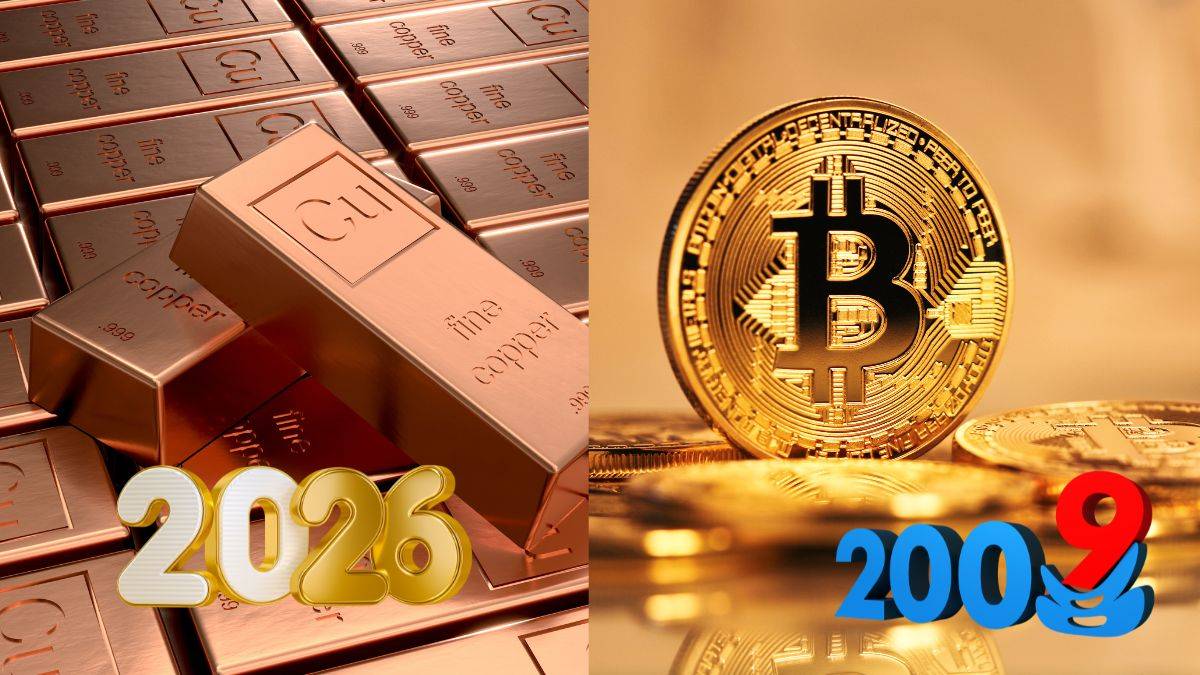
Copper has long been an essential industrial metal. It is used for wiring, plumbing, electronics, and construction. But in the past 10 years copper has grown more significant due to its role in powering green energy and advanced technology. Electric cars need a lot of copper in batteries and motors for making them. Solar panels, wind turbines, and renewables require the use of copper wiring. Copper is also used for connected data centers, artificial intelligence infrastructure and in smart devices that rely on copper for cooling. As the world transitions to clean energy and digitalization, copper demand is growing more sharply than ever before.
Copper prices soared in 2025 - as some reports have seen over a cost increase of 35%. Copper, on India’s Multi Commodity Exchange (MCX), is up from ₹796 to ₹1,197 a kilogram, almost 50 per cent more than its previous benchmark. They reckon that's only the beginning. A shortage of mining output, supply chain strains and rising demand are producing a supply shortfall that could drive prices even higher in 2026 and beyond.
Its comparison to Bitcoin of 2009 is bold but thought‑provoking. Bitcoin was misinterpreted, undervalued and completely ignored by most of the population at the time. Those who played early received incredible returns as cryptocurrency entered the mainstream. Copper in 2026 is compared with Bitcoin primarily because of undervaluations in relation to future demand, being of extreme importance for any future industry, being limited supply and being not fully adopted by retail investors. Copper may not rise as rapidly as Bitcoin did, but for investment gurus who know the early importance of that substance, it should still be a long‑term growth story.
Investors currently have a number of options if they wish to investigate copper. They seek investment via commodity exchanges, copper‑related ETFs, in some cases even by buying copper bars. Each approach carries its pros and cons. Physical copper needs secure storage and purity checks, but ETFs and futures are less complicated and more volatile. Prices can go up or down and hence the need to focus more on long‑term strategy; spreading portfolios into multiple asset classes rather than just one.

As with all investments, copper carries risks. A slowdown in the global economy might further hurt industrial demand. Mining activities may be prohibited by environmental laws. Prices may also adjust if supply rises or demand slows. Investors need to be educated, and don’t invest all their chips in one commodity.
For all its risks, copper has emerged increasingly as an asset of the trade. No longer a pure industrial metal, but the backbone of clean energy, digital infrastructure and technological progress. Copper demand will just continue to ramp up as governments and companies double down on sustainability and innovation.
The viral tweet comparing copper to Bitcoin may sound histrionic but it’s rooted in the increasing conviction that the time for copper is here to go. For long‑term-oriented investors, the year 2026 may be the moment to appreciate the hidden potential of copper.
Copper in 2026 won’t provide the same explosive returns as Bitcoin in 2009, but the comparison exposes a fundamental truth: undervalued assets that are tied to future growth can become some of the most powerful investments. Copper is well-positioned for centrality in the world economy as demand grows for EVs, renewable energy and AI. If you grasp this early enough, buying copper today is not just a safe bet it might be the unique chance to take a rare opportunity to ride the next big wave in the investment world.









Comments
Leave a Comment