
According to Infosys CEO Salil Parekh, AI services will be part of nearly half of the company’s work in the next two to three years, which is evidence of the increasing importance of AI in the global IT services industry.
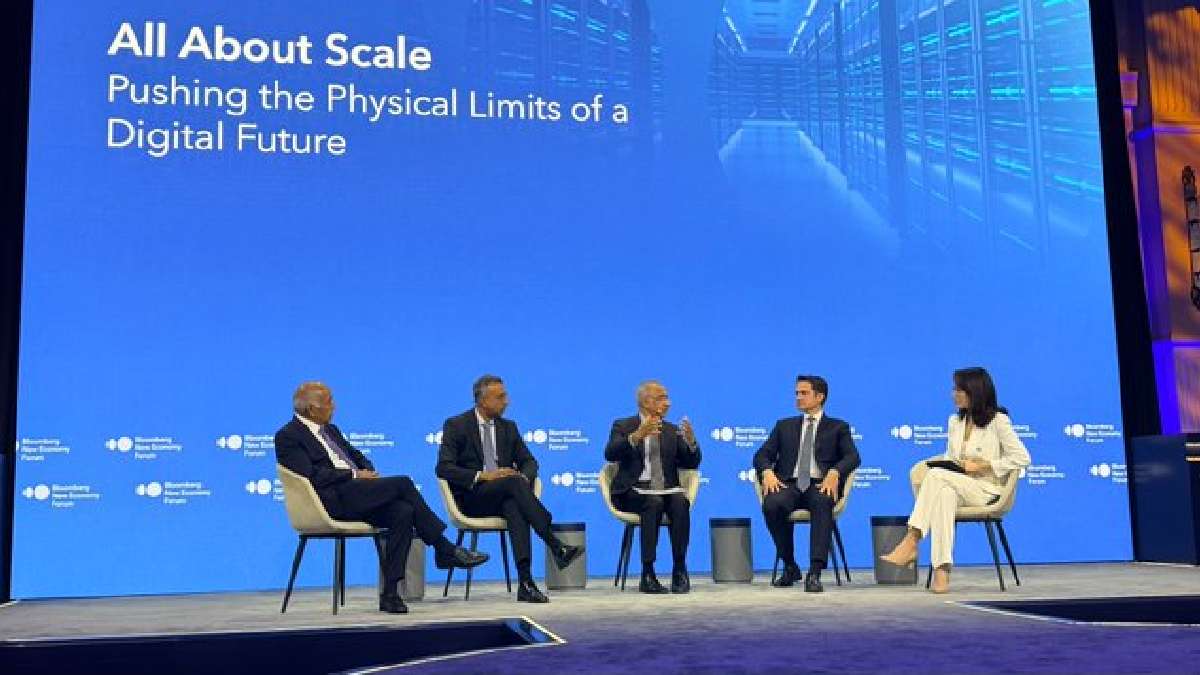
The outlook is indicative of the rapid adoption of AI technologies to increase productivity, automate work processes, and to come up with new digital solutions. That transition is a big reason big IT service companies like Infosys are starting to grow and better cater to clients’ needs.
AI Set to Play a Bigger Role at Infosys
AI is becoming an increasingly critical part of the technology strategies of companies across industries. Businesses are looking at software development, customer support, data analysis, cybersecurity, business process management, and enterprise automation.
Infosys has now developed an AI-related capability to enable its clients to integrate these technologies into their own businesses. With organisations looking at how they can use generative AI and other advanced tools in the field, demand is increasing for technology partners to implement these systems, manage them, and connect them to their existing business platforms.
If AI services account for nearly half of Infosys’ work in the next two to three years, it would be a major change in the company’s business mix. It would also underscore the growing role of AI-led projects in the future of IT consulting and digital transformation.
And that shift doesn’t necessarily mean half of the company’s workforce or revenue will come from AI. This is the least important part of the statement, as it depends on how the company defines and reports AI-related activities.
Opportunities and Challenges for the IT Industry
The growing use of AI is also a chance for technology companies to build new services and build relationships with existing customers. The industry is seeking solutions to reduce operational costs, optimize services, and make quicker decisions.
For IT service providers, this demand could lead to new projects involving AI integration, cloud platforms, data management, and software modernization. Also, customised AI applications may also be developed for various industries.
At the same time, the rapid adoption of AI is changing the way traditional IT services are delivered. Where once much of the manual labor (and hence a lot of the work) was done by humans, AI tools are now taking over. Service providers will need to adjust their delivery models, invest in new capabilities, and train their employees to work in new roles.
The transition can also impact pricing structures. If AI makes things faster and more efficient, customers will expect lower costs or better outcomes from technology partners. IT companies will need to put business value behind AI services as opposed to the standard billing model.
Skills and Workforce Transformation
AI is also expected to increase the demand for professionals in machine learning, data engineering, AI governance, cloud computing, and cybersecurity.
As AI projects become more AI-focused, training and reskilling will be key for Infosys and others. Workers might have to learn how to use AI tools effectively, check their outputs, and apply them to complex business problems.
AI usage has implications for privacy, security, reliability, and responsible use as well. AI systems will need to work correctly and comply with the law in the future.
Parekh’s outlook points towards the extent of the transformation in the IT services industry. As companies move beyond experiments with AI and start integrating it into everyday operations, technology firms will be under increasing pressure to deliver tangible results.
The next two to three years could thus be very important for Infosys as it tries to grow its AI-based business and improve customer service. Adoption rates, client spending, and how the company is able to convert AI demand into sustainable business growth will be key factors to watch.







Comments
Leave a Comment