
Delhi’s worsening air pollution is once again reminding us of what happens beyond India’s borders. As the national capital battles deteriorating air quality attention has shifted to agricultural stubble burning in Pakistan’s Punjab province and movement of polluted air across the wider northwestern region.
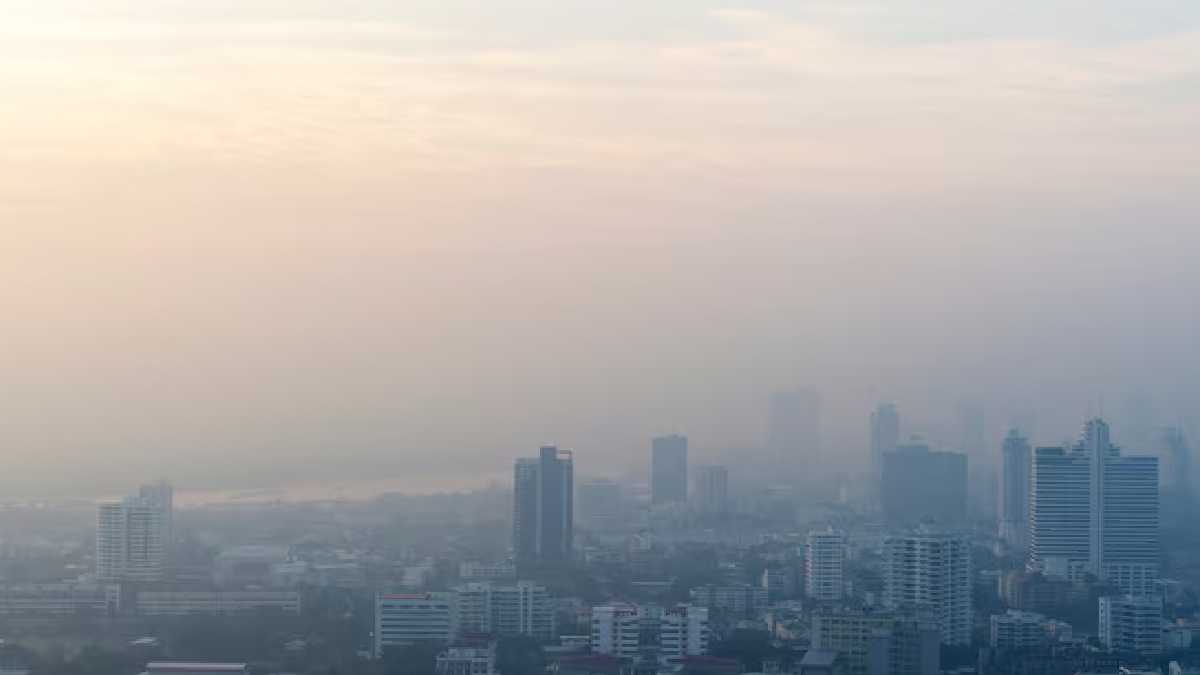
But experts say to blame Pakistan alone would oversimplify a much bigger environmental problem. Delhi’s pollution is caused by local emissions, neighbouring states, agriculture, industrial pollution and unfavourable weather conditions.
On 3 November 2026 Delhi AQI slipped into ‘Very Poor’ category and CAQM had to implement Stage II of GRAP (Graded Response Action Plan) across Delhi-NCR as AQI had risen to 324. (AQI is an index that measures air pollution levels.)
Why Is Pakistan Being Linked To Delhi’s Pollution
Agricultural stubble burning is one of the seasonal contributors to air pollution in northern India and neighbouring Pakistan. Paddy crops are harvested after which farmers burn leftover crop residue to prepare their fields for next agricultural cycle.
Satellite images analysed by The Indian Express showed a dense concentration of active farm fires in Pakistan’s Punjab province near the international border. Smoke and pollutants from these fires are travelling across the region.
Northwesterly winds can carry pollutants from one place to another. If those winds blow towards Delhi, smoke and particulate matter (PM) from agricultural fires in neighbouring regions can add to the pollution load there.
But that doesn’t mean Pakistan is the only source of Delhi’s pollution. The extent to which cross-border emissions contribute depends on wind direction, atmospheric conditions and intensity of agricultural burning.
Delhi's Own Pollution Sources Remain Significant
Delhi has pollution sources within its own boundaries. Vehicle emissions, industrial activities, construction dust, road dust, waste burning and residential fuel consumption all contribute to poor air quality.
Transport was responsible for about 20.07% of Delhi’s PM2.5 pollution on November 3 according to the Indian Institute of Tropical Meteorology’s Decision Support System. Residential sources, industries, construction and waste burning also contributed to pollution burden.
Pollution from neighbouring Indian districts (Gurugram, Jhajjar, Sonipat and Faridabad) also affects the capital’s air quality.
A January 2026 analysis by Centre for Research on Energy and Clean Air (CREA) also pointed to the importance of pollution brought in from outside Delhi. It estimated that around 65% of air pollution in the capital in 2025 came from outside the city (neighbouring NCR districts).
Weather Conditions Make The Situation Worse
Weather conditions determine how severe Delhi’s pollution is. During winter low temperatures, slow winds and less atmospheric mixing cause pollutants not to disperse well.
As a result smoke, dust and harmful particles remain closer to the ground so pollution levels go up.
Local emissions, regional pollution and seasonal agricultural burning all pose a serious challenge to authorities.
Why Cross-Border Cooperation Matters
Air pollution does not respect borders. Delhi and Pakistan’s Punjab province are parts of a regional atmospheric system where pollutants can move across geographical and political borders.
Blaming neighbours won’t solve the problem. India and Pakistan need stronger pollution monitoring, scientific data sharing and coordinated action against agricultural burning and industrial emissions.
In the end, Delhi’s air quality will only improve if action is taken consistently in the capital as well as neighbouring Indian states and where appropriate regional cooperation.
Pakistan’s farm fires might add to the pollution burden under certain weather conditions but Delhi’s air crisis cannot be explained by one country alone it is a regional environmental problem that requires long term solutions.





Comments