
Kerala is facing increasing fears over lethal lightning strikes with the threat of thunderstorms and lightning strikes as monsoon patterns shift with changing monsoon patterns and the weather has turned to the Northeast monsoon season. Heavy rain is not only expected to hit Kerala to have thunderstorms and lightning but also heavy rain is likely to occur in the next few days.
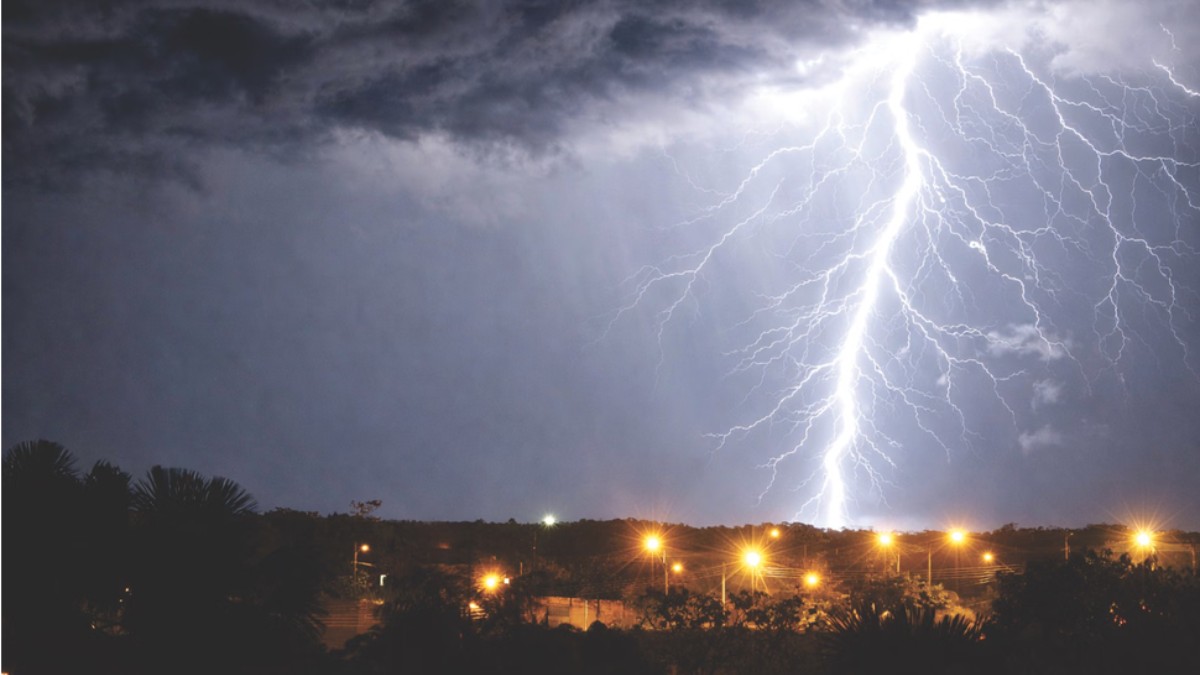
The state has also seen thunderstorms and lightning warnings throughout the state and weather officials have issued warnings for lightning and thunder in the sky in the last few months and experts say cloud formation, atmospheric instability and local weather and geographical factors are factors of concern. And I am so happy to see the warning that people need to take precautions before a storm is here but not wait for lightning to show up.
How Do Lightning Strikes Occur?
One of the most important reasons for lightning is that huge thunderclouds, called cumulonimbus clouds, rise quickly in the atmosphere. These clouds form when warm, moist air rises quickly into the atmosphere. Within the clouds, water droplets, ice crystals and other particles collide and separate electrical charges. When the electrical difference is so high that a sudden discharge of lightning is produced. These discharges can travel through clouds, between clouds and/or between a cloud and the ground.
The resulting electrical current can cause fatal injuries, damage buildings and electrical equipment, start fires and disrupt power and communication networks. Kerala’s humid conditions, strong atmospheric convection and episodes of intense thunderstorms can provide favorable conditions for these dangerous electrical discharges.
How Do Changing Monsoon Patterns Affect Lightning Activity?
Meteorologists attributed changes in cloud structure and longer dry intervals during the monsoon to changes in lightning activity, as well. In June 2024, the Kerala State Disaster Management Authority reported that lightning was becoming an increasingly frequent problem year-round and that it may be more prevalent during breaks in the monsoon season and that lightning could increase during breaks in the monsoon.
That is why we cannot just assume lightning risk at the end of heavy rain will disappear when it stops. A storm can result in dangerous electrical activity before the first drops of rain even reach the ground or even when rainfall is fairly light in a given area.
Which Areas of Kerala Are at Higher Risk?
Geography also plays a role in determining where lightning hazards can be particularly serious. Scientists at the Advanced Centre for Atmospheric Radar Research (Cochin University of Science and Technology) identified Kottayam as one of the lightning hotspots and it is also part of Ernakulam, Idukki and Pathanamthitta in the hilly part of Western Ghats. The development of thunderstorms in these areas can be influenced by moist weather, terrain and atmospheric circulation. But lightning can strike anywhere in Kerala and it is not safe to treat districts outside hotspots as being safe.
Who Is Most Vulnerable to Lightning Strikes?
Lightning is a human hazard, so we don’t need a direct hit to get injured. Lightning can affect people directly by a side flash from a nearby object or electrical current spreading through the ground. Metal structures, wet surfaces and conductive pathways are the risk factors that can be high in these storms. People working outside, farmers, construction workers, fishermen and those moving in exposed areas can be in danger of being injured when thunder strikes, standing under a tree or in the open field or on a terrace can be dangerous for people.
What Safety Precautions Should People Follow?
Kerala’s disaster management authorities have repeatedly advised residents to seek shelter as soon as they realize that a thunderstorm is brewing. The lightning safety guidance from the state also recommends that people not go into places that are in the vicinity of an exposed area, water bodies and tall trees, and not to be near electrical appliances and plumbing at times of heavy rain.





Comments
Leave a Comment