The Indian farm industry is going through a paradigm shift with state-of-the-art technologies and help from the government. As it is at the base of the country’s economy and living environment in the countryside, there is now a national effort to develop the farming sector.
There are hundreds of programs here in India to bolster farmers and help them get the best out of their lives. The flagship programs of the government are: PM-KISAN, crop insurance schemes, soil health cards, and irrigation projects. They provide financial assistance, skill training in farming, and help with modern agriculture.
It is the government’s responsibility to find a way for farms to be profitable, economical and environmentally friendly for millions of farmers every day across the country. Pradhan Mantri Kisan Samman Nidhi, which is one of the biggest schemes in the country, is one of the programmes under the implementation of which the government financial aid for farmers, which includes income assistance, also called Pradhan Mantri Kisan Samman Nidhi, is being implemented as a programme.
They are an initiative that the government is directly delivering income support to qualified farmers. Crop insurance schemes facilitate farmers to recover losses associated with natural disasters, and soil health cards provide information regarding the quality of soil and nutrient levels.
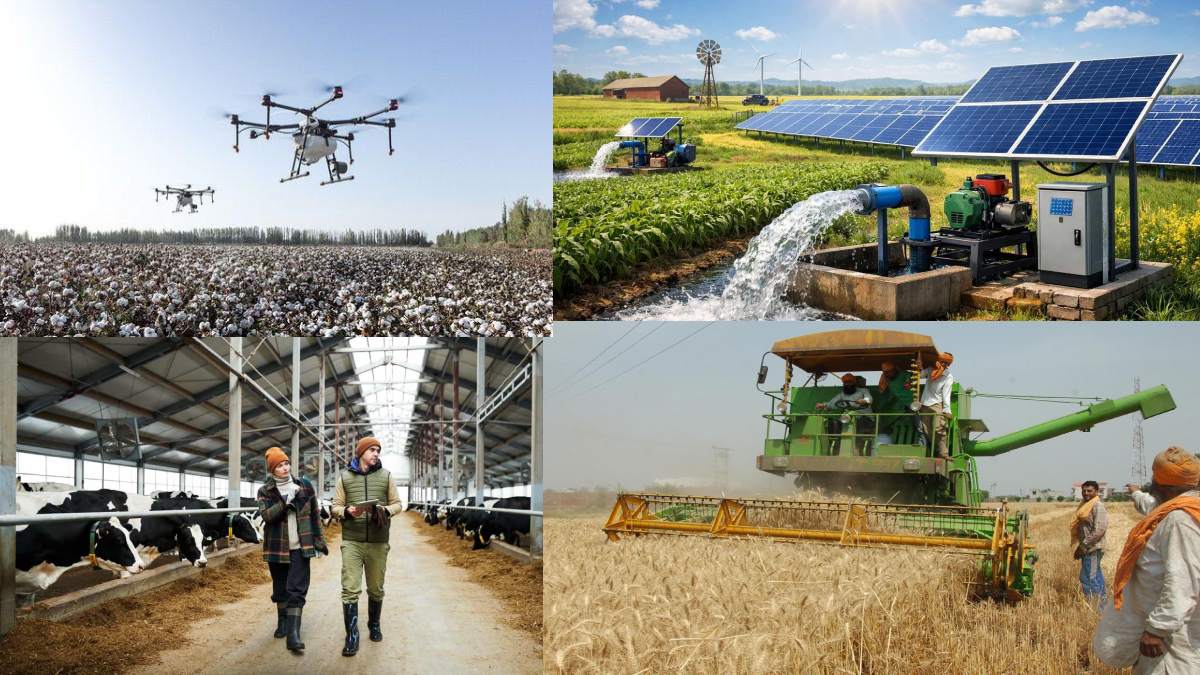
So building in irrigation projects is also providing the farmers with the ease of taking more or less water supply over the land, which reduces the dependence on rain. Government assistance and modern farming practices are also launching a new crop industry in India.

And as it worsens, rural people are using current technologies everywhere, from end to end, to grow more or at least more expensive. Young, educated farmers are concentrated on new approaches to support and enhance the farmer toward a higher productivity of an agricultural system, for the provision of a healthy source of food.
One of the most advanced and successful such modern practices is drip irrigation, where water is applied to the roots of plants. It works even better in water-poor regions. And organics too are in vogue, just as consumers across the seasons increasingly expect healthier food, lighter foods and plant-based methods of doing things.
Another great leap forward in the field of agriculture is drones. Drones are used for crop surveillance, pesticide and fertiliser control, while the latter is mapping farmland. Those technologies help the farmers save labour, reduce time, and enhance precision in the operations of the farm.
Digital marketplaces are also directly connecting farmers to buyers, providing them a window of opportunity to sell their crops for better prices, bypassing intermediaries often seen as market coercion in developing countries. And when farmers are better off in terms of working practices, infrastructure or water, and if they have access to markets,
Indian agriculture can be much better, experts say. Increasing rural infrastructure, investing in storage facilities and transportation systems, may also help the agricultural supply chain become a better one, too. While the farmers’ challenges with climate change and erratic weather, along with prices and scarce water, remain, technology and government support are creating new platforms that farmers can use to grow and increase production.
The agriculture community is still central to both food security, job creation and the national economy. And as the farmers and government are coming very near to modern sustainable agriculture, India’s agricultural society will have a bright future on the horizon.
It is farmers who collectively will develop and innovate in concert with the government, developing farming systems that are both potent and resilient enough that, from the very end of the world’s longest-drawn-out march to the land, they will deliver agrarian prosperity.