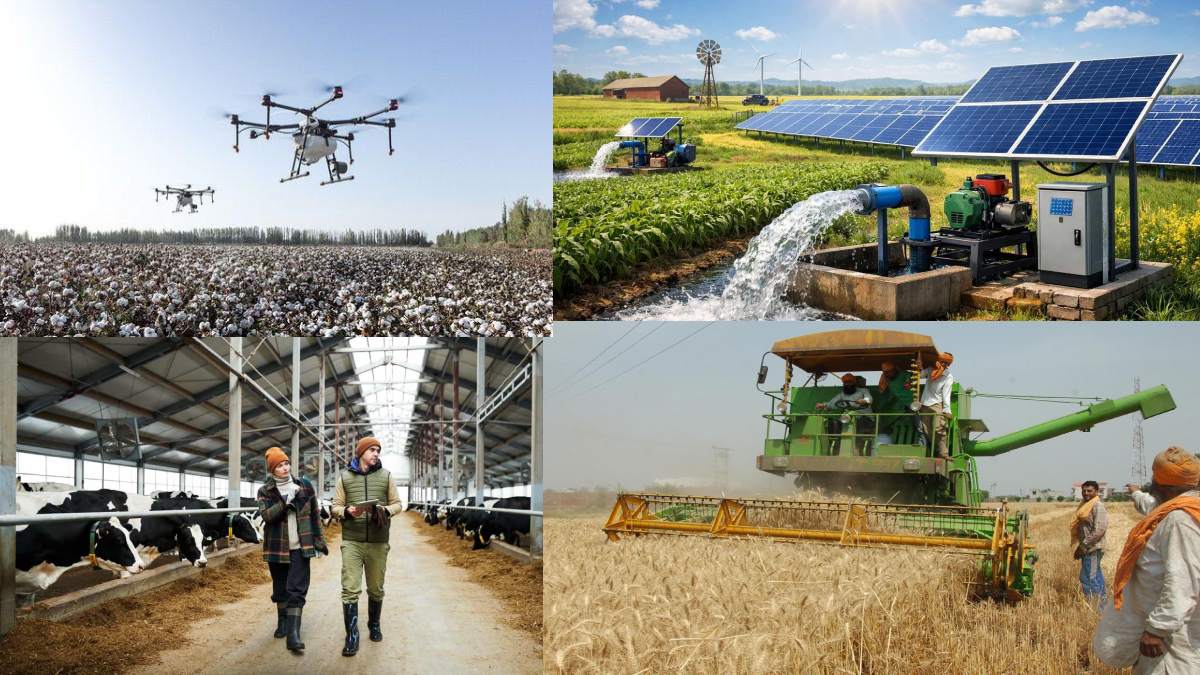
Agriculture has traditionally formed the basis of India’s economy and culture. Known as the ‘backbone of the country,’ agriculture is vital in providing work for the people and ensuring food security, which is to say, in promoting rural development, food security and rural development.

From the paddy fields of Punjab to the lush tea gardens of Assam and the cotton farms of Maharashtra, agriculture is a symbol of India's wealth and the variety of India's agriculture. India is one of the leading producers of rice, wheat, milk, spices, pulses, fruits and vegetables in the world.
Almost half of the nation depends on farming (often in conjunction with related activities) for its daily existence. Agriculture not only feeds many millions of people in the country and is involved in the export of large quantities of goods, but also in the economic development of the country generally. Indian agriculture has one of the greatest abilities in the country to create employment.
For this reason, millions of rural families depend on farming, which enables them to provide income and food. Agriculture also fuels many other areas, including textiles, sugar, tea and food processing, creating additional jobs and fueling industrial development. The other reason agriculture is so important to food security is that, for India, agriculture is very important.
A strong agricultural sector that supplies enough food for the expanding population. Farmers cultivate food year-round to prepare food for people’s daily needs, all the way across the country. India’s export economy also adds to Indian agriculture contributes to its export economy.
Products such as tea, spices, rice, coffee and cotton are sold overseas; India earns valuable foreign exchange through these exports, and so its economy both strengthens and expands its economy overall in international markets and its consumer base. India grows crops in diverse climate conditions, and different soil types give rise to a variety of crops in the land.
Rice, wheat, sugarcane, cotton, maize, pulses, tea, coffee and spices are examples of the most important crops grown in India. Based on rainfall, temperature plus soil fertility, various states produce different crops. Rice is grown in the monsoon regions, and wheat in its cooler parts.
Tea cultivars grow in Assam, and the hills around it, and cotton is grown in Maharashtra and Gujarat. And by the nature of this diversity, the Indian agriculture is one of the world´s very unique and rich systems of agricultural production.
Despite threats from climate change, water scarcity and increasing production costs, rural India is still very much agricultural land. Support to the farmers with improved technology, irrigation and market access can also strengthen the agricultural sector and improve the livelihoods of millions of people.