When even inner working becomes visible and shareable, spirituality has slipped quietly into the logic of competition. And so meditation streaks, emotional composure, mystical experiences or symbols of “awakening” can begin to resemble points on a scoreboard. When growth is measured this way, something crucial is stripped away:
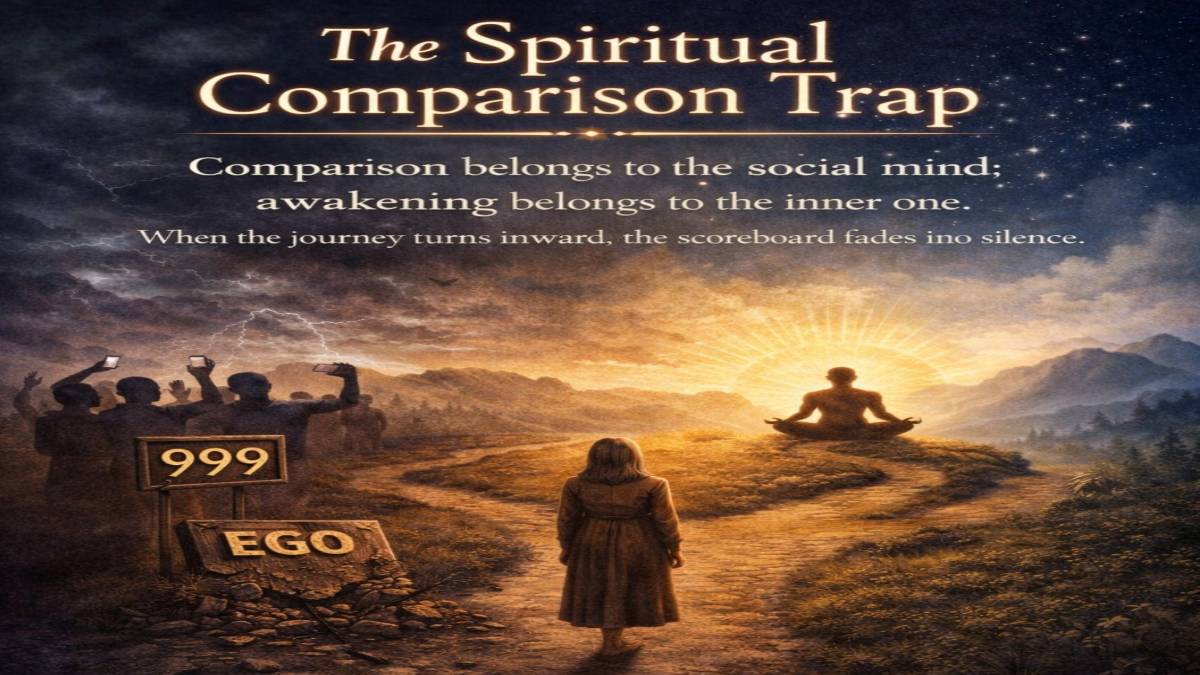
Spirituality was never supposed to be a sport in the first place, but the ego has learned to disguise itself in sacred language, and so the experience inward becomes one of staging outward. This is also the heart of the spiritual comparison trap. Once awakening is something we put on display, measure, judge or rank, the ego remains the primary force at work on our psyche today. What appears like progress could be merely an attempt at validation in disguise.
One of the truest truths about spiritual maturity to be overlooked is that no two paths are the same. Every individual has a different nervous system, different life history, karmic momentum and emotional capacity. For one, awakening may come in the form of silence, for another, even through suffering, study, love, responsibility, loss or deep confusion. Some roads are quiet and unseen; others are dramatic and expressive. None is inherently superior.
Comparison flattens this complexity and turns deeply personal processes into shallow metrics. There are subtle, but profound dangers to comparing. It promotes rushing — making people grow before the body or mind can ready. It invalidates lived experience by implying that certain lessons “ought” to look a certain way. It also lures seekers to pursue symbols of spirituality more than their substance, confusing aesthetic or conceptual “spiritual bling” with actual transformation. In creating this, presence gives way to performance instead.
Genuine indicators of growth are much less glamorous, much more honest. They reside in questions such as: Am I more honest with myself? More embodied and present in daily life? Am I capable of holding compassion alongside clear boundaries? Am I willing to integrate my shadow, not just perform my light? These shifts are seldom outwardly announced, yet they quietly alter ways in which one lives, relates and responds.
Real spiritual work is about integration not imitation. Wisdom has no applause or witnesses. That does not require comparison to support its validity. Once awareness becomes strong, it stops being so much pressure to measure oneself against people. The realm of compare and contrast is to be found in the social brain; awakening resides in the inner life.
When the journey is truly inward, the scoreboard simply vanishes. Comparison is a habit of the social mind, not an awakening. As awareness grows deeper, the need to measure quietly vanishes.