
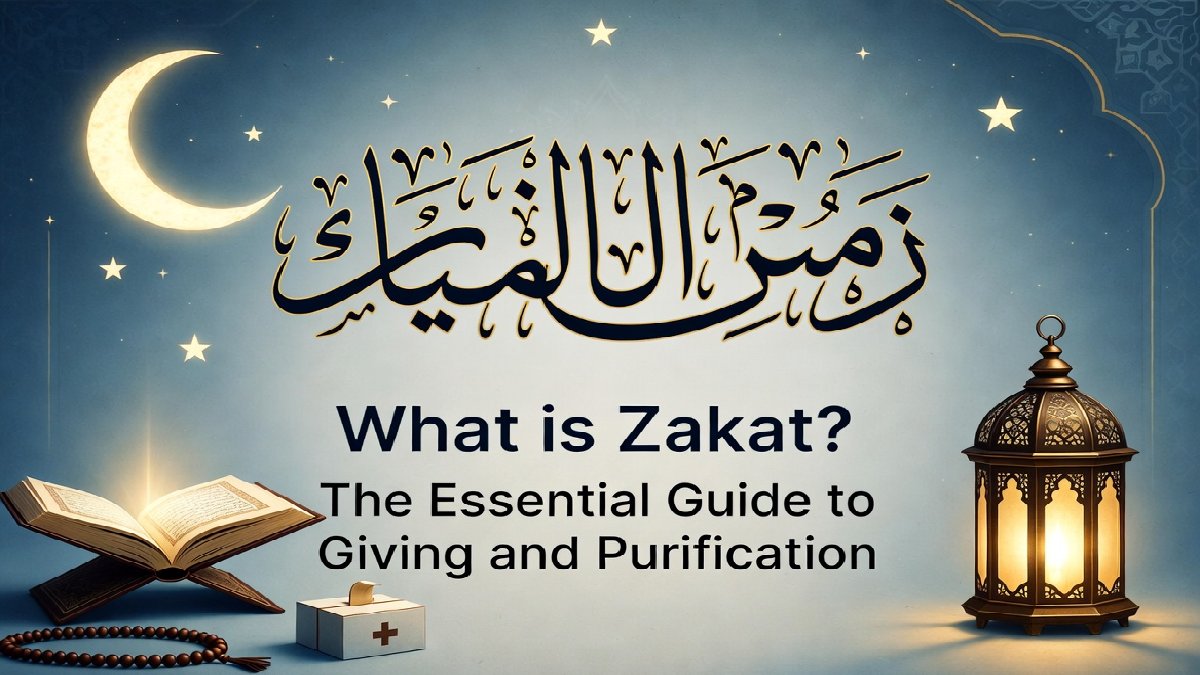
Zakat is more than mere charitable giving: it is a religious obligation for every adult Muslim who fulfills specific requirements for a certain wealth. Zakat literally means “to purify.” In the Islamic religion, the giving away of a portion of one's money is said to cleanse the remaining wealth and the soul of the donors.
Why do Muslims give Zakat during Ramadan?
Zakat can be paid at any time of the year after an individual has held a certain amount of wealth for one lunar year (Hawl). Ramadan is the holy month, and many choose this time; Islamic scholars believe that the spiritual rewards are multiplied many times over during this holy month because, in Islamic tradition, good deeds are also multiplied many times over. By giving now, believers hope to maximize the blessings associated with their charity.
How much is it given?
The standard rate for Zakat is 2.5% (or 1/40th) of the total qualifying wealth of a Muslim. This includes:
- Savings and balances in the bank.
- Gold and silver.
- Business inventory and stocks.
- Receiving rental income from investment property.
For the Nisab to be considered, a person's wealth needs to surpass a certain level of wealth. Based on the current market value of 87.48 grams of gold or 612.36 grams of silver in February 2026, the Nisab is calculated.
Who receives the money?
The Quran (Surah At-Tawbah 9:60) precisely describes eight categories of Zakat-eligible persons. It is, above all, an instrument of societal justice for:
- The Poor (Al-Fuqara): Those with no income.
- The Needy (Al-Masakin): Those who have some income but are unable to meet basic needs.
- The Debt-Ridden: Those struggling to pay off essential debts.
- Wayfarers: Travelers or refugees stranded with no resources.
Zakat vs. Zakat al-Fitr
It is very important to highlight the distinction between the two. Zakat al-Mal (on wealth) is 2.5%, alongside Zakat al-Fitr (Fitrana), which is a smaller, obligatory flat fee paid by each head of household for every family member before the Eid al-Fitr prayer. This way even the poorest of the community can enjoy a hearty meal during the festival.








Comments
Leave a Comment