Not only did Chinese actress Zhang Jingyi make headlines at the Beijing International Film Festival for her impressive presence that day, but also for an unusual accessory. She lugged what appeared to be just a simple trash bag, but in fact was a luxurious Balenciaga item worth nearly $1,790. That moment quickly went viral, encouraging debate about fashion, value and cultural identity.
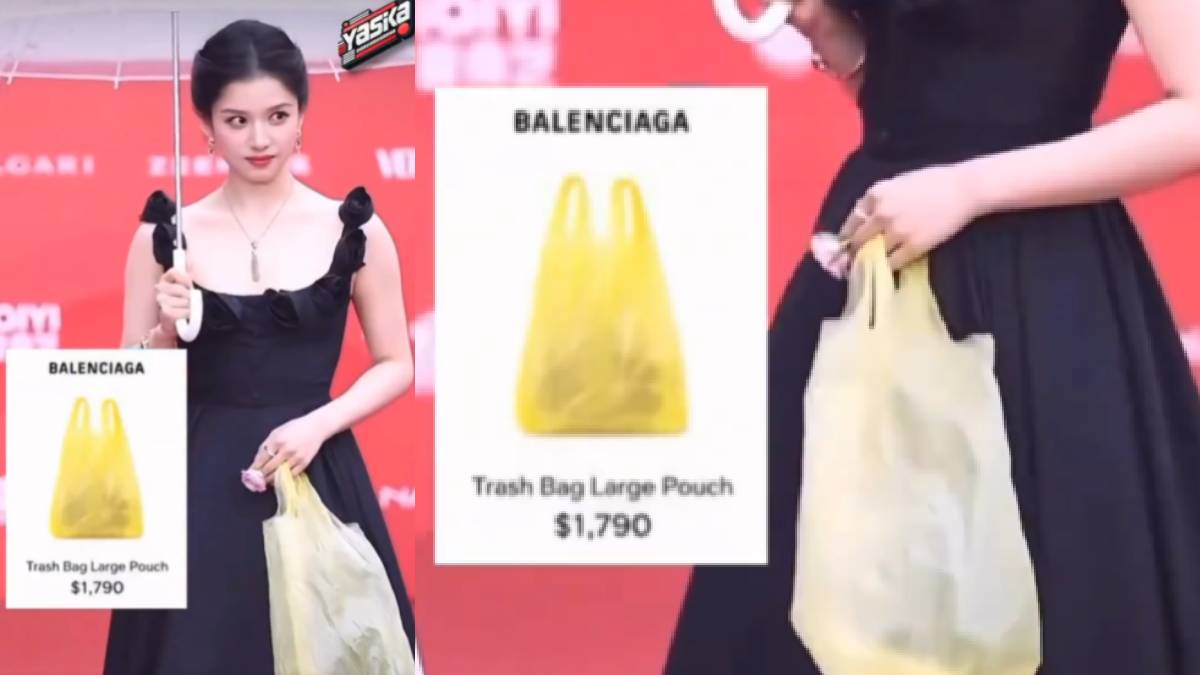
Zhang Jingyi, whose role in hit dramas Fall in Love, Lighter and Princess drew her way onto the red carpet wearing a chic black dress. What attracted everyone’s attention was the plain, yellow bag she was carrying. So many thought it was a plastic trash bag but, according to fashion insiders, it was Balenciaga’s “Trash Bag Large Pouch,” an item of designer-chic, intentionally styled to look like everyday waste bags.
Social media erupted with mixed responses. Others derided the design, deeming it “ridiculous” and “tone-deaf,” wondering why anyone would pay nearly $1,800 for something that resembles a garbage bag. Supporters defended Zhang Jingyi, extolling her bravery and Balenciaga's avant-garde way of dressing. The brand’s supporters said it was one that has pushed the boundaries of established notions of luxury to take everyday objects and turn them into premium statements.
Balenciaga has come up with provocative designs in the past. From sneakers with worn-out looks to bags that look like shopping totes, the brand frequently walks the thin line between use-case utility and luxury fashion. The accessory “trash bag” is said to be a critique of consumerism, showing how perception can change your value. Zhang Jingyi’s decision helped fuel this conversation, demonstrating how celebrity appearances can make niche fashion get a worldwide blowup.
The incident raises the broader questions:

- Luxury vs. Utility: Can we make design and branding a luxury item out of everyday items?
- Celebrity Influence: How stars like Zhang Jingyi shape global fashion trends.
- Public Debate: Why choices over fashion often ignite cultural dialogue outside of style.
- Consumerism: Brands use shock value to subvert notions of merit and identity.
Zhang Jingyi’s viral red carpet moment was so much more than a fashion statement. Carrying Balenciaga’s “trash bag” pouch, she brought out the struggle between the extravagant and the simple and triggered a global discussion. What appeared to be a plastic bag was a posh suit, showing that in fashion, perception is what’s most valuable. The incident is an example of how one red carpet appearance can set off conversations about style, value and cultural identity in the modern era.