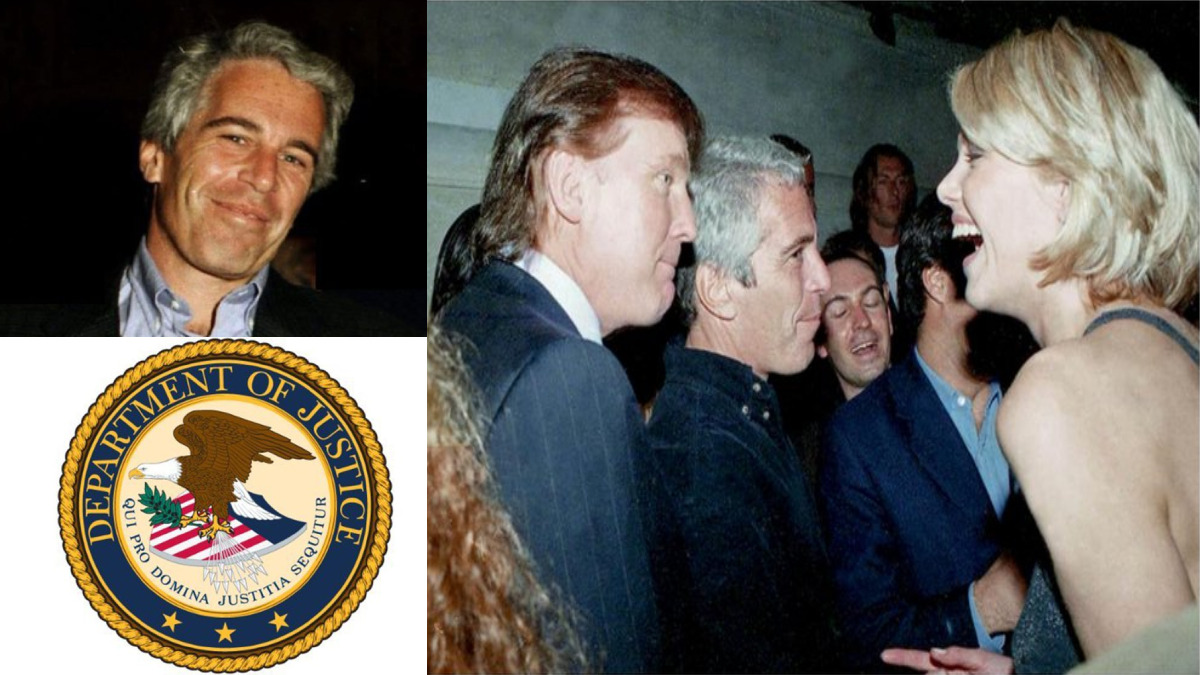
Transparency advocates and lawmakers are demanding answers after the Department of Justice scrubbed a series of documents and images from its newly launched Epstein records portal. The removal occurred on Saturday, following an initial "document dump" on Friday that was mandated by the Epstein Files Transparency Act.

The Missing "File 468"
Among the most scrutinized removals is a document referred to as File 468. Digital records and screenshots from early visitors show that the file contained a photograph of a desk drawer filled with various snapshots.
The Content: Inside the drawer, a photograph was visible showing Donald Trump alongside Jeffrey Epstein, Melania Trump, and Ghislaine Maxwell.
The image is believed to have been taken at the Mar-a-Lago resort in February 2000. While the photo has circulated in the public domain previously, its inclusion and subsequent removal from the official investigative trove have sparked a political firestorm.
Beyond the Photo: What Else Disappeared?
In addition to the Trump-related image, approximately 15 other files were removed without notice. According to reports from the Associated Press and CBS News, these included:

- Images of paintings depicting nude women found in Epstein’s residences.
- Photographs of a room containing what appeared to be a massage table.
- Scans of various investigative folders and credenzas containing celebrity-related snapshots, including images of Bill Clinton and the Pope.
Political Fallout and DOJ Silence
The disappearance of the files has drawn sharp criticism from the House Oversight Committee. Democrats on the committee took to X (formerly Twitter) to question Attorney General Pam Bondi, asking, "What else is being covered up? We need transparency for the American public."
The DOJ has not officially commented on whether the removals were intentional, citing "technical issues" or the need to further redact information to protect victim privacy as potential reasons for the rolling nature of the release. Meanwhile, Deputy Attorney General Todd Blanche stated that the department is working "tirelessly" to process millions of remaining records.