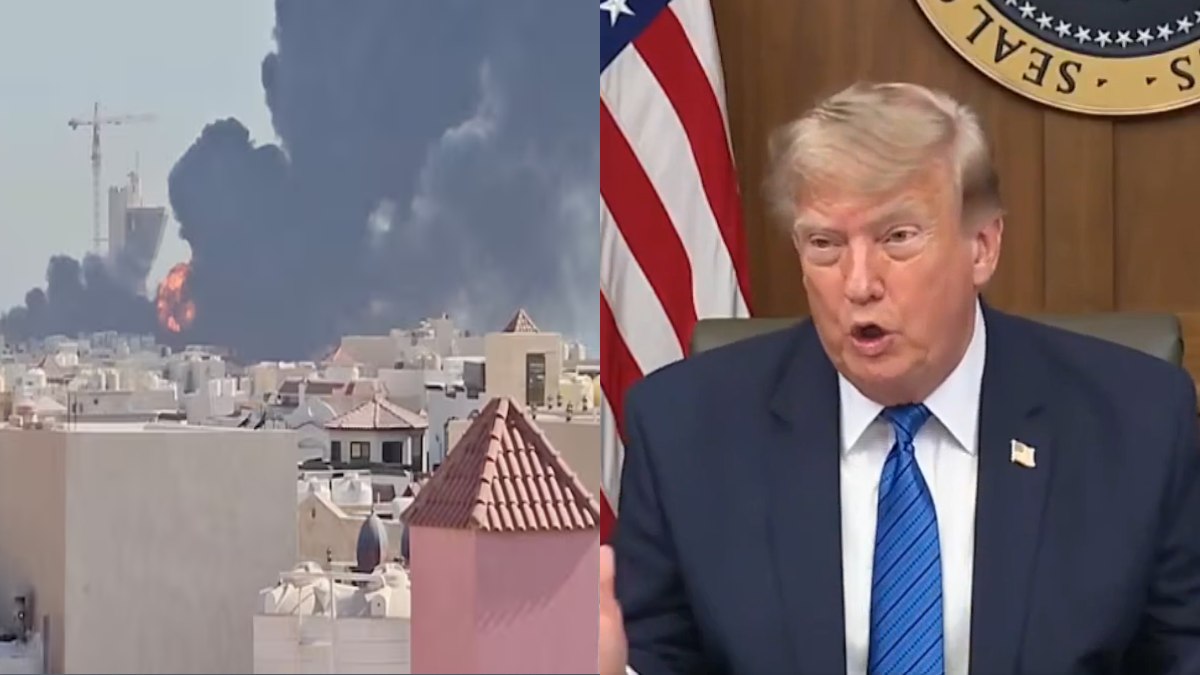
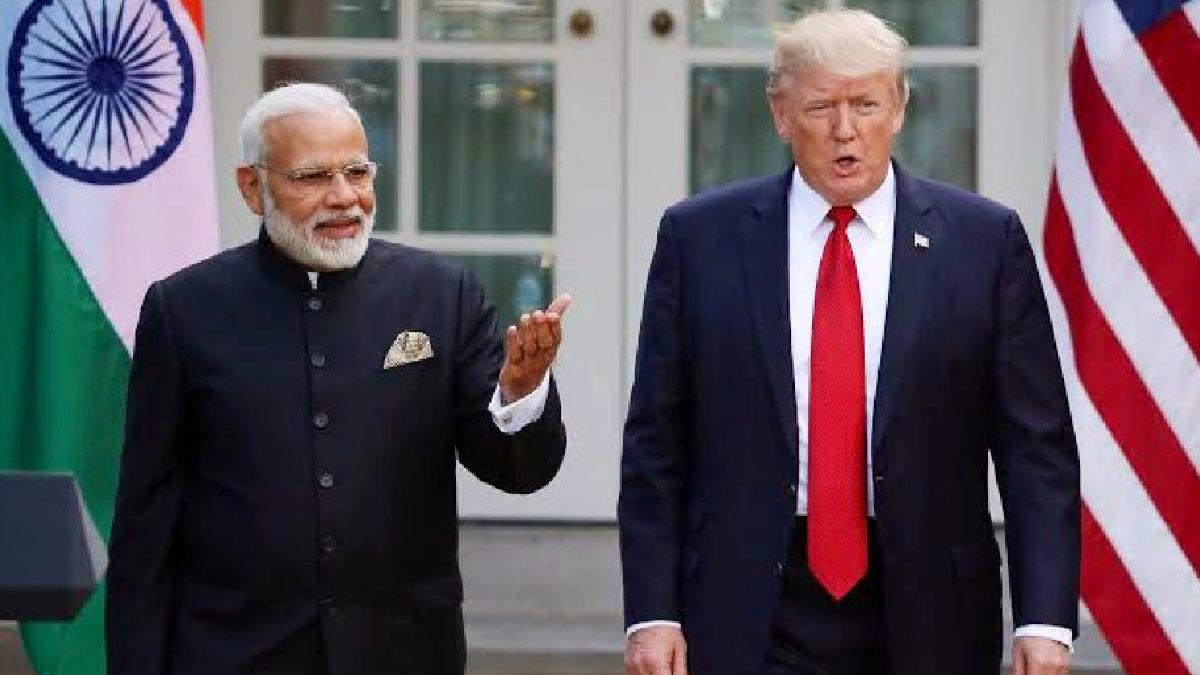
In a high-stakes exercise in military muscle-flexing, the United States has mobilized a gargantuan “Air Bridge” across the Atlantic and into the Middle East, a “Code Red” warning to Tehran. Today, digital flight tracking data and open-source intelligence (OSINT) have exposed a record level of American warplanes, refueling tankers, and cargo vessels flying toward the Persian Gulf.
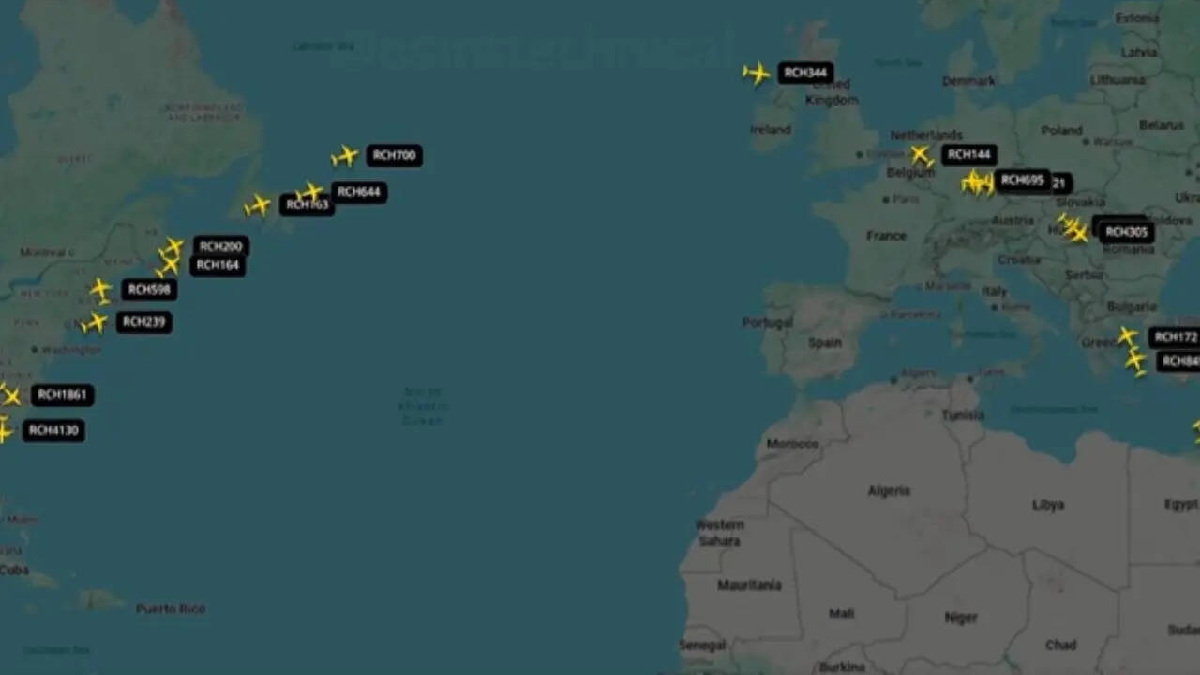
This pace is part of what the Trump administration has described as a double-track approach: applying “maximum pressure” during indirect nuclear negotiations in Geneva, but also preparing for possible kinetic strikes when diplomacy falls short. The Digital Trail: OSINT Unmasks the Armada For the first time in a modern military buildup, civilian analysts are capturing the scale of the military buildup in real time.
From U.S. and European bases to forward-operating hubs in the Middle East, observers have tracked a “digital trail” of over 50 advanced fighter jets, including F-22 Raptors, F-35 Lightning IIs and F-15E Strike Eagles, using platforms like Flightradar24 and ADS-B Exchange. Central to this effort is a massive refueling "Air Bridge" based at Naval Station Rota in Spain and RAF Lakenheath in the UK. Over the last 48 hours, more than 15 KC-135 Stratotankers were spotted flying across the Atlantic to facilitate the long-range deployment of fighter squadrons.
CENTCOM military planners have reportedly committed these assets to Muwaffaq Salti Air Base in Jordan and Al Udeid Air Base in Qatar, making for a powerful strike force within minutes of Iranian airspace. Two Carriers and a Warning. The airpower surge is complemented by a powerful naval presence.
The USS Abraham Lincoln is currently stationed in the Arabian Sea and will soon be joined by the world’s largest aircraft carrier, the USS Gerald R. Ford, recently spotted off the coast of Gibraltar. Together, these two carrier strike groups will deliver an additional 120+ aircraft and a fleet of guided-missile destroyers to Iran’s doorstep. President Trump has been very vocal about the intent with this “Armada,” saying on Friday that he is thinking of "limited strikes" if Iran does not sign a new nuclear accord that forbids all uranium enrichment.

White House Press Secretary Karoline Leavitt said the U.S. still has its foot in the door at the negotiating table in Geneva; however, if Tehran does not accept the deal, the military is "ready to send whatever the President requires." The Looming Reckoning. Though Iranian Foreign Minister Abbas Araghchi has publicly declared that Tehran “will not be pressured” by the buildup, the strategic location of units called “Wild Weasel,” formed in response to a growing threat from enemy air defenses, also points to the fact that the U.S. is preparing for more than a show of force.
According to analysts at the Center for Strategic and International Studies (CSIS), if such immense firepower is already there, it is a momentum of its own. As both countries gear up for a third round of talks this Thursday in Geneva, the digital trails in the sky are a constant, visible reminder that the door to a peaceful resolution is closing fast.