China is rapidly adopting automation, artificial intelligence, and robotics to develop its agricultural sector. Technologies that enhance productivity, precision, and efficiency are being used to support autonomous tractors and robotic machines, as well as AI-based crop monitoring and agricultural drones.
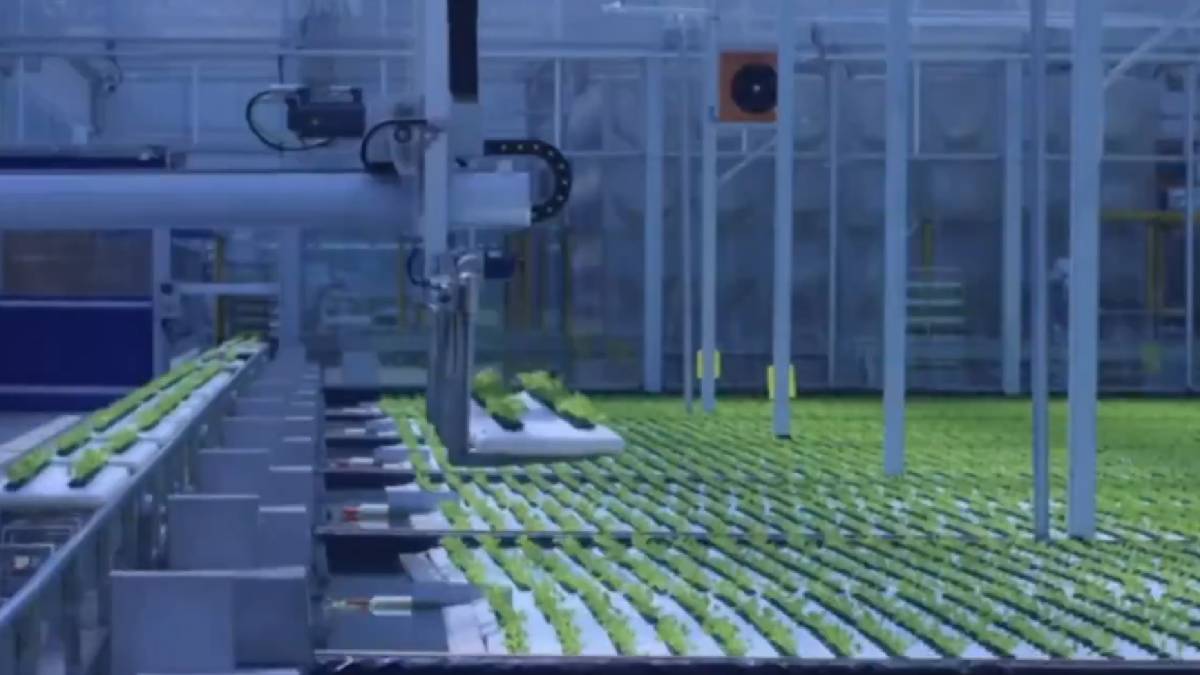
The change is part of the larger transformation of smart agriculture in which machines and software are increasingly facilitating farmers in areas which have traditionally been the domain of manual labour. Recent reports have documented Chinese farms using autonomous robots to plant, harvest and remove weeds, and AI technologies are being used to monitor crops, soil and pest outbreaks.
One of the most visible developments is autonomous agricultural machinery. Driverless or semi-autonomous tractors can be used with positioning systems, sensors and automated controls to do field work with minimal human involvement. China's autonomous agricultural tractor market is estimated to grow from $790 million in 2026 to $2.17 billion by 2031 as more and more investment is made into automated farming equipment.
The machines can perform repetitive tasks (ploughing, planting, spraying and harvesting) along precisely defined paths. Automation can reduce the physical burden and improve consistency in agricultural operations.
Artificial intelligence is also becoming more important. Smart farming systems can collect information about soil, weather, crop growth and environmental conditions. AI-based systems can then analyse that information to help identify potential problems and improve decision-making.
In some Chinese agricultural projects, autonomous robots are used to check crops and detect pests and diseases. In rice fields, for example, cameras and AI systems can be used to monitor crop growth and pest outbreaks. Smart farming systems using remote monitoring can inform farmers to predict crop growth and pest outbreaks.
✨🇨🇳China is advancing agricultural automation across its farming sectors. pic.twitter.com/PqUDx7XwXO
— 🇨🇳XuZhenqing徐祯卿 (@XueJia24682) August 18, 2026
Agricultural drones are another major part of China’s automation push. Drones can fly over large areas very quickly and can be used for crop monitoring and precision spraying. Farmers can identify areas that need to be further explored in terms of aerial data and not treat the entire field in the same fashion.
The growing automation will be of particular importance in agriculture with labour and productivity problems. Automated equipment can perform repetitive or physically demanding work for longer periods and will help farmers manage bigger areas with fewer people.
But China's agricultural automation drive is not restricted to big tractors. Researchers and technology companies are developing smaller specialised robots that can perform specific tasks. These include machines for weeding, crop monitoring and harvesting.
Other than conventional crop farming, China is also experimenting with automation. Robotic fish have been developed to monitor aquaculture environments, and researchers have developed robotic fish that can monitor the behaviour and environmental conditions of fish and the breeding facilities and surrounding infrastructure.
Robotics, AI, satellite positioning, sensors and telecommunications are also starting to build a connected agricultural ecosystem. Instead of having to depend on a farmer’s observation of a field, the machines can collect a lot of data and information about what’s happening on the farm.
The benefits may be better resource efficiency. Precision systems could allow farmers to use water, fertiliser and pesticides in a more selective fashion, reducing waste while maintaining crop productivity.
At the same time, automation can present challenges. It is expensive to run sophisticated machinery, and farmers need technical skills to operate and maintain it. Smaller farms may find it more difficult to justify the cost of highly automated systems than large commercial agricultural operations.
There are also questions about how automation will affect rural employment. Robots may reduce the need for certain forms of manual labour, but they can also create demand for workers who are proficient in machine operation, software, maintenance and agricultural data analysis.
China’s progress is part of a much broader global movement towards agricultural robotics. The worldwide agricultural robotics market is expected to grow dramatically in the next few years, driven by advances in AI, sensors, autonomous machinery and precision agriculture.
The long-term goal is not to eliminate farmers from the agricultural process. Automation can bring farmers from physically intensive tasks to supervising machines, analysing data and making higher-level decisions.
China’s increasing investment in agricultural automation indicates how quickly farming is connecting to advanced technology. Autonomous tractors, AI-powered crop monitoring, drones and specialised robots are moving from experimental projects to practical agricultural applications.
If the technology continues to mature and costs fall, automated farming could change how crops are planted, monitored and harvested. China’s experience could also influence agricultural technology development in other countries as governments and farmers search for ways to increase productivity while reducing labour and resource pressures.
To be clear, the present picture is clear: China is increasingly considering agriculture as a technology sector, combining robotics, AI, automation and data to modernise farming. The transformation is still in process, but autonomous machines and intelligent farming systems are now a reality that indicates that the farm of the future might look quite different from the traditional fields of today.