The Supreme Court’s decision to refuse to entertain a public interest suit opposing restrictions on the entry of outsiders into government schools in Uttar Pradesh and Rajasthan has been a huge setback for the Cockroach Janata Party (CJP) and its “School Thik Karo” campaign. The group was arguing that rules restricting the entry of journalists, YouTubers, social media users and civil-society representatives into government schools and the use of photography, videography, interviews, audio recording and livestreaming were draconian and should be reviewed and rectified.
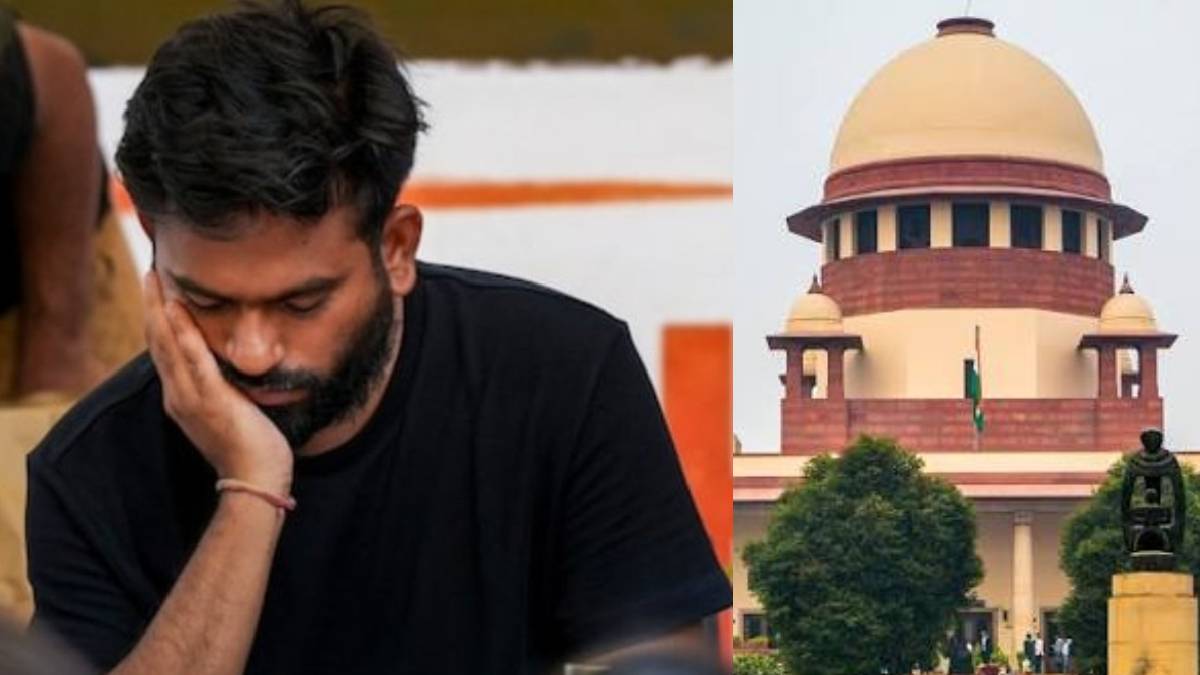
A bench consisting of Justice P.S. Narasimha and Justice Alok Aradhe declined to consider the petition filed by Priya Mishra under Article 32 of the Constitution. The bench said it was not inclined to entertain the writ petition. This means that the petition did not obtain relief against the challenged restrictions, and the permission requirements remain in place.
The matter has attracted attention because the CJP’s “School Thik Karo” campaign has been highlighting alleged deficiencies in government-school infrastructure. The campaign has focused on calling people’s attention to the state of school buildings and basic facilities. More recently, the government of Rajasthan has demolished a dilapidated government school building in Rampura when the campaign had attracted attention.
The restrictions challenged before the Supreme Court stem from orders from education authorities in both states. In Rajasthan, a circular issued on August 16 states that outsiders must have prior permission from the school principal before entering government school premises. It is also required to obtain written permission for photography, videography, interviews, audio recording and livestreaming.
In Uttar Pradesh, in an August 19 order regarding council schools in Ayodhya, outsiders, YouTubers and people associated with social media should not enter school premises or take photographs and videos without permission from the competent authority. The petition also mentioned similar directions issued in several other districts of the state.
The petition had argued that broad restrictions could affect freedom of speech and expression and legitimate efforts to document the condition of public educational infrastructure. It tried to distinguish between recording identifiable children and documenting facilities such as classrooms, toilets, drinking-water arrangements, electricity infrastructure, school buildings and other public amenities.
However, the Supreme Court’s refusal to hear the Article 32 petition means the immediate challenge did not bring the restrictions down. This is different from a detailed ruling on the constitutional validity of each restriction. The Court declined to hear the petition and instead found a merits judgment in favor of all rules.
For the Cockroach Janata Party, the development is politically significant as its school campaign had raised the issue of government-school infrastructure, and it sought greater freedom to see and record conditions on the ground. With the Supreme Court not taking the matter, the CJP’s campaign is now faced with a legal obstacle to achieving its aims.
The CJP has been on the receiving end of several high-profile legal and political developments related to student protests and its plans to organise demonstrations. The Supreme Court had earlier intervened to stop its proposed demonstration on September 5 in Delhi, and the organisation said it moved off the march after it was assured of cases against student protesters.
This latest school-entry decision is a major setback for CJP’s immediate legal challenge. While the organisation can continue raising concerns about government-school infrastructure through other lawful channels, the Supreme Court’s refusal to entertain the PIL means that the specific challenge to the UP and Rajasthan restrictions has not succeeded at this stage.
The ruling is likely to keep the debate alive about how government schools can balance child safety and privacy with transparency, journalism, public accountability and documentation of public infrastructure. But for now, visitors to the affected government schools in Uttar Pradesh and Rajasthan still need to apply for permission from their respective education departments.