External Affairs Minister S. Jaishankar highlighted the increasingly interconnected nature of Asia and the world for which it is connected as a whole while speaking at an Asia Society event in New York on 28 September 2026.
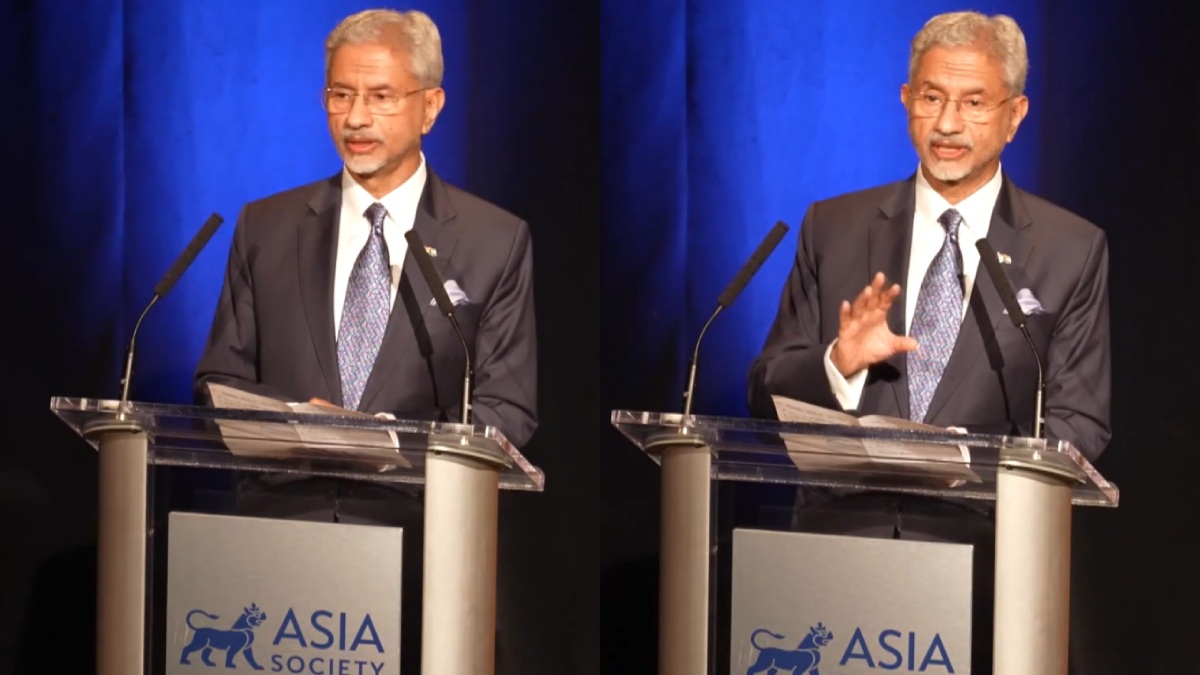
The gathering during the High-Level Week in the UN General Assembly, Jaishankar said that countries and regions in one part of the world are no longer considered separate entities and regions can no longer be regarded as separate nations because development in one part of the world is becoming more and more important to others.
His comments were particularly on the growing connections between the Indian Ocean and Pacific regions, often termed Indo-Pacific.
“If there is an Indo, there is a Pac”
Jaishankar says that traditional approaches often divide the world into countries, regions and continents. But he said that today's interconnected world makes it increasingly difficult to maintain such divisions.
He said, “If there is an Indo, there is a Pac,” describing the relationship between the Indian and Pacific parts of the wider region.
According to Jaishankar, the Indo-Pacific is “getting tighter, not looser.” He said developments in policy frameworks, analysis and regional concepts were moving towards a more integrated approach rather than treating different parts of Asia as separate regions.
Why the Indo-Pacific Matters
The Indo-Pacific is a very important framework for discussions about trade, maritime connectivity, supply chains, security, technology and diplomacy.
Jaishankar’s words were indicative of the fact that developments in these areas are increasingly crossing traditional geographical boundaries. A disruption or policy change in one part of Asia can have consequences for countries and markets elsewhere.
He also said it’s hard to separate what happens in Asia from what is happening in other parts of the world. This interrelatedness means governments should take regional issues into account as well as global ones.
Moving Beyond “Neat Compartments”
One of the challenges is that governments and analysts are used to dividing complex issues into well-defined geographical or policy categories, Jaishankar said.
He described these as “neat compartments” where individual problems are identified and solutions are sought within those boundaries.
But the minister pointed out, the growing interdependence between countries makes this more complicated. Economic, security and geopolitical developments might overlap across regions and thus need to be considered in greater detail.
#WATCH | New York, USA: Addressing the Asia Society event, External Affairs Minister Dr. S. Jaishankar says, "...Our landscape in this interdependent world is actually a very indivisible landscape. We are used to thinking of countries, regions, continents... But the fact is: it… pic.twitter.com/KD2lghem2e
— ANI (@ANI) September 29, 2026
Jaishankar also discusses Global Challenges
The remarks by the Asia Society came as Jaishankar was in New York for the UN General Assembly High-Level Week.
In his wider discussions around the UN meetings, Jaishankar illustrated the difficult international environment, including the ongoing conflicts and what he called a “4F” crisis for food, fuel, fertiliser and finance.
These comments form part of India’s wider engagement with discussions on global instability and international cooperation.
When did Jaishankar make these remarks?
Jaishankar made the remarks at an Asia Society event in New York on 28 September 2026. He said he had had a conversation with India's External Affairs Minister and was on the theme “The United Nations General Assembly Comes to Asia Society.”
The timing was significant at that time: the UN General Assembly's High-Level Week. Contemporary reports also confirm that Jaishankar spoke to the Asia Society in New York after the end of the UN High-Level Week.