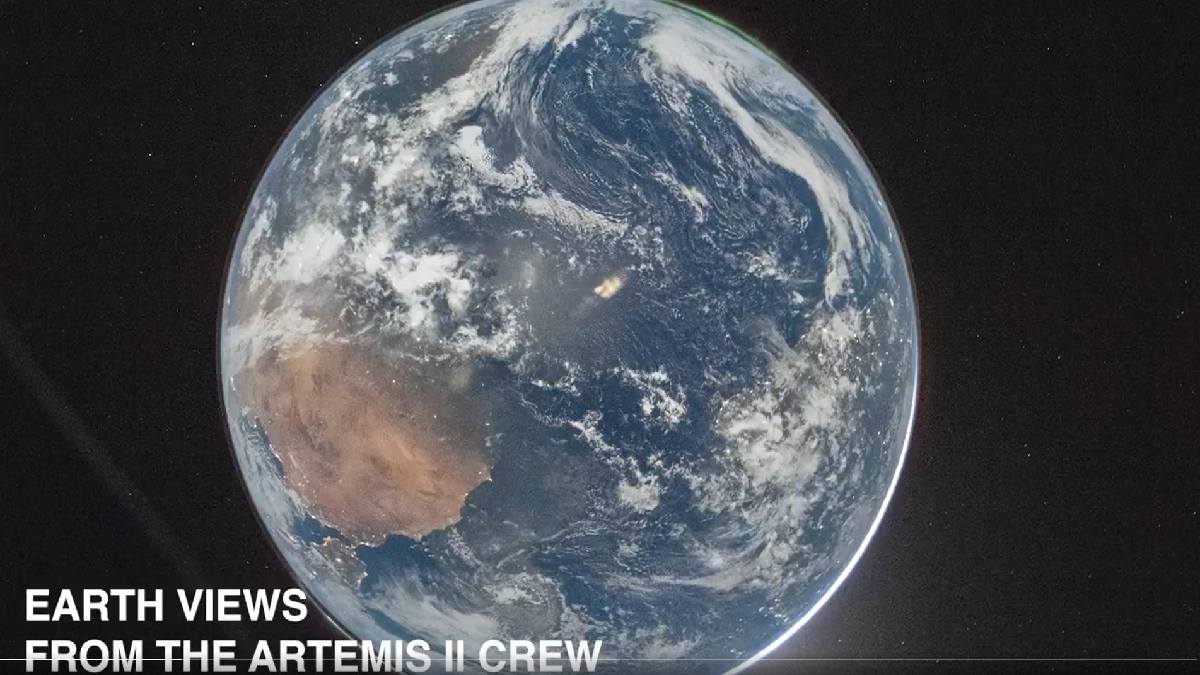
For most people, seeing Earth from space is a thing people do when they’re taking pictures and videos.
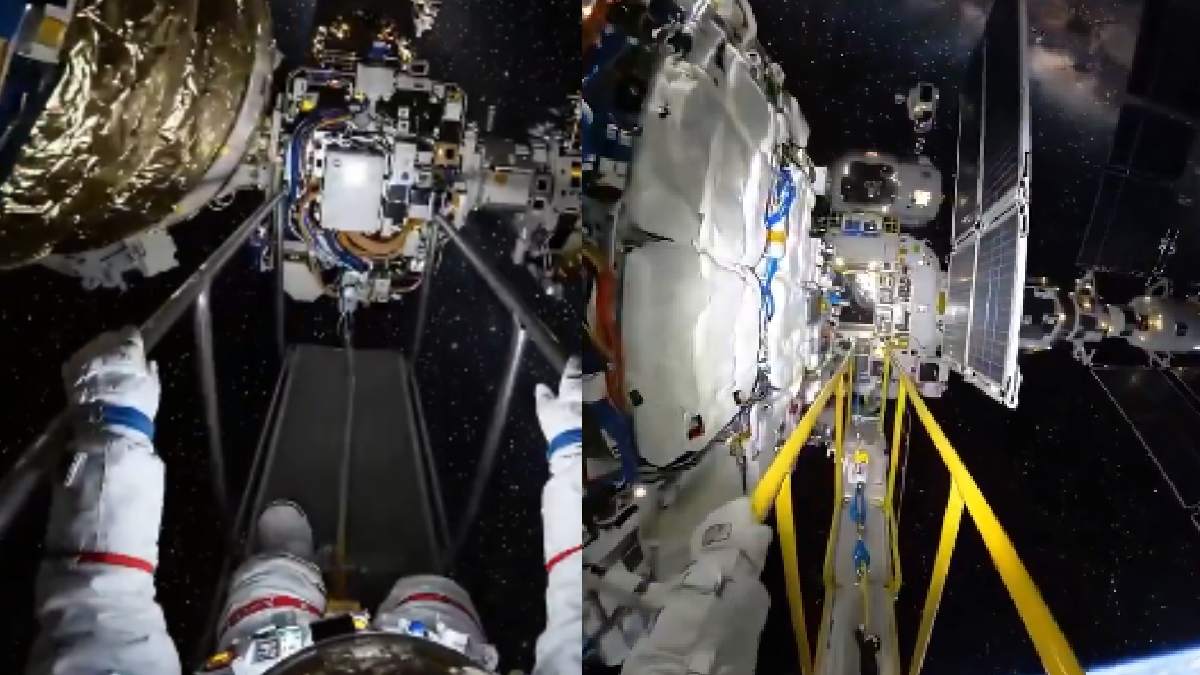
But for astronauts, that moment is when they step out of the spacecraft and see Earth for themselves. A spacewalk, known as extravehicular activity (EVA), is one of the most difficult things an astronaut can do.
During an EVA, an astronaut leaves the relative safety of a spacecraft or space station and works directly in the vacuum of space. They stay connected to the spacecraft by safety tethers and carefully follow procedures while doing repairs, experiments, maintenance, or other tasks.
One of the most striking features of a spacewalk is the silence. Sound cannot make it through the atmosphere of space. Astronauts communicate with their colleagues using radio systems in their helmets, and the outside environment is eerily quiet.
But the images of astronauts floating above the Earth are just a tiny part of the picture. Long before the hatch opens, astronauts are going to be very much in the process.
A major concern is decompression sickness, sometimes referred to as “the bends,” in which astronauts practice carefully designed procedures to adjust their bodies to the lower pressure inside the spacesuits.
Depending on the mission and procedures involved, this can include pre-breathing oxygen to reduce nitrogen in the bloodstream before entering the lower-pressure environment within the suit.
Fewer than 300 people in human history have ever seen this with their own eyes.
— Physics-astronomy (@Physicsastronmy) August 18, 2026
Earth spinning beneath them. Nothing between their face and the infinite void except a helmet visor. 🌍🚀
It’s called an extravehicular activity (EVA)—a spacewalk.
You leave the station, secure… pic.twitter.com/LFZIm9yMag
Training is another very important part of the preparation. The astronauts spend a lot of time underwater to rehearse spacewalk procedures because the underwater environment can simulate the weightless conditions of an EVA.
Wearing a huge spacesuit in a giant training pool, they practice moving and handling things and doing the tricky stuff.
There is nothing about a spacewalk that is left to chance. Everything is planned, measured, and rehearsed. Astronauts need to know where their tools are, how they will move around the spacecraft, and what steps to take if something unexpected happens.
Even simple actions can be challenging in a spacesuit. The suit protects astronauts from extreme temperatures, radiation, and the vacuum of space, but it also restricts movement and requires physical effort.
The final images make a spacewalk look easy: an astronaut floating above the Earth, working against an ocean, cloud, and continental landscape of the sky.
But behind that moment are years of training, detailed procedures, engineering, and teamwork.
A spacewalk is so much more than stepping outside a spacecraft. It is the culmination of preparation, discipline, and technology to allow humans to briefly work in one of the most hostile environments imaginable.
What viewers may see may be only a few minutes of exquisite moments of footage. In the background of such images is an enormous human effort carefully rehearsed long before the hatch ever opens.