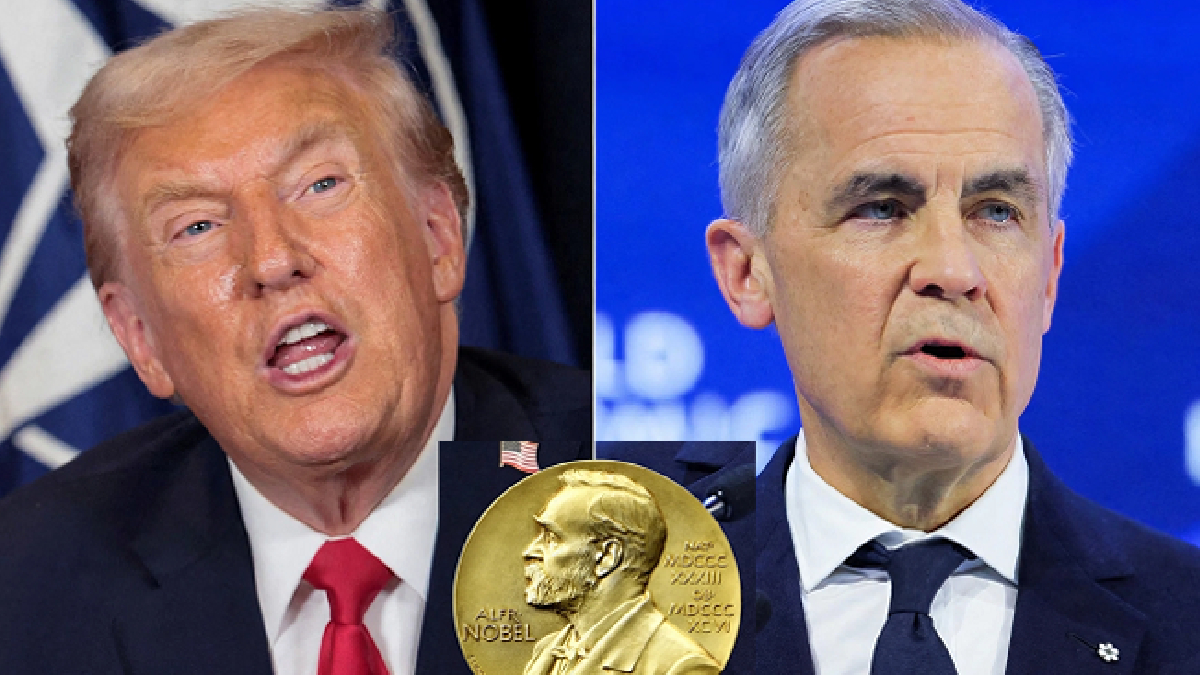
The 2026 Nobel Peace Prize race is going to take an unexpected turn. We are seeing Donald Trump and Canadian Prime Minister Mark Carney among the top most likely candidates as well as US President Donald Trump and Canadian Prime Minister Mark Carney compete for the prize in 2026.
But in a twist that sounds like the science-fiction genre to me, the International Space Station (ISS) has also emerged as a possible candidate.
The Norwegian Nobel Committee will declare the 2026 Nobel Peace Prize winner on October 9. 287 candidates have been nominated this year including 208 people and 79 organisations.
But the committee does not publicly announce the names of nominees so there is no official shortlist. Names reported in the media come from nominations by nominators, expert opinions and speculation.
Trump has long said that he is interested in winning the Nobel Peace Prize and has been mentioned as an option for the prize this year. Trump supporters praise his diplomacy efforts; others say his record of involvement in international conflicts are not enough to win the prize. But experts are still not too hopeful, given Iran's continuing conflict, they said.

Carney, meanwhile, has become known around the world in recent years for his tough stance on Trump and his quest to position Canada as an independent middle power. And his calls for greater cooperation between countries have stoked speculation that he might be in the Nobel conversation. Carney is not yet included on the shortlist, though.
The most unusual name in the discussion is the International Space Station. The ISS has brought astronauts from the United States, Russia, Canada, Japan and European countries together for decades, even as political tensions between some of those nations have intensified on Earth.
Experts have referred to the station as a rare example of international cooperation. Haakon Gjerlow, director of the Peace Research Institute Oslo, has said the ISS is a symbol of countries working together peacefully toward a common goal.
The possibility also conforms with the Nobel Peace Prize’s rules which give organisations the award. Around a third of the nominees in this year’s prize list are organisations, so an institutional winner is certainly possible.
Still predictions are uncertain. Other names and organisations being discussed include humanitarian groups working in Sudan, advocates for children in Ukraine, the International Court of Justice and the International Criminal Court.
As the announcement is made only days away, the biggest question is whether the Nobel Committee will choose a powerful political figure, a humanitarian organisation or make history with an award linked to humanity's cooperation in space.
If the ISS were to win, the 2026 Nobel Peace Prize would quite literally have a contender from beyond Earth.