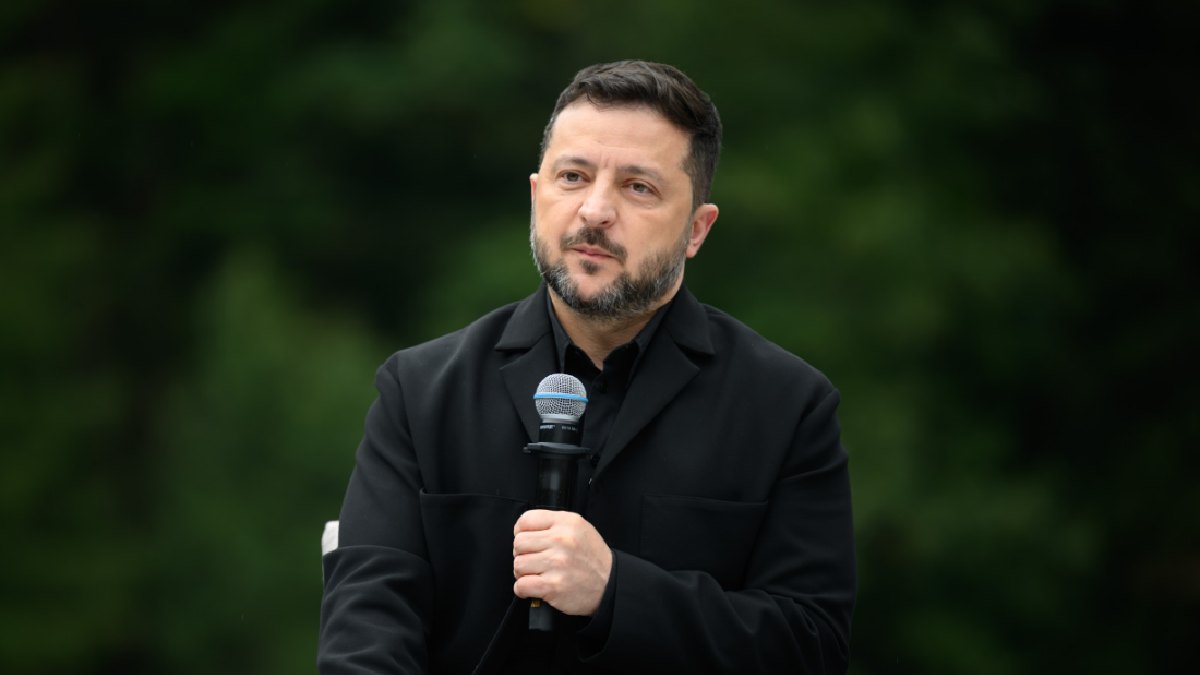
Ukrainian President Volodymyr Zelenskyy has launched the Carpathian Eight (C8), a new regional cooperation format in which Ukraine and seven European countries have come together. The initiative was launched at the first Carpathian summit in Ukraine’s Ivano-Frankivsk region on September 18, 2026.
The eight countries participating in the C8 are Ukraine, Romania, Serbia, Poland, Slovakia, the Czech Republic, Austria and Hungary. The European Union is also a part of the summit and the broader framework, but it is not one of the eight countries. A group of countries with geographic, economic and transportation links with the larger Carpathian region is present in the C8.
Which countries are part of the Carpathian Eight?
Ukraine: As host and initiator of the new format, Ukraine is at the center of the C8 initiative. Kyiv has raised the emphasis of regional security, energy resilience, transport links and economic cooperation as central themes for the new framework.
Romania: Romania is one of Ukraine’s neighbouring countries and is involved in a number of regional cooperation efforts with Kyiv. Its geographical position also gives it an important role in transport, logistics, and cross-border connectivity.
Poland: Poland is also involved in the initiative. Polish Prime Minister Donald Tusk attended the summit in Ukraine. Warsaw has kept close contact with Kyiv during Russia’s full-scale war against Ukraine as well as transport, security and economic relations are still important areas of bilateral cooperation.
Slovakia: Slovakia's participation brings another Central European neighbour into the group. The country shares a border with Ukraine, so cross-border transport, energy and regional economic cooperation are of interest in the C8 agenda.
Czech Republic: The Czech Republic is also part of the eight-country format. Its inclusion sends the initiative further west in Central Europe and expands the geographical scope of discussions on infrastructure, trade and regional cooperation.
Austria: Austria is among the participating countries and doesn’t share a direct border with Ukraine. Its participation adds another dimension to Central European integration and opens the doors to economic and regional cooperation.
Hungary: Hungary is also part of the C8 and shares a border with Ukraine. Energy, transport and cross-border economic issues are among the areas that could be discussed through the new regional framework.
Serbia: Serbia is the only member of the group that is not part of the European Union. Its involvement gives the C8 a broader southeastern European context and links the initiative with another important regional partner.
What is the Carpathian Eight?
The C8 is being marketed as a regional cooperation platform rather than a new military alliance. Security, energy, logistics, investment, trade and cross-border projects are the core of the initiative, it aims to connect governments with regional administrations, businesses and local communities in all countries involved.
Zelenskyy has emphasized the importance of keeping trade and the transport routes open, especially at the time of war in Ukraine and regional security and economic planning. Energy cooperation has also become a big problem in Europe and one that needs to be built up and re-established in Europe.
The geographical identity of the initiative is related to the Carpathian mountain range which covers parts of Central and Eastern Europe. Many of the participating countries are located in or close to the Carpathian region, which is a natural geographical basis for cooperation.
Security And Economic Cooperation
Security is one of the big themes of the C8 summit. Ukraine’s initiative is one in the midst of the ongoing war between Russia and Ukraine, and Kyiv’s overall push for deeper partnership with European partners. At the same time, the agenda of the summit is far broader than defence and security.
Trade, energy, logistics and investment are also at the heart of the new framework. Reuters reported that a business forum connected to the summit brought together around 550 representatives, while investment and trade agreements worth about €1 billion were expected to be signed during the economic portion of the event.
The logistics component would be particularly pertinent to regional commerce. Better transport links and cross-border infrastructure could enable for goods to be moved between Ukraine and neighbouring European markets. Energy cooperation might also be aimed at boosting regional resilience and infrastructure.
EU participation in the new format
The European Union is also participating in the C8 summit, underlining a wider European dimension to the initiative. The bloc is not one of the eight countries but it is in line with the regional format and with wider European cooperation.
The launch of the Carpathian Eight follows Ukraine's ongoing efforts to deepen its political and economic integration with Europe. Kyiv has also been involved in other regional mechanisms and collaborations (the Nordic-Baltic Eight and Ukraine-Southeast Europe cooperation frameworks) in order to build up partnerships across the continent.
The C8 therefore forms another forum for Ukraine and its regional partners to come together and talk about common problems. Its future role will depend on whether the countries involved are able to translate the security, energy, logistics, trade and investment commitments into concrete projects.
For now, the September 18 summit marks the formal launch of the Carpathian Eight which brings eight European countries together under a new regional structure while the European Union participates. The emphasis on practical collaboration gives the group an agenda that goes beyond security with the focus on economic development and cross-border cooperation.