Even now, as tension between China and Taiwan continues to shape the world political landscape, one date keeps popping up in intelligence reports, military discussions and foreign policy conversations: 2027. The year is often referred to as the so-called “Davidson Window” in discussions when China threatens to take Taiwan by force.
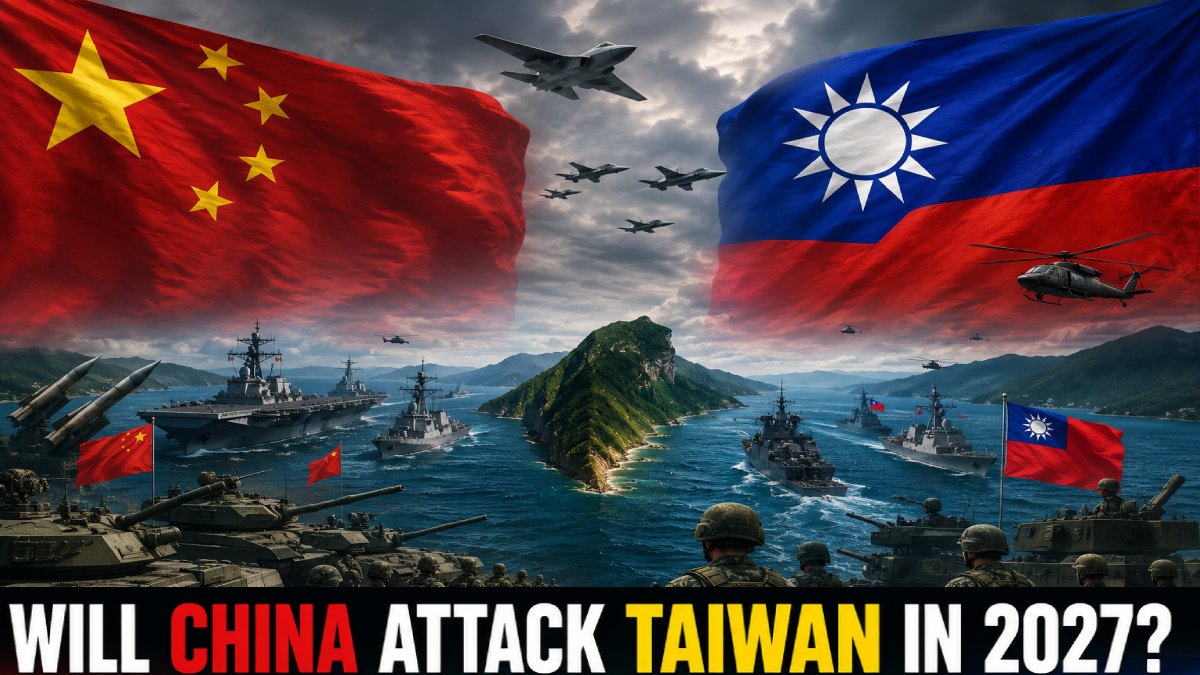
Experts also stress that the Davidson Window does not mean war will be certain in 2027. It means, rather, the period when war risk will probably rise sharply.
What is the Davidson Window?
The term “Davidson Window” originated from comments by former U.S. Indo-Pacific Command chief Admiral Philip Davidson when he testified before the U.S. Congress in 2021. Then, Davidson warned that China could pose a serious military threat to Taiwan within the next six years, with the possible danger period between 2021 and 2027.
His assessment was based on China's rapidly expanding military capabilities, growing pressure on Taiwan, and Beijing's long-standing aim of reunification with the self-governed island.
Since then, policymakers, analysts and military officials have used the term "Davidson Window" to describe the period leading up to 2027, when China’s military modernisation efforts are expected to reach key milestones.

Why does 2027 matter?
Several factors have made 2027 a focal point in discussions about Taiwan.
First, 2027 marks the 100th anniversary of the PLA, China's People's Liberation Army (PLA). Xi Jinping has repeatedly urged the PLA to become a world-class military force that can achieve China's strategic goals.
Second, U.S. intelligence and defence officials have noted that Beijing has directed the military to develop the capability to conduct a successful operation against Taiwan by 2027. However, officials emphasise that having the capability does not necessarily mean there is a decision to invade.
Third, China’s military has expanded its naval, missile, cyber and air warfare capabilities drastically over the past decade. The developments have raised the concern of regional governments and international allies about the balance of power in the Indo-Pacific.
Could China actually attack Taiwan?
Most security experts believe an invasion would be extremely risky.
Taiwan is separated from mainland China by the Taiwan Strait, a body of water about 130 kilometres wide at its narrowest point. A large-scale amphibious assault would be among the most complex military operations ever attempted.
China would also face huge economic and diplomatic blowback. Beijing is already intertwined with the international trade networks, and a conflict over Taiwan could lead to severe sanctions, market chaos, and international isolation.
At the same time, Taiwan has beefed up its defences, expanded military spending and expanded cooperation with partners like the United States and regional allies.
What are analysts looking at?
Not only the invasion, but experts are monitoring many possible scenarios:
- Military blockades around Taiwan
- Cyberattacks targeting critical infrastructure
- Economic coercion and pressure campaigns
- Limited military actions designed to intimidate Taipei
- Escalation after a political or diplomatic crisis
Many analysts say these options might be more likely than a full-scale invasion because they are less risky and put pressure on Taiwan in a different way, and also bring more pressure to Taiwan.
What will happen?
There is no public indication that China is making a final decision to attack Taiwan in 2027. Intelligence agencies and defence experts tend to regard the year as a benchmark for military readiness and not a fixed invasion date.
The Davidson Window is a warning of increased risk rather than a prediction of war. Beijing, Taipei, Washington and other capitals in the Indo-Pacific region will decide whether tensions continue to increase or stabilise.
For now, 2027 remains one of the most closely watched dates in global security discussions, and it is one of the most important political flashpoints, with diplomacy, deterrence and crisis management at the heart of these issues in one of the world’s most sensitive geopolitical flashpoints.