In landmark paleobotanical discoveries of 24 million-year-old Kewra (Pandanus) fossils in Assam, scientists have unearthed evidence of ancient plant remains from the prehistoric vegetation and environment of India that could have made a significant contribution to our understanding of the evolution of tropical environments in the Indian subcontinent.
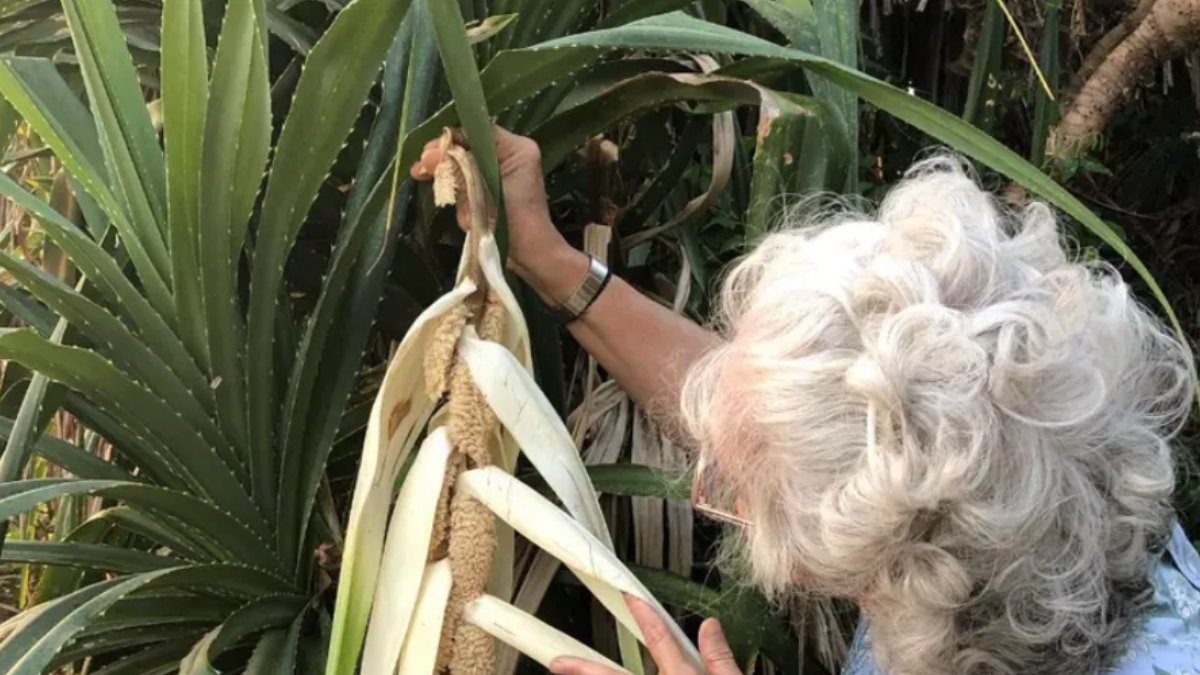
The fossilized remains date back to about 24 million years ago and are from the Late Oligocene to Early Miocene period when the Earth's climate and landscapes were undergoing such dramatic transformations. The fossils suggest that Kewra plants of today’s beauty and economic importance existed millions of years ago, before the creation of much of the landscapes we see today.
The Kewra plant, scientifically known as Pandanus, is found in tropical and subtropical coastal regions. It is widely used for its aromatic flowers, which produce kewra essence, which is used in perfumes, sweets, beverages, and traditional cuisine. It also has ecological significance, providing habitats and protection to coastal areas, and helping stabilize sandy soils.
The fossilized specimens were retrieved from sedimentary rock formations in Assam that have been found to preserve evidence of ancient plant and animal life, they added. Analysis of the fossils revealed that their structure very closely resembles that of modern Kewra species and researchers were able to confidently identify the ancient plant.
Climatic conditions in northeastern India millions of years ago were much more humid than what we see today, suggesting that Kewra would have thrived in an environment where dense vegetation flourished. These findings will help reconstruct ancient ecosystems and provide a better understanding of how climate changed plant evolution across South Asia.

Fossil discoveries such as these are essential for tracing plant species' evolution and diversity over geological time, scientists say. Fossil specimens and living relatives are compared, and evolutionary changes, migration patterns, and adaptations are explained by millions of years of weather and landscape changes.
The Assam Fossil Site has already been very successful in many geological and paleontological discoveries that have made an impact on India's geological and paleontological records. Northeastern India is unique in Earth's geological history as it lies at the junction of the Indian and Eurasian tectonic plates. That collision generated the Himalayan mountain range and changed the climate in the region, river systems, and biodiversity.
The new fossils were discovered by the team and they suggest that tropical vegetation flourished in the region long before today's environmental conditions were established. Scientists think more fossil species can be excavated and analyzed so that the picture of ancient forests and ecosystems will be clearer.
Fossil-bearing geological sites are also important as they are natural archives of Earth’s history, and through millions of years, they are able to record changes in climate, biodiversity, and the environment. Research into India’s natural heritage is a good thing that we should continue to do as we can see the global patterns of evolution and ecological change.
The results are expected to spur more studies about prehistoric vegetation in the Indian subcontinent. New methods - microscopic analysis, radiometric dating, and geochemical studies - may help scientists to better assess the age of the fossils and the environment in which the ancient plants flourished.
As well as scientific significance, such findings as the Assam Kewra fossils also tell us a great deal about the geological history of India. They underscore that the landscapes of India still preserve a wealth of the world’s oldest recorded life history extending far back millions of years. And this is the kind of discovery that keeps geologists, botanists, evolutionary biologists, and conservationists interested.
The 24-million-year-old Kewra fossils are still a compelling reminder of Earth’s deep history as we continue our research. They offer a rare glimpse of ancient tropical ecosystems that once covered large parts of northeastern India and provide fresh evidence of the strength and evolution of plant life through changing geological periods.
The discovery not only furthers our knowledge of India’s prehistoric past but also highlights the need for research and conservation of the Earth’s rocks. Each fossil unearthed adds another chapter to the story of life on Earth and scientists are now reconstructing environments that existed before modern civilization was developed.