West Bengal government formally launched the "Annapurna Yojana," a landmark social security scheme for women, today at Nabanna. Chief Minister Suvendu Adhikari presided over the ceremony and transferred ₹3,000 directly into the bank accounts of over 28 lakh women in the first phase.
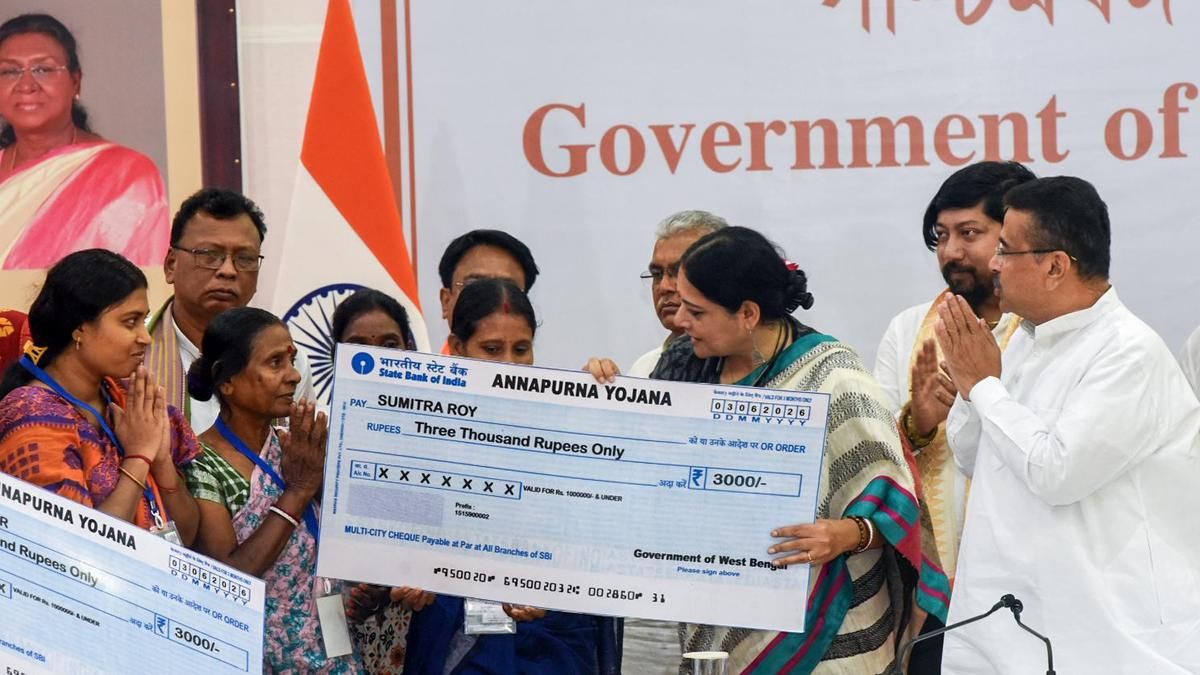
Five women were symbolically handed approval letters during the event. The Minister of Urban Development and Minister of Women, Child Development and Social Welfare, Agnimitra Paul, was also present.
Massive Reach, Phased Rollout
In the first phase, beneficiaries started receiving ₹3,000 directly into their bank accounts from today. The government estimates that nearly two crore women will eventually benefit from the scheme. In order to provide a full and inclusive picture of the beneficiary list, the beneficiary list will be updated every seven days.
CM Suvendu Adhikari said the state administration’s tireless efforts made for the immediate launch of the scheme. “Our officials have worked around the clock to make this possible,” he said.
Learning from the Past
Agnimitra Paul said the government is taking a more cautious view of Annapurna Yojana after the detection of large fraud in the previous Lakshmir Bhandar scheme. She said that beneficiaries will have 90 days to register. Women aged 25 to 60 would be able to apply for this benefit. Transparency Measures

Chief Secretary Manoj Kumar Agarwal laid out robust transparency mechanisms. Beneficiary lists will be published at block, panchayat, and even booth levels, so citizens may raise objections if ineligible names appear. On the other hand, applicants who were not selected will be allowed to apply again. This is a bold step in bringing welfare to women in West Bengal and is the first step in the government's approach to direct transfers and public accountability.