A good coordination between forest officials and railway authorities in Assam prevented a potentially frightening clash of elephants with the passenger train. The incident took place on Wednesday morning in Hawaipur area of Hojai district under the Lanka Range where forest staff saw elephants moving on the railway track. With quick action from the officials and the loco pilot of the Down Rajdhani Express to bring the train to a halt were the railway control and the loco pilot of the Down Rajdhani Express.
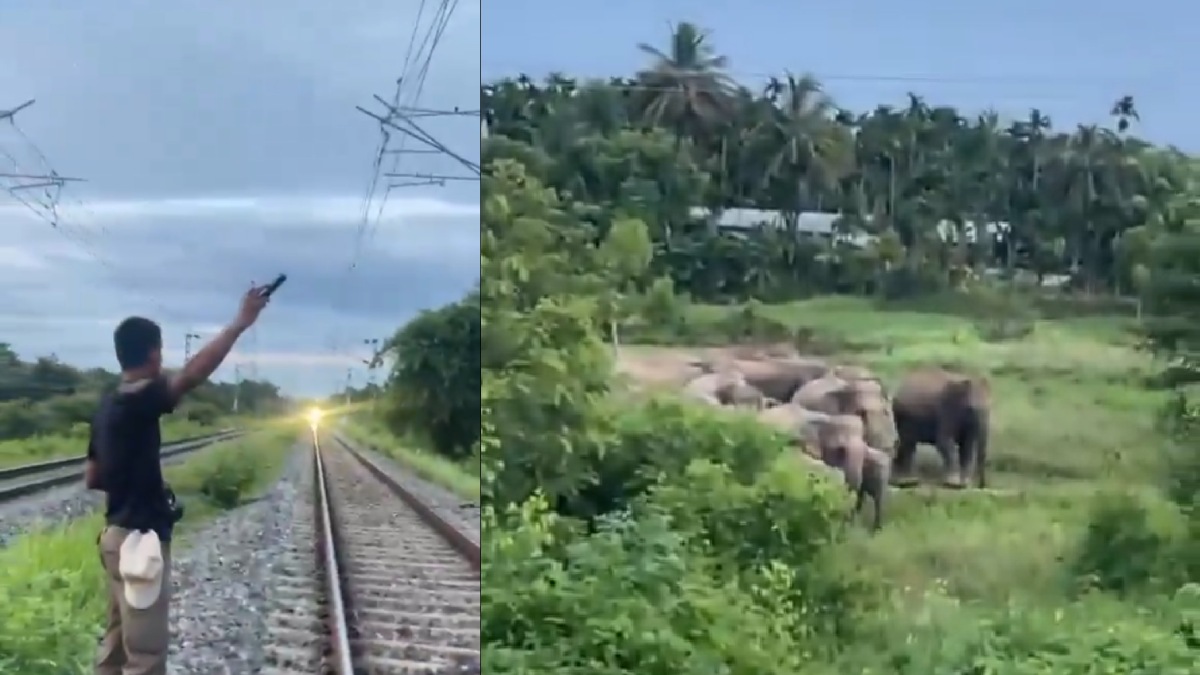
According to the information about the incident, the train stopped at railway kilometer 167/8 immediately when the elephant herd was detected. The timely intervention allowed the animals time to cross the railway track without being disturbed. It was only then that the herd could move safely across and train operations could get going.
Assam Forest Minister Jayanta Mallabaruah also posted a video of the incident and shared the action of the forest minister Jayanta Mallabaruah to highlight the coordination of the elephants during the orderly movement of the elephants.
The footage has exposed those difficulties for forest and railway authorities in areas where railway lines pass through or near wildlife habitats and has created a lot of wildlife habitat. Such instances are examples of how we can see why continuous monitoring and quick communications are vital in areas in which wild animals move between forest landscapes.
Assam has an extremely large number of wild elephants, with estimates of the elephant population in Assam at about 6,000. The elephants move many miles from place to place in search of food, water and space in the wild. Even their traditional routes of movement can touch roads, railway tracks, agricultural fields and human settlements. And as infrastructure develops it is hard to avoid encounters between wildlife and transportation networks as long as the environment is constructed.
Railway tracks are particularly dangerous for elephants as trains are fast moving and have very short stopping distances. A collision between a large elephant herd can result in the death of animals and serious danger to passengers, railway staff and the train operations. So identifying elephant movement zones and giving railway personnel timely information about the movement of animals is critical to wildlife protection.
The Hawaipur incident also underscores wildlife corridors' importance. Animals can efficiently travel along less populated and more infrastructure-dependent forest areas as they can without being forced into the city. The conservation of existing corridors and the network of habitats will reduce the likelihood of dangerous encounters between elephants and people.
Another approach that is being considered in wildlife-sensitive areas is to use elevated railway sections and other infrastructure to allow animals to move beneath or around railway lines.
These measures require significant investment, planning and coordination but can lead to long-term benefits in the long run by distinguishing animal movements from the railway traffic. In areas with frequent elephant crossings, technology-based monitoring systems, warning mechanisms and coordinated communication between forest departments and railway control rooms can enhance safety.
The successful response to Hojai is more than a single incident. It is a reminder that wildlife conservation is predicated on quick decisions at the local level. A forest official spotting a herd, railway control receiving the warning and a train crew responding properly can all prevent an accident in minutes.
A better public awareness is needed for driving authorities, railway staff, tourists and those living near forest areas to minimize human-wildlife conflict. Wild elephants don’t go through the forests to cause harm; they move on a path that is established and there’s food and water to eat and drink. Community action in dealing with this behaviour becomes more assured when animals are encountered.
This morning, alert staff from Lanka Range of @assamforest along with the loco-pilot of 167/8 down Rajdhani Express with support from the control room in-charge, Lumding Station under @RailNf averted a major accident from happening involving elephants on the Habipur section. pic.twitter.com/0KDAvD9HQ8
— Kaushik Barua (@Airawat) August 19, 2026
As Assam strives to balance infrastructure development with its rich natural heritage, incidents such as this further accentuate the need to plan transportation projects to meet wildlife needs. Better wildlife corridors, better monitoring, speed restrictions in areas of sensitive nature and infrastructure like elevated rail sections can make people, and animals, safer.
The safe crossing of the elephant herd near Hawaipur can be viewed as an example of the potential of what effective coordination can do. The prompt response of Assam’s Lanka Range staff, Lumding railway control and Rajdhani Express crew ensured that a leisurely train journey was not turned into a wildlife tragedy. For thousands of elephants in Assam’s forests and movement routes such vigilance will be imperative to safeguard one of the state’s most important and iconic wild species.