
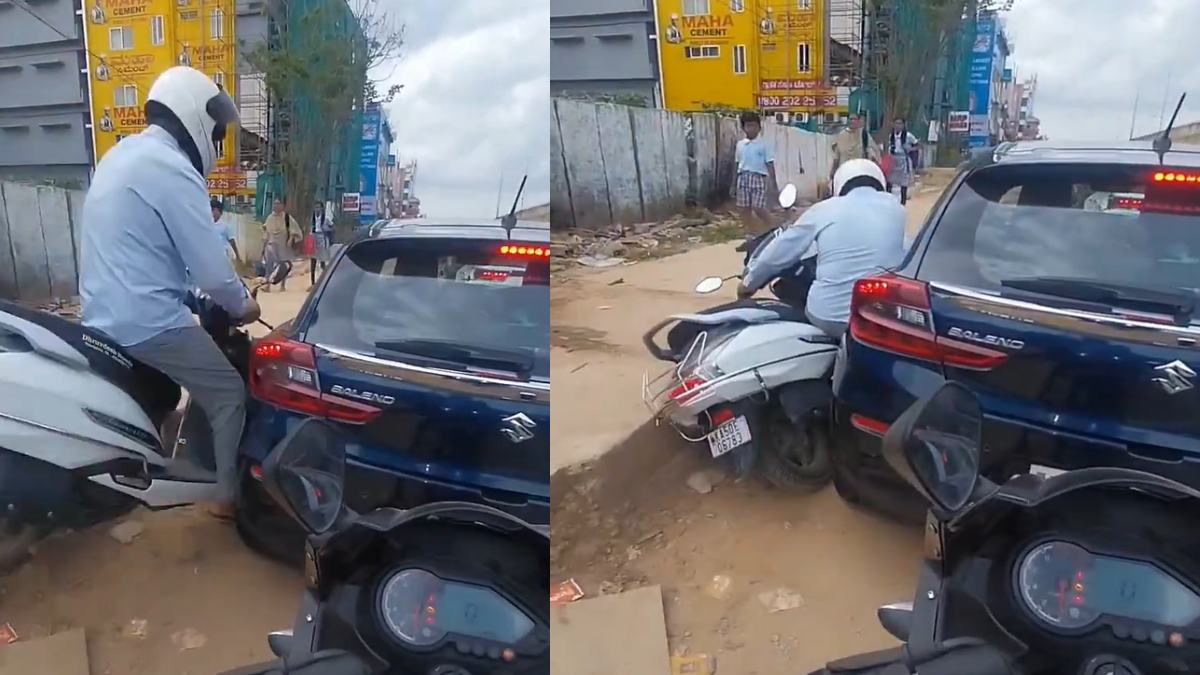
A shocking incident in Bengaluru’s Mahadevpura area once again exposed the dangers of gig economy workers in India. A delivery executive at Zepto on Friday was savagely assaulted after a minor collision with two individuals riding a scooty. The attackers reportedly thrashed the worker and struck him on the chest with a helmet, causing him to collapse at the scene. It has been the occasion of popular outrage and pressing questions on issues such as road safety, urban violence and the plight of delivery personnel – the essential resources of India’s booming quick‑commerce industry.

What Went Wrong in Mahadevpura:
Police reports and eyewitness reports suggest that the delivery rider was on duty on Mahadevpura's busy roads when his vehicle collided slightly with a scooty carrying two passengers. What should have been a mere traffic dispute escalated into violence. The people allegedly assaulted the rider, repeatedly battering him and hitting his chest with a helmet. The rider fell flat in the street, leaving bystanders stunned and traumatized. Police said they were investigating and were trying to figure out who the attackers were. Authorities are looking to determine whether the assault was simply triggered by road rage or whether there were other disagreements involved in the incident.
A #Zepto delivery executive was brutally assaulted in #Bengaluru’s #Mahadevpura area on Friday after a minor collision with two individuals on a scooty, raising fresh concerns over road safety and the vulnerability of gig economy workers.
According to police and eyewitness… pic.twitter.com/qXoOpqx8u5— Hate Detector 🔍 (@HateDetectors) January 9, 2026ALSO READ


Everyday Risks Facing Delivery Workers:
Here’s why it’s a shining example of the daily difficulties encountered by delivery executives operating in India’s fast‑growing quick‑commerce sector. Companies such as Zepto, Blinkit, Swiggy and Zomato depend on thousands of riders to make their deliveries, often under tight schedules and high delivery targets. They tend to navigate crowded roads with erratic traffic flow and impatient drivers. Apart from driving hazards, delivery workers also endure customer hostility, harassment in public places and, in this case, violent clashes with strangers. Because they are working so quickly to deliver, they often take risks that make them susceptible to accidents and clashes.
Increasing Road Rage in metropolitan India:
The assault in Mahadevpura is symptomatic of a troubling surge in road rage incidents across Indian cities. Even small collisions or misunderstandings escalate into clashes and violence is the norm amid growing traffic congestion, stress and impatience, which causes more frequent road rage incidents. These kinds of incidents are happening in Bengaluru, according to civic groups who have raised the alarm that they are becoming more frequent and pose serious risks to human life and property. For gig workers who spend long hours on the road, the risks are magnitudes higher too. Unlike office workers, they are working in the streets, a place where they are increasingly exposed to unpredictable behavior by other drivers and pedestrians.


Public Reactions and Civic Issues:
The incident has raised alarms in citizen forums and advocacy groups. Delivery workers play a critical role in many aspects of urban life, bringing food, groceries and other essential items into households as rapidly as possible, many have noted. But many have little basic protection or support systems. The attack outraged social media users, who called for tougher consequences for the attackers and stronger protections for gig workers. Some said delivery companies should offer their employees training, insurance and emergency help. Others stressed the importance of better policing of road rage incidents to limit such violence.
Authorities Respond:
Local law enforcement is investigating the case and will take action in response, officials say. Officials are also investigating whether the confrontation was triggered by traffic violations. But civic groups say in addition to punishing the attackers, systems must also change to protect delivery workers from similar threats in the future.
The Big Picture: Security on the Gig Economy:
The assault in Mahadevpura is not an isolated instance, it’s symptomatic of wider problems in India’s gig economy. Delivery workers are mostly considered contractors, not employees, which narrows their access to coverage such as health insurance, paid leave, or legal protections. And as demand for quick‑commerce expands, so does pressure on these workers to meet unrealistic deadlines. Advocates are demanding reforms that range from:
- Clear safety policy guidance for delivery workers.
- Insurance for accidents and assaults.
- Training programs to manage aggressive interactions.
- Stronger traffic laws enforcement to curb road rage.
The violent attack on a Zepto delivery executive in Bengaluru’s Mahadevpura district has shone a spotlight on the immediate necessity for better safeguards for gig economy workers. These are the people who sustain today's urban life, but they're also extremely at risk of traffic accidents and violent clashes. As investigations continue, the episode is a reminder that India’s fast‑growing quick‑commerce industry must give dignity and safety to its workers, too. Without better safeguards, the risk posed to delivery personnel will continue to grow, putting their lives at risk, and destabilizing the services millions of people depend on, day after day.










Comments
Leave a Comment