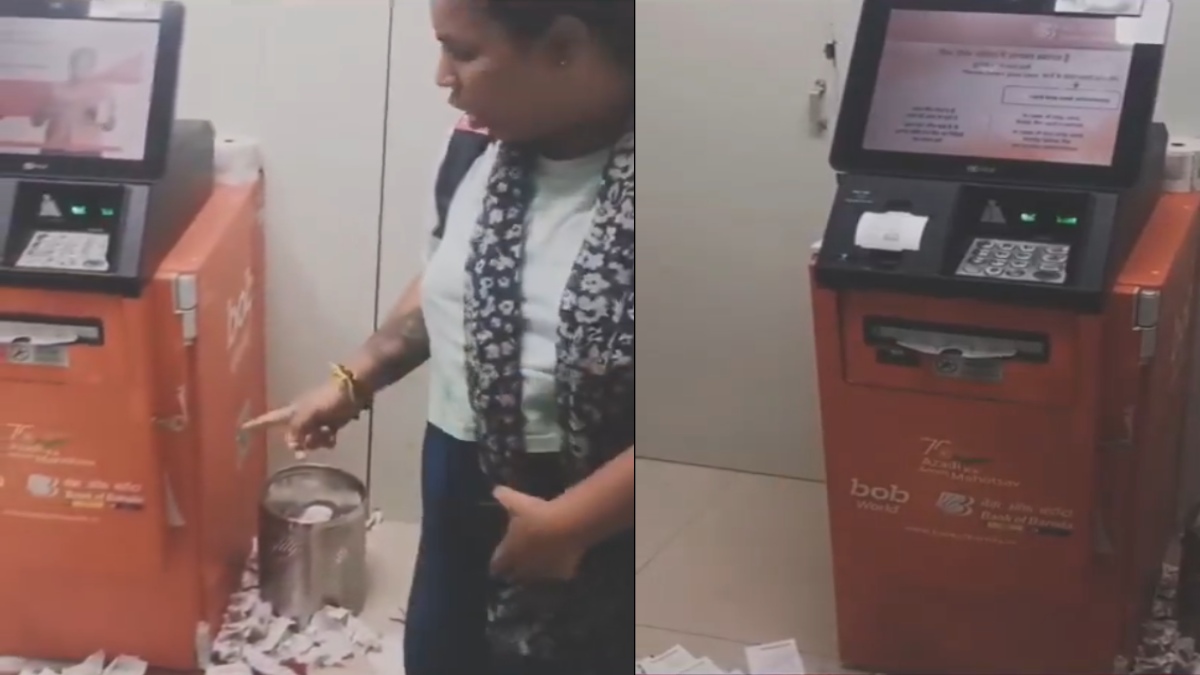
A security breach at Bank of Baroda ATM at Horamavu Agara Main Road in Bengaluru has raised questions on the safety of ATMs to replenish cash. It is reported that the staff who went to the ATM to replenish cash forgot, after they finished the operation, the ATM key.
The ATM machines are constructed with various layers of security to protect cash, customer information and equipment itself. Access keys and other security credentials are therefore sensitive items to be handled carefully and taken into account during the cash replenishment process. Leaving such an item behind, if confirmed, could potentially create an avoidable security risk.
A key to an ATM was left behind, the report said, and ATMs are frequently stolen, tampered with or used for other criminal activities.
Cash replenishment is a routine and highly sensitive operation. The personnel involved in this process should follow established security procedures when accessing an ATM, handling cash and securing the machine after the replenishment has finished. Keys and other access mechanisms should ordinarily be checked before staff leave the location.
If the lapse is confirmed, questions could be raised as to whether the employees involved were in possession of the final verification of the final information. A simple checklist to confirm that cash, keys, equipment and other sensitive items have been secured can be used in case such a problem occurs. What is happening now is that the importance of the security measures being taken on ATMs.
The problem is not just that an ATM might be physically compromised. A misplaced key may raise a number of security matters depending on the type of key, how secure it is and if someone comes to get hold of it and unauthorized. Sensitive access devices are therefore generally monitored and controlled.
Banks frequently work with security services and other companies to manage the cash and maintain the ATM. These operations are dependent on coordination between bank officials, cash-handling personnel, security guards and technical teams. All participants are collectively responsible to manage procedures.
The report also highlights the need for accountability after every cash-loading operation. When an ATM has been replenished, staff will have to make sure the machine is secured and keys and other material are accounted for before leaving the premises. Any discrepancy should be immediately reported to the appropriate supervisory authority.
The security of an ATM is particularly important for customers because the machines provide access to cash and banking services outside of a typical branch environment. Banks need to have strong physical and technological security in ATMs. Even a simple administrative error can cause alarm about the reliability of those security measures.
The Horamavu Agara incident has also raised questions whether the bank’s internal monitoring mechanisms are robust enough. If a key was indeed left behind, the bank would need to know when the error was discovered, who reported it, whether the key was recovered and whether the ATM was inspected after.
As security experts have repeatedly noted, physical security is still an essential aspect of modern banking protection. Although banks are spending billions on surveillance cameras, alarms, electronic monitoring and cybersecurity systems, physical access to machines must also be tightly controlled. At any stage, security weaknesses can undermine well-established protection systems.
It should be noted, however, that a reported security lapse can be as serious as a security breach. There is no evidence (as of now) that the ATM is actually robbed or that customer funds were stolen as a result of the reported incident. The issue at hand is that the key of the ATM has been reported to be left behind and so the risk is that it is left behind.
If an investigation is initiated, authorities or bank officials could check CCTV footage from the ATM location, access logs and establish the sequence of events surrounding the cash replenishment. Such checks could help determine if the key was actually left behind and how long it remained at the location.
The bank will also need to review its standard operating procedures to see if some additional safeguards are in place. Regular staff training, mandatory post-operation checklists and supervisory checks can reduce the chances of the same mistake occurring in the future.
The incident is a reminder to all customers using ATM systems, and one that I do not want to ignore, that customers using the ATM should be on guard for suspicious activity, tampering, or strange people who come to an ATM should be reported to the bank or regulators or authorities and report suspicious activity, or the bank or other authorities to the ATM and not to be ignored.
The incident at Horamavu Agara does raise a much bigger issue about basic security discipline in the banking environment in general. Modern technology can offer significant protection but good security also relies on employees and service personnel working according to routine.
Staff at the Bank of Baroda ATM on Horamavu Agara Main Road, Bengaluru, reportedly forgot to take the ATM key after replenishing cash. How is it acceptable to leave such a crucial security key behind, effectively making it easier for thieves who target ATMs? This is a serious… pic.twitter.com/aLM97IW0bn
— ಸನಾತನ (सनातन) (@sanatan_kannada) August 18, 2026
If the case that the ATM key was left behind is proven, the situation could be interpreted as a warning for greater accountability during cash replenishment and maintenance. Banks carry sensitive equipment and large amounts of cash every day and so the control of access keys and security materials is essential.
Hence the security practices in Bengaluru ATM were not good. No bank or authority would know what happened and if the key was recovered and any other security measures were taken after the said lapse.