The residents of Kasaragod, Kerala have been scared to death after a huge tunnel was discovered under a house when a septic tank was being dug, the residents say. What had been ordinary digging soon became an underground structure and there was fear for the safety of the inhabitants of the house and for what may lie below the house.
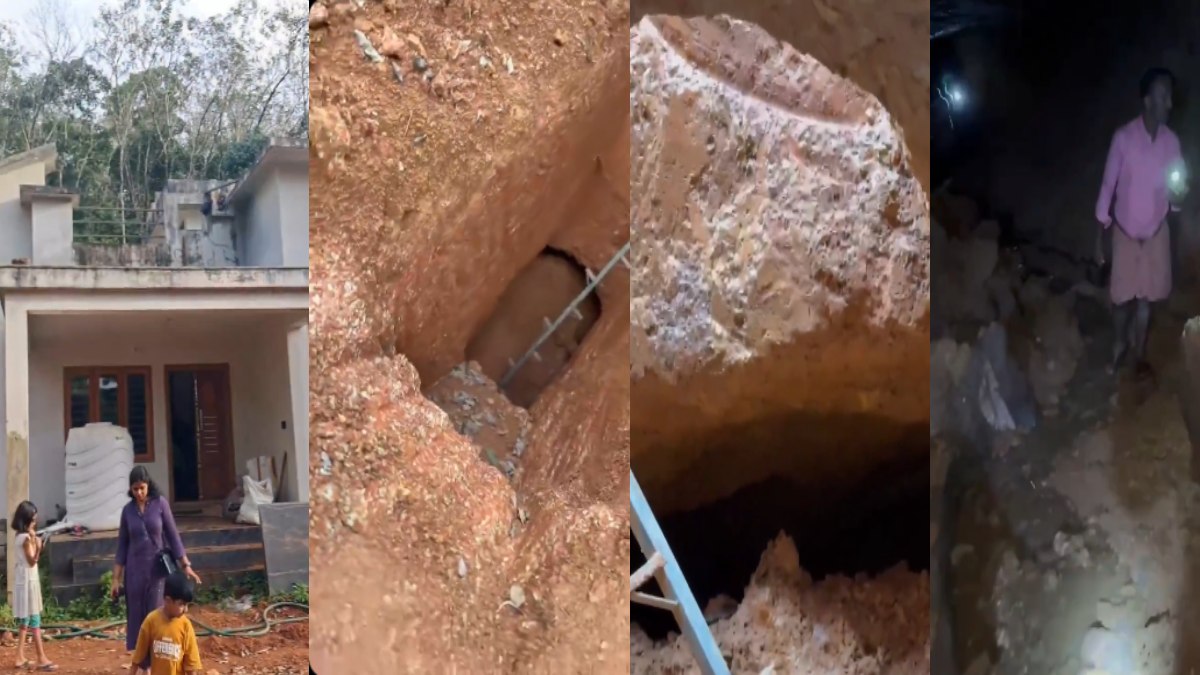
Based on the information on the internet, workers digging a pit in which the septic tank was meant to be constructed had found an opening for an underground passage. The unexpected discovery changed the way they were working and residents were concerned about the structure of the property and about the tunnel.
All the families living in the house have clearly been scared. A hidden underground passage under a residential property is a very rare event and residents are now reluctant to stay inside the home until it is fully tested. They are particularly worried about the stability of the building or ground and that the tunnel could affect the stability of the building further.
At this stage the origin, age and purpose of the tunnel are not known. It would be premature to speculate about why the structure exists or who may have constructed it. A rigorous inspection by the competent authorities and experts would be required to determine if the passage is a naturally formed cavity or an old man-made structure or something connected to previous activity at the site.
Underground discoveries may reveal very little about a property's history. Older buildings, abandoned wells, drainage systems, storage facilities and other underground formations can be hidden for years prior to being revealed during construction or excavation. It has been particularly interesting to find the tunnel large and appearing to be beneath a residential property.
For the residents, the most immediate issue is safety. Underground cavities and passages can weaken the soil above them in some way depending on their size, depth, construction and condition. If the tunnel is structurally unstable, continued excavation or moving about the area could potentially make them even more risky. Residents should not enter the tunnel or carry out further digging until knowledgeable professionals are working on the site.
The discovery also underscores the need to be cautious during excavation of homes and to be mindful when working around homes. Even relatively simple tasks such as digging a septic tank pit can lead to underground features that were hitherto unknown to property owners. At least once excavation work has started, the stability of the excavation area and if further precautions are required in the area might need to be determined before it can be carried out, authorities will need to take action.
Residents’ fears are understandable, too, because there is little information on the underground passage. An unexplained tunnel naturally raises questions about its history and purpose. But unusual discoveries can have ordinary explanations that only come through after technical examination. Experts can study the construction materials, dimensions, direction and surrounding soil to establish more about the structure.
If the tunnel is found to be man-made, we could investigate how it was constructed and when. Property records and others from the property and surrounding area could also be useful. Local residents or older property records might provide some clues to the past use of the property and how things used to be if those things are no longer visible today.
It is also a possibility that other underground structures may exist nearby. If the tunnel is part of a larger network or connected to another cavity, then its extent should be determined before any construction is resumed. A professional survey could determine how long, deep and how far it could extend without putting people at risk.
Residents may understandably resist such assessment on this part of the property and stay away from it. Going into an underground structure without proper equipment or professional oversight would be dangerous if structural instability, poor air quality, water accumulation or other hazards were to occur.
The incident has also attracted curiosity among people in the region. A tunnel being discovered beneath a normal house is unusual enough to draw attention at least in this day and age because it was found accidentally during a normal household project. What was in turn a normal septic tank excavation has turned into an investigation into an unanticipated underground feature.
For authorities, the facts will be more useful than speculation. A technical inspection should be done to check whether or not the tunnel is a threat to the house or any neighbouring property. Engineers should also investigate the ground surrounding the excavation to see whether the foundation is weakened or if any additional reinforcement or safety measures are necessary.
The incident is a reminder that underground conditions are not always visible from the surface. Properties may contain old foundations, wells, drainage channels, cavities or other structures that have been covered over or forgotten. This is especially relevant in older settlements where land may have been used or modified many times over several generations.
Moreover, the septic tank project itself may also need to be postponed until the area is declared safe. If excavation is continued without understanding the tunnel structure, the safety of ground movement would be more likely. Residents and workers would therefore need to wait for proper technical guidance before they would restart construction.
As more information is gathered, the major questions for the Kasaragod discovery would probably include the origin, purpose, dimensions and structural condition of the tunnel. It could also be investigated to find out if it is of historical significance or is just an old underground feature from some previous construction on the property.
A massive tunnel has been discovered beneath a house in Kasaragod while digging a pit for a septic tank. The residents are now scared to stay in their own home. pic.twitter.com/8yJQIRKuZ7
— ಸನಾತನ (सनातन) (@sanatan_kannada) August 18, 2026
The discovery itself is a rather intriguing mystery as well as a potential safety concern. That it was found beneath a residential house has understandably made the occupants feel uncomfortable about staying there. So a professional assessment can only be made with that building and the surrounding land to see if it is structurally safe.
So the Kasaragod tunnel discovery turned an ordinary septic tank excavation into an unexpected local incident. Despite the curiosity, we feel that we are doing this to the best of our ability to keep people and workers safe. In the absence of realization of the tunnel condition and its origin, safety is still crucial.
When officials or technical experts examine the underground structure, they’ll have more to say about how long the tunnel has been in place, why it was built, whether it extends beyond the property and most importantly, whether it poses any danger to the house or people who live nearby.