Even as parts of Bengaluru struggle with various civic problems, a significant drinking water crisis has broken out in Rajajinagar, revealing the daily struggles of thousands of its inhabitants. As auto drivers in the city are being reported to be on a line for fuel as shortages multiply, people in Chamundi Nagar encounter an elemental crisis: access to drinking water.
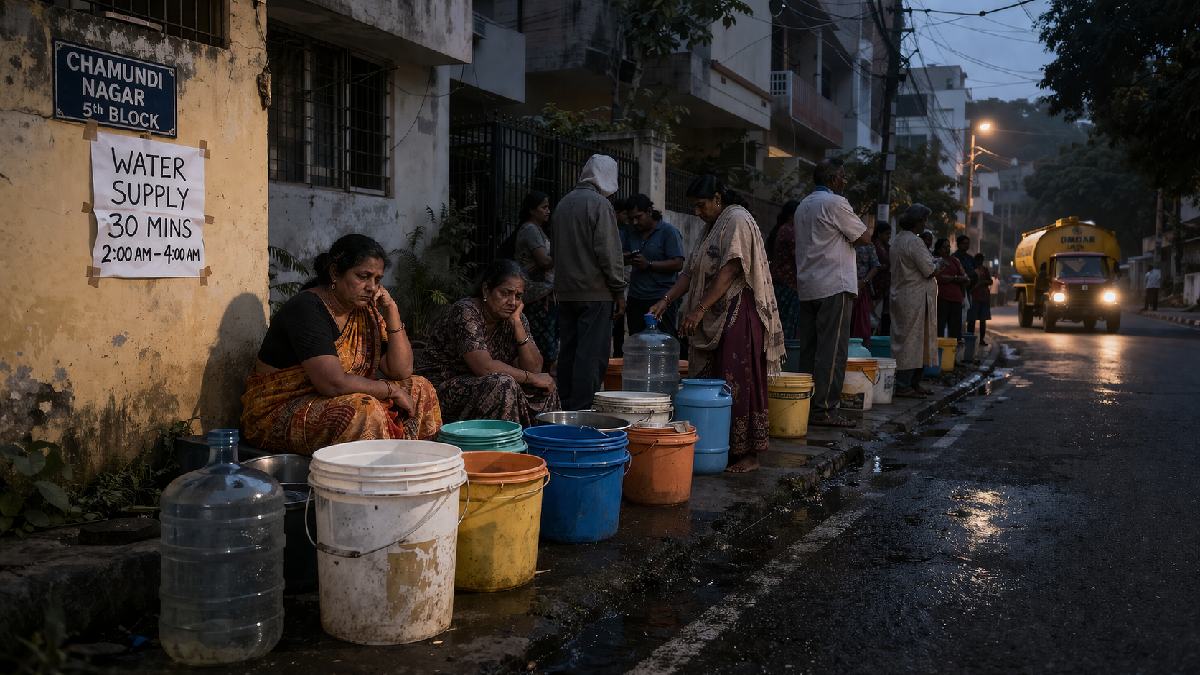
Located in the 5th Block of Rajajinagar, Chamundi Nagar (Ward No. 130) is home to more than 3,000 families. Being in the centre of the city, however, the locality is experiencing what many have found to be an abysmal scarcity of water supplied by the Bangalore Water Supply and Sewerage Board (BWSSB).
Residents say that the water supply has become uncharacteristically poor and unpredictable, and so they live in fear. Waters are often only provided for 30 minutes per day, and usually very inconvenient hours (around 2:00 AM, or even as early as 4:00 AM), according to locals.
This has required at least one person from every home to stay awake at night just to fetch water. This narrow window is missing, which leads many to be without water the entire day, making their most basic need a daily challenge. The situation has deteriorated so badly that many families have no choice but to depend on private water tankers.
Residents can see at least three tanker loads sold weekly, making the financial burden extremely high on a community level. This is added to the regular water bills that they continue to pay to the BWSSB, though they are often denied even a reliable supply. Anger is mounting among residents who cite the irony of being charged at little more than the price of water that is in short supply, citing the irony of being charged for the water they are getting.

Many complained of what they say is neglect by authorities and of no accountability. It is exacerbated by prices for tanker water, which is increasing – adding another burden to budgets too tight to handle. Locals have also condemned elected representatives, as they claim that even though words may be promises, after elections, there seems to be very little follow-up or action in place. There’s been no long-term solution, which only fueled public discontent.
“The crisis is emblematic of a larger problem in city infrastructure in urban-growing cities such as Bengaluru, where there isn’t enough water as demand exceeds supply. Due to summer conditions also most likely to exacerbate this situation, immediate intervention has become necessary.
Residents of Chamundi Nagar have issued a warning, stating they will take to the streets in protest if the authorities are unable to bring about a fixed solution immediately. So no longer is it a luxury to them to have access to clean drinking water; it’s a basic human right denied to them at present. The story is a stark reminder of the critical imperative of sustainable drinking water management and better civic governance in one of India’s fastest-developing urban cities.