At least 36 girl students fell ill after allegedly eating a mid-day meal containing detergent powder in a government school in Bihar’s Nalanda district, raising fears over food safety and supervision in school kitchens. The incident occurred on Tuesday afternoon at the Middle School in Parasi, which falls under Noorsarai police station’s jurisdiction.
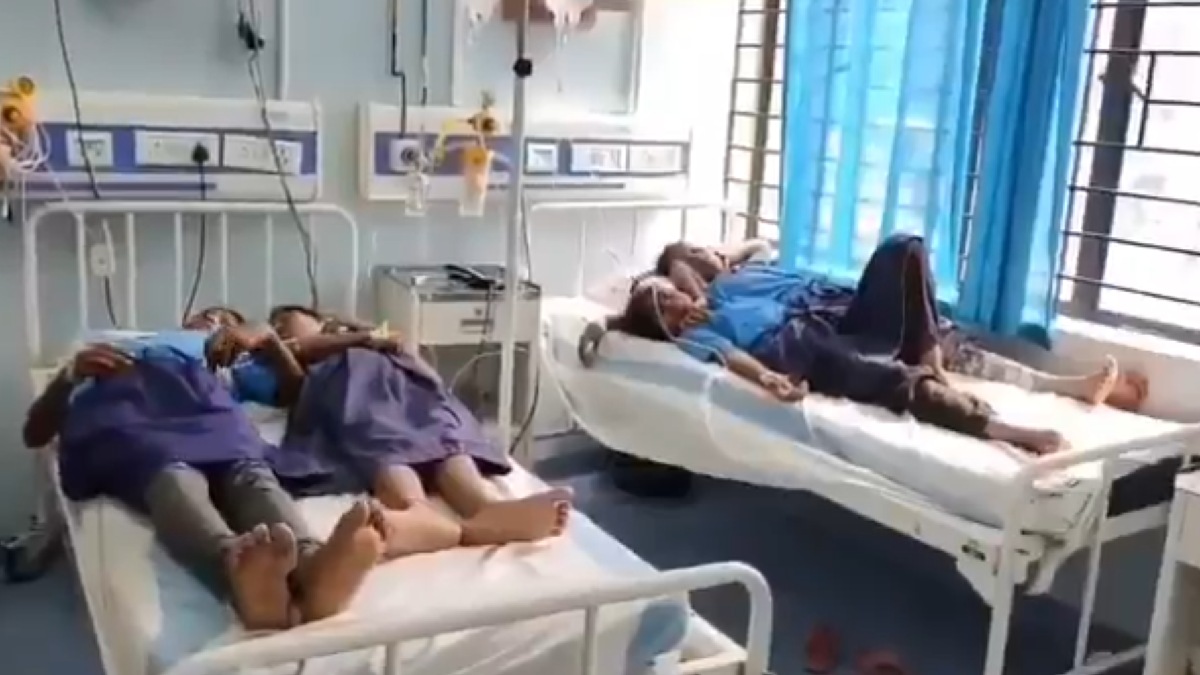
According to officials and local accounts, the students had gathered for their usual mid-day meal when several of them started complaining of dizziness and vomiting. The meal was soybean rice and was provided by an NGO according to the menu, and it was prepared and served by them. What might have appeared to be a typical lunch quickly became an emergency when students began feeling sick after eating.
School principal Shailendra Kumar Singh said some students had already eaten the meal when others said the food did not contain enough salt. The containers containing salt and detergent powder were said to have been kept inside the kitchen. But the cook mistakenly thought the detergent powder was salt and added it to the food.
The alleged mix-up has raised serious questions about the way ingredients and cleaning materials are stored and handled in school kitchens. Detergents are not meant to be kept alongside food ingredients because accidental mix-ups can potentially be fatal. The incident has thus stressed the need for proper labelling, separate storage, and strict supervision in facilities where meals are prepared for children.
Several students, soon after eating the meal, started to complain of dizziness and began to vomit. First aid to the affected children was provided by school officials. But still, some of them felt unwell, and they were taken to Biharsharif Sadar Hospital for further treatment.
The affected students were seen by doctors at the hospital, and their condition was monitored. Civil Surgeon Dr. Jay Prakash Singh visited the hospital and reviewed the situation. According to officials, all the children were stable and out of danger, so their families and school authorities had some relief.
The Bihar Rural Development Minister Shravan Kumar traveled to the hospital and met the affected students and talked to doctors about their treatment and condition. The decision to visit the hospital confirmed the seriousness with which the administration was dealing with the incident.
Kumar said an inquiry would be conducted to determine why the lapses occurred during the preparation and serving of the mid-day meal. The salt and detergent storage process, kitchen staff, food preparation procedures, and the school's supervisory systems will be investigated.
Mid-day meals are essential in government schools because they provide children with nutrition and an incentive for regular attendance. Because so many children eat these meals, food preparation must be done to the highest standards of hygiene and safety since they will be eaten by many. Even small lapses can be big when it comes to serving food to dozens of students.
The Nalanda incident has thus renewed the need for strong safety protocols in school kitchens. Food ingredients and cleaning products should be stored separately, clearly labelled, and handled by trained personnel. Kitchen workers should also have regular training on food safety, and school authorities should be required to check meals before serving them to students.
Why Bihar always ??
— Oxomiya Jiyori 🇮🇳 (@SouleFacts) August 18, 2026
In Bihar's Nalanda, when extra salt was demanded for the mid-day meal, allegedly detergent (Surf) was given instead. More than 20 children fell ill and were admitted to the hospital. pic.twitter.com/08gSUJET8b
The children were not injured, and their health is stable, but the incident has caused parents and the local community great fear. Parents send their children to school expecting them to receive safe food and a secure learning environment. So when these basic safeguards are not provided at all, confidence in the school meal system will be undermined.
The investigation will have to establish exactly how the detergent ended up in the food and whether the incident was the result of an accident or if something else was wrong. And if that’s the case, what can be done to prevent it from happening again?
So far, it is the health and well-being of the affected children that is the priority. It is a reality that we have to be vigilant in school meal programs: procurement and storage of ingredients, cooking, quality checks, serving. That is so that these protections are always followed to protect the children who depend on them every day.