The dispute over Tamil Nadu’s state anthem Tamil Thai Vaazhthu ceremonial order is approaching the state government’s advantage as the Madras High Court has said it is not a constitutional imperative for the government not to sing the state anthem at the first time in official events. The court’s observation has provided some clarity in a political and constitutional issue which has become quite a big political and constitutional headache in Tamil Nadu.
The issue is related to the interpretation of a circular issued by the Union Ministry of Home Affairs on Jan. 28. The circular had raised a storm of debate over the order of Vande Mataram, Jana Gana Mana and Tamil Thai Vaazhthu to be performed at government functions.
The Additional Solicitor General of the Centre said that the Home Ministry's instructions were regarding the sequence between Vande Mataram and the national anthem when both are performed at the same event.
According to the Centre's clarification before the court, the circular does not prescribe any order for state anthems. This means that the Tamil Nadu government is not prevented by the circular from having Tamil Thai Vaazhthu before Vande Mataram and Jana Gana Mana during official functions. The Madras High Court has left the case until now and will give its verdict.
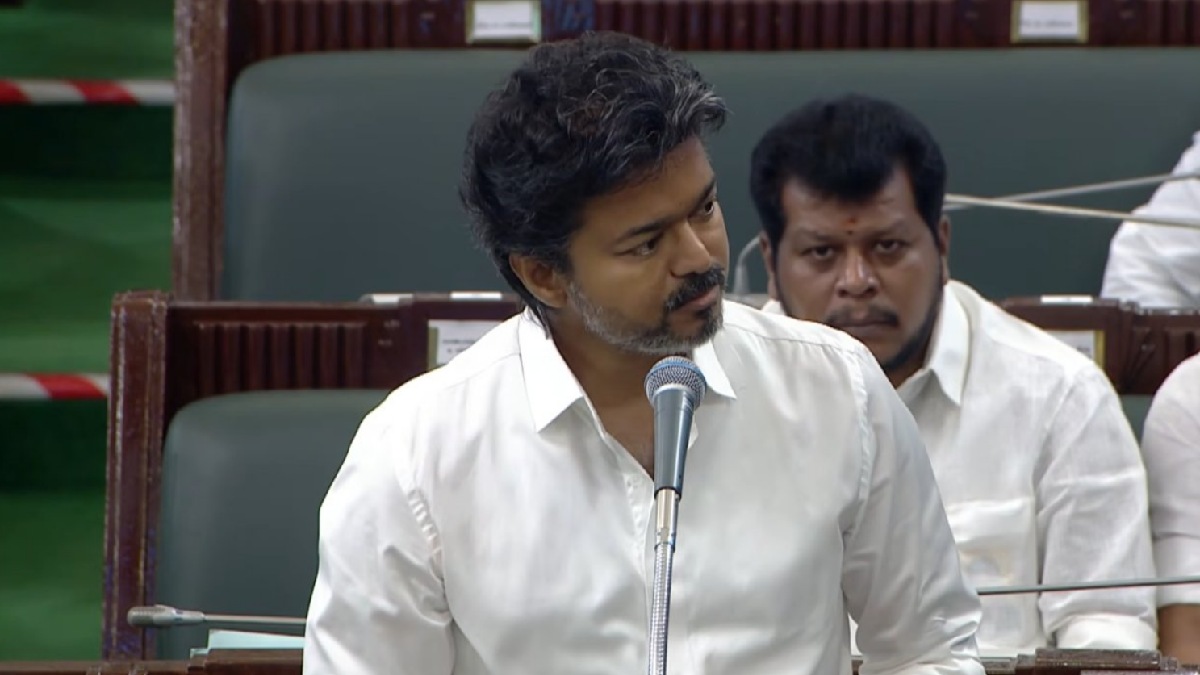
The controversy has its roots in Chief Minister Vijay's swearing-in ceremony on May 10, 2026. Tamil Thai Vaazhthu was performed following Vande Mataram and the national anthem, hence it was the third song in the ceremony. It was not taken as the usual practice by people in the ceremony and was later challenged in court.
On January 28, a Public Interest Litigation was filed against the Home Ministry circular. The petitioner claimed that changing the official ceremonial practice in Tamil Nadu had caused public concern and raised questions about the dignity of Tamil Thai Vaazhthu. Not only the order of songs but the symbolism of the state anthem and old customs which were still practiced on government official occasions were at stake.
The dispute deepened in the run-up to Independence Day when it came to the time of Independence Day. On August 10, the Tamil Nadu Assembly unanimously passed a resolution that Tamil Thai Vaazhthu must be sung first at all government functions. That resolution underlined the state's position that the state anthem should be in traditional order of precedence at all official events for the purpose of the state anthem.
The issue had also attracted attention after a convocation ceremony at Manonmaniam Sundaranar University on July 28. Political leaders said that instructions given by the Raj Bhavan included Vande Mataram as first, followed by the national anthem, and Tamil Thai Vaazhthu. The sequence caused more criticism and added another dimension to the already growing dispute between the state government and Governor RV Arlekar.
Earlier, on August 6, 21 MPs wrote to Governor Arlekar about the issue, expressing concern about the treatment and ceremonial placement of Tamil Thai Vaazhthu. Their intervention showed the extent to which the issue had moved on from simple procedural problems and also became an important political issue.
The Madras High Court’s observation now gives an important understanding of the Centre’s circular. The court has made clear that the circular only addresses Vande Mataram’s relation to Jana Gana Mana and so cannot be read automatically as an instruction on Tamil Thai Vaazhthu to be performed after the national anthem.
For the Tamil Nadu government, this is an important observation because it supports the case that there is no central directive in place that prevents the state from following its preferred ceremonial order. But the court’s final verdict will be closely watched because the legal proceedings are about government protocol, state traditions and the interpretation of central instructions.
The controversy also underscores the deeper context of national and state symbols at official events. While Jana Gana Mana is the national anthem of India and Vande Mataram is the national song, Tamil Thai Vaazhthu occupies an important cultural and official position in Tamil Nadu. So the discussion over their ceremonial sequence has been deeply political and emotional.
With the verdict reserved, attention will now turn to the Madras High Court's final ruling. But until then, the court's observation that there is no bar under the Home Ministry circular to singing Tamil Thai Vaazhthu first gives the Tamil Nadu government a significant legal and political relief in a controversy that has continued for several months.