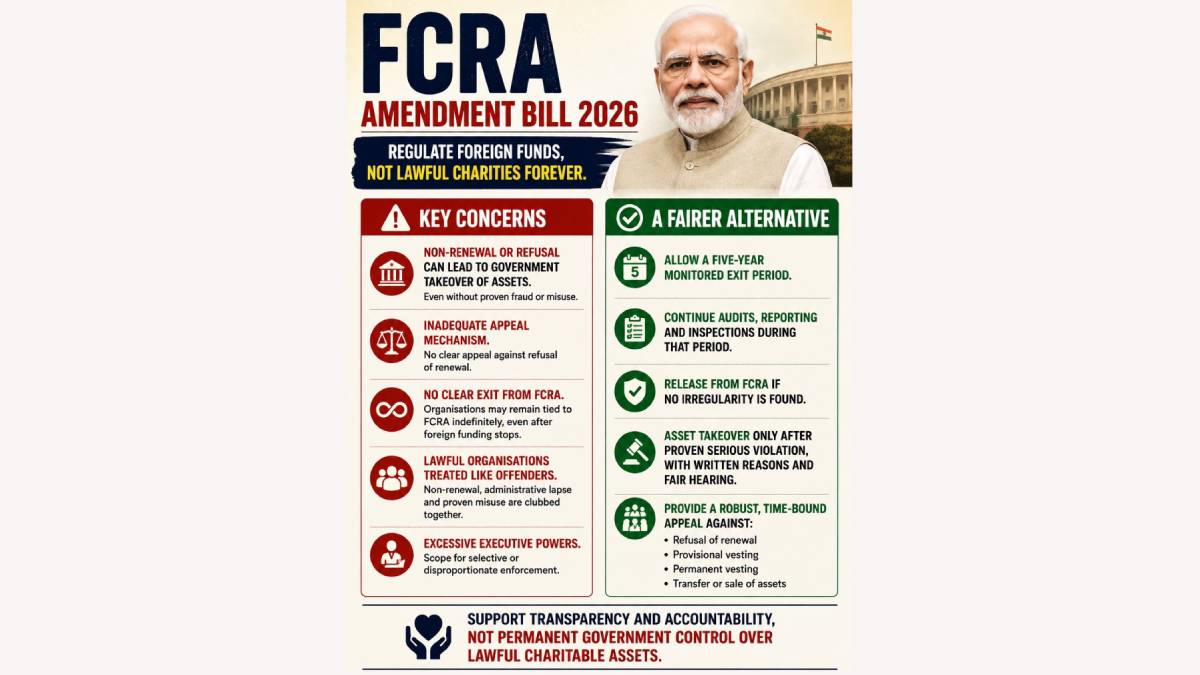
They have not been satisfied with the status of the bill and have been calling for the complete withdrawal of the Foreign Contribution (Regulation) Amendment Bill, 2026, and the Centre has taken the decision to send the bill to a Joint Parliamentary Committee (JPC) for further debate.
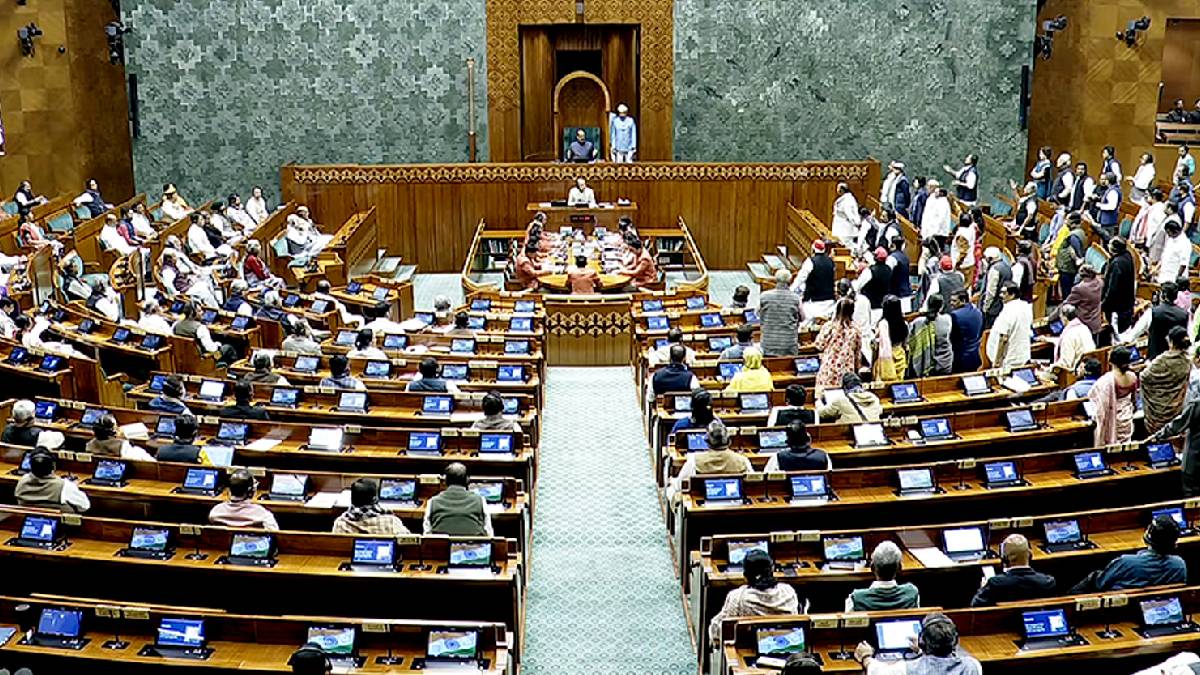
The government’s decision to look at a JPC as an alternative is seen as a way to address the concerns about the proposed amendments to a wider political consensus and build the consensus. But Congress and some other Opposition parties have continued to maintain that simply referring the bill to a parliamentary panel doesn’t address their fundamental objections. They would rather see the legislation withdrawn entirely than the bill be considered by a JPC in its current form.
FCRA Amendment Bill, 2026, was introduced in Lok Sabha on 25 March. Since then, the proposed legislation has been vehemently opposed by various political parties and organisations. The present Bill aims to change the law governing foreign contributions received and utilised by the people, associations and non-governmental organisations.
The Centre’s willingness to refer the Bill to a JPC comes at the end of the Monsoon Session of Parliament. Reports indicate that the government has been engaging with Opposition parties in an attempt to break the deadlock. Some parties have welcomed in-depth parliamentary scrutiny, but Congress and Trinamool Congress still seem opposed to the JPC option and have insisted on complete withdrawal of the legislation.
Christian organisations and other civil society organisations have also been concerned and have expressed concerns about it affecting those working in education, healthcare, charity and social welfare. Church representatives were also in contact with Union Home Minister Amit Shah and expressed their views on the proposal.
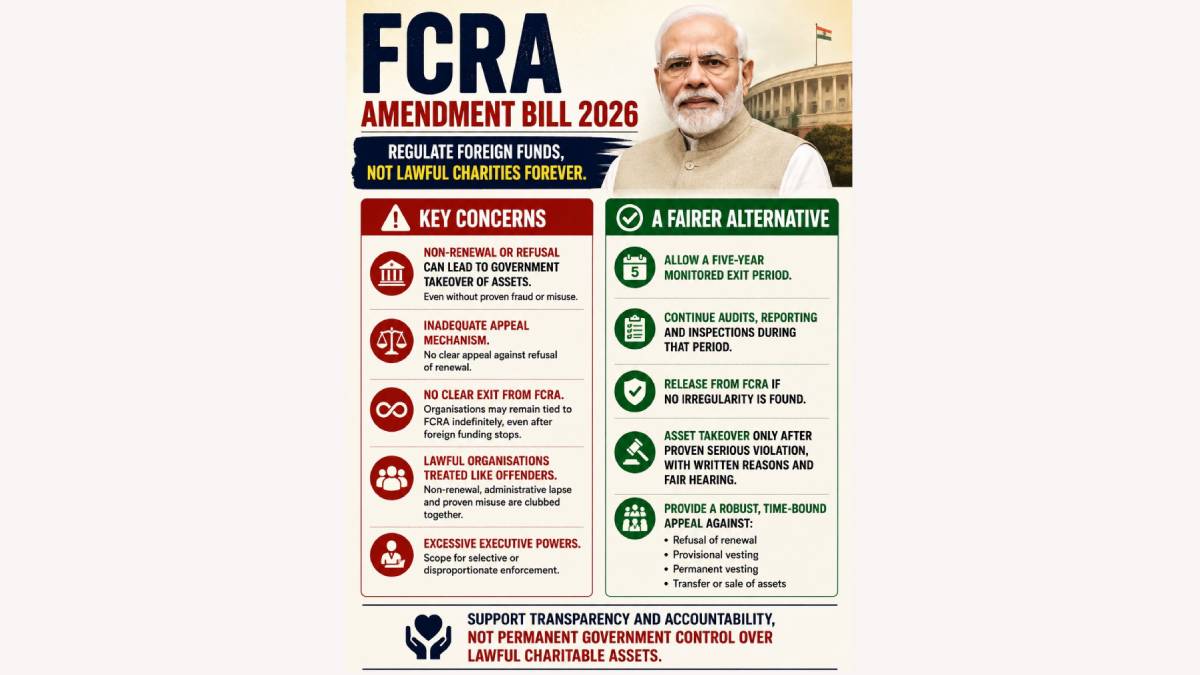
One of the key issues in the discussion is the powers of government in dealing with organisations whose FCRA registration is cancelled or not renewed. The changes are likely to be a huge blow to organisations dependent on foreign contributions for their operations.
The government has argued that the legislation is going to help to make foreign funding transparent and accountable and regulate foreign investment transparently. The Centre has also attempted to explain why changes could affect groups and/or social organisations most at risk.
The Union Home Minister Amit Shah has assured Mizoram Chief Minister Lalduhoma that FCRA provisions will not be implemented retrospectively, and this is part of the ongoing discussions on the Bill.
The issue has also taken on political dimensions in the states where religious and civil society organisations have voiced their concerns on the proposed amendments. Recently, the Tamil Nadu Assembly passed a resolution to withdraw the FCRA Amendment Bill in its present form, in response to the Centre’s demand.
So Congress’s position is clear: a JPC referral is not a substitute for withdrawal. The party and its Opposition allies say that the Bill should be withdrawn first before any consideration of changes to the FCRA framework.
The government’s JPC proposal, however, would allow for further discussion on the legislation and consultation with stakeholders and a discussion of specific provisions. Parliament can hear and assess the implications of proposed changes before Parliament is in a position to take a final decision.
The FCRA Bill is yet another major source of friction between the government and the Opposition. The Centre is seeking a mechanism to move the legislation forward while Opposition parties are saying that the Bill should be scrapped in its present form.
The immediate political question is whether the government’s decision to send the FCRA Bill to a JPC will create space for compromise or whether Congress and other Opposition parties will continue to oppose any further movement of the legislation.
For now, Congress is still demanding total withdrawal and has said that parliamentary scrutiny alone does not satisfy its criticisms of the FCRA amendments, and so it will not be enough to resolve its concerns on the proposed FCRA amendments.