Catholic bishops have again called on the government to withdraw changes to the Foreign Contribution Regulation Act (FCRA). They say the legislation will add additional pressures on organisations working in education, healthcare and social services, where it could put them at risk too. The demand comes at a time when the government and several Christian organisations are at odds over India’s foreign-funding regulations.
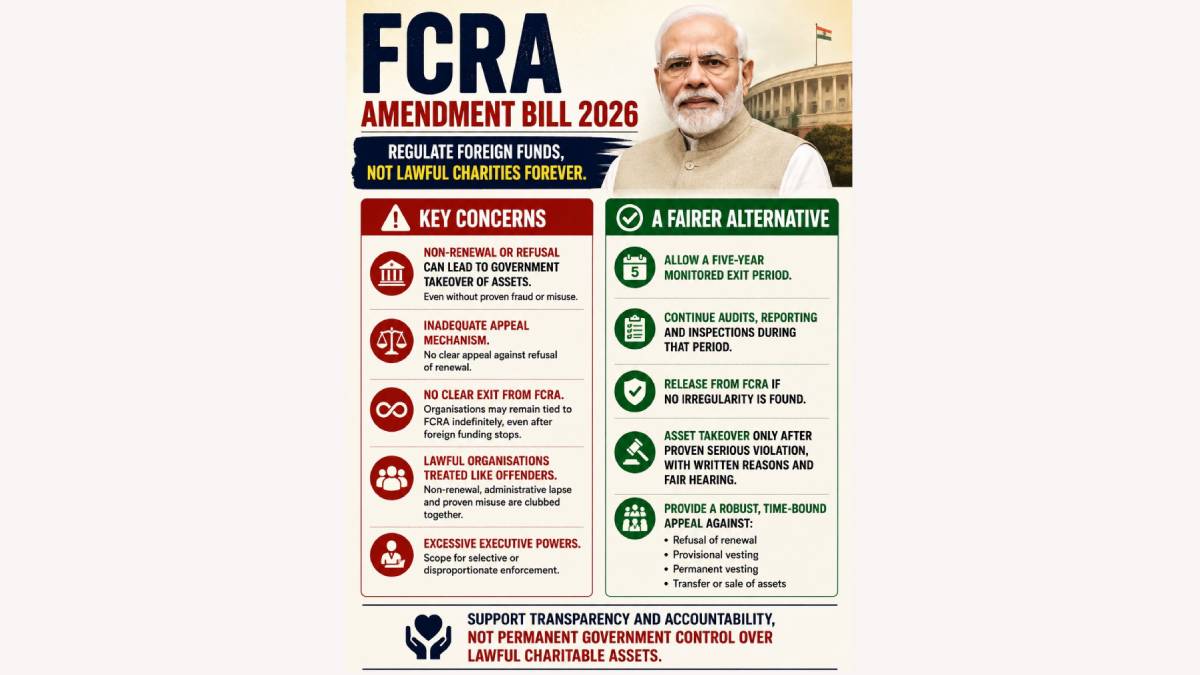
The bishops also expressed concern about violence that they described as being motivated by intimidation and mob attacks towards Christians. They encouraged the government to ensure the safety of communities and institutions and the implementation of the proposed FCRA legislation.
FCRA regulates acceptance and use of foreign contributions by individuals, associations and organisations in India. In India, foreign money is received and used according to Indian law, and the money must support the country’s interests.
However, FCRA compliance has become a key operational issue for charitable and religious organisations. Organisations that receive foreign contributions must comply with regulations in terms of registration, reporting, utilisation of funds and financial disclosure.
The Catholic bishops’ latest intervention reflects the continuing debate over how foreign contributions should be regulated while legitimate charitable and social-service organisations can operate.
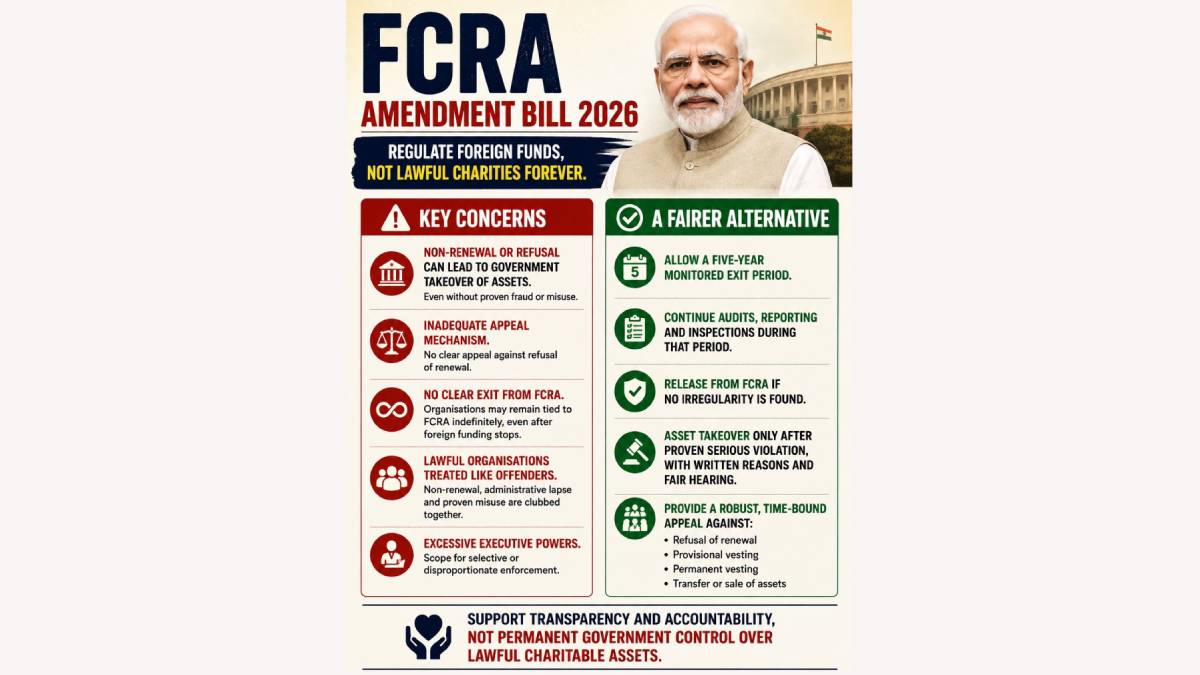
The bishops have stressed the long-standing contributions of Christian institutions to Indian society, especially education and healthcare. Catholic-run schools, colleges, hospitals and social services have operated across India for over a century, serving community members in urban and rural places.
The bishops said that these institutions have provided services to people of all backgrounds and have played a significant role in helping people irrespective of their background. Regulators should not be biased against those organisations involved in legitimate charitable work and regulatory changes should not, therefore, disrupt their activities, they said.
The FCRA has been a politically sensitive issue because foreign funding can be about transparency, accountability, national security and civil society organisations’ independence. Foreign contributions must be regulated so as to prevent misuse of money and for funds to be used for the purpose for which they are received, the government has repeatedly maintained.
Supporters of stronger regulation say tighter regulation is needed for financial issues to be avoided and organisations receiving money from abroad to be transparent. But critics have said that too much regulation would make it harder for legitimate non-governmental organisations and charitable institutions to conduct their work.
The Catholic bishops’ demand therefore places the proposed legislation in this larger debate over the balance between regulatory oversight and the operational freedom of civil society organisations.
The bishops also linked their concerns to the overall security climate facing the Christian community. Violence and intimidation allegations are politically sensitive and would need to be seen in terms of specific incidents, police investigations and evidence.
The issue has particular relevance for Christian institutions that heavily rely on foreign donations to fund charity programmes, healthcare initiatives, education and humanitarian work. Any changes to the regulatory framework could impact the way these organisations receive and use overseas funds.
At the same time, any organisation that receives foreign contributions is subject to India’s legal and financial requirements. Transparency in funding, proper accounting and compliance with statutory rules are core to maintaining public trust.
The latest appeal from Catholic bishops indicates that the FCRA remains a major flashpoint between the government and sections of India’s Christian community. But the conflict goes beyond funding; it is also about religious freedom, civil society activity, institutional autonomy and government oversight.
The government's response to the bishops' demand will be closely watched as talks around the proposed legislation continue. If the government withdraws or changes its approach or consults more closely with the organisations dependent on foreign involvement, the outcome could affect the relations between the government and organisations needing foreign assistance.
For Christian organisations, the priority is likely to be making sure that the legitimate charitable activities in education, healthcare and social welfare do not suffer from any disruption. For the government, the challenge is to keep close track of foreign funding and to ensure that all legitimate organisations can also operate within the law.
And the renewed demand by Catholic bishops so far keeps the FCRA debate in the national spotlight, with regulatory accountability and the functioning of charitable institutions at the centre.