There are water shortages in some parts of Delhi in the coming days, as the water level at the Wazirabad barrage remains dangerously low despite the release of more Yamuna water to the national capital.
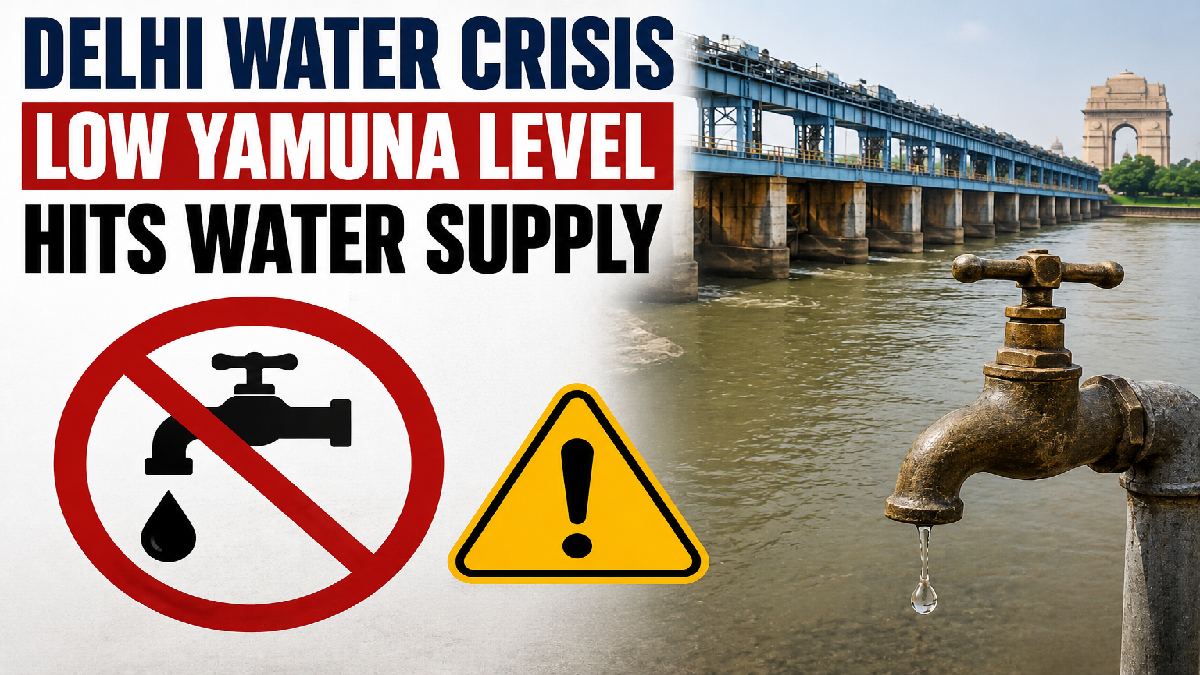
According to officials, the water level at the Wazirabad barrage was nearly 669.5 feet on Wednesday, well below the normal level of 674.5 feet. The Haryana government stated 979.5 cusecs of water had been released through the Carrier Line Canal (CLC) and Delhi Sub-Branch (DSB) canals managed by the Delhi Jal Board, but the supply situation has not improved yet.
The Delhi Jal Board (DJB) confirmed that water production at two of the major treatment plants, Wazirabad and Chandrawal water treatment plants, has been significantly reduced due to a lack of raw water from the Yamuna River.
The Wazirabad Water Treatment Plant, which has an average production capacity of 131 million gallons per day (MGD), and the Chandrawal plant, which has 94 MGD, are currently working below normal capacity. Water output at both facilities has reportedly dropped by nearly 25 to 30 percent and the city’s overall water supply is significantly diminished.
The disruption will impact a number of localities in North, West and parts of South Delhi. The most likely areas to get supply shortages will be:

- Civil Lines
- Hindu Rao Hospital area
- Kamla Nagar
- Shakti Nagar
- Karol Bagh
- Pahar Ganj and NDMC areas. Parts of the Cantonment and adjoining areas
The DJB has not specified when the normal water supply is expected to resume. Delhi's total daily drinking water production (which is usually between 990 and 1,000 MGD, including tubewell supply) has declined by almost 70 to 100 MGD, officials said.
A senior DJB official said that while Haryana has released additional water into the canals, the capital requires adequate water levels in the Wazirabad pond through the Yamuna River to properly treat and supply.
The water in the two canals has seen some increase, but it may take nearly three days to reach the treatment plants,” he said. “Until water levels return to normal, the plants are likely to continue operating below capacity.
Meanwhile, Delhi government officials confirmed that discussions are ongoing with the Haryana government to increase the supply of raw water and other aspects of the supply of fresh water to help the city with water supply to solve the problem.