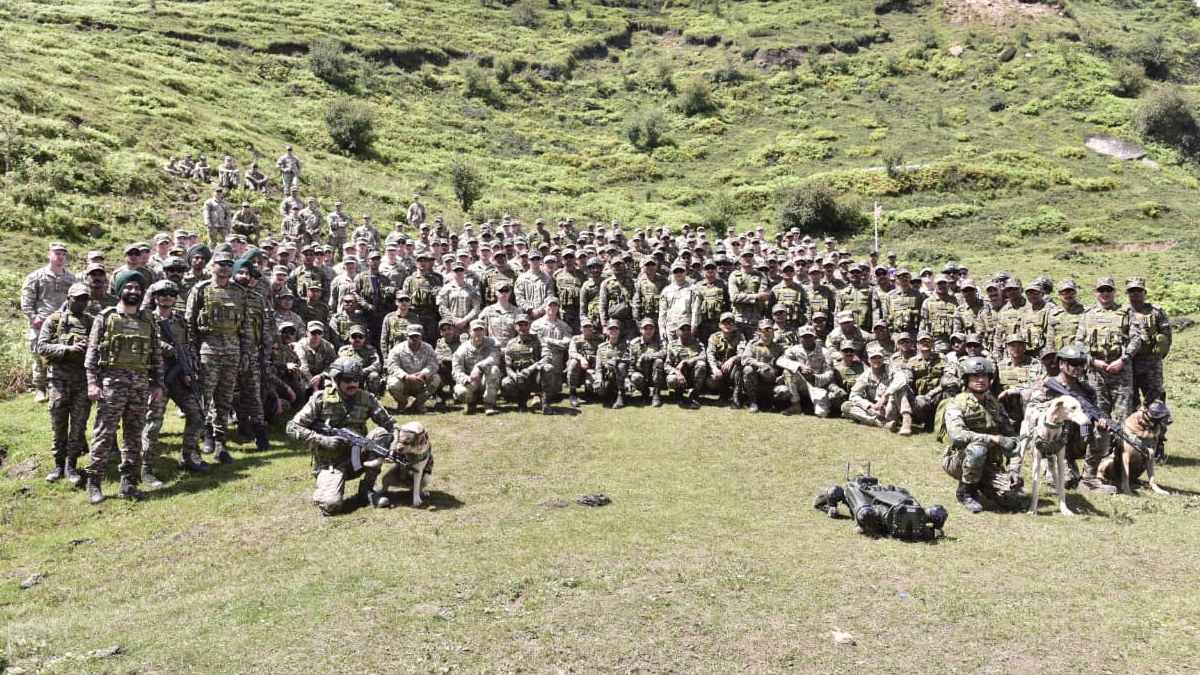
In Auli in Uttarakhand, Indian and US Army personnel conducted a joint counterterrorism training exercise as part of Exercise Yudh Abhyas 2026 in which they conducted joint counterterrorism work in close quarters based on coordinated operations in close quarters.
The training included building-clearance and room-intervention drills to simulate situations that soldiers may have to work in close quarters. This exercise showed how assault teams and specialised personnel can work together in conjunction to ensure the success of the mission and was an exercise that showed how modern technologies and specialised assets can work in conjunction with military operations.
The drill brought soldiers from Indian and US armies together in a structured training setting to enhance professional collaboration and interoperability. Building-clearance exercises are meant to expose troops to the challenges of working in and around structures and to what it means to communicate effectively (communication, coordination and situational awareness) and to be placed in such structures.
By collaborating in a joint effort and understanding each other’s procedures, capabilities and ways of working, all of which were made possible by the activity.
Specialised resources were used in the exercise - drones, robotic dogs, military canines and snipers - to show that modern military training is in good hands. Uncrewed aerial systems can also provide situational awareness and robotic systems are capable of making sense of situations where sending people forward may be more hazardous. Canines are still an important specialised capability in security operations and trained sniper teams can provide watch and support in case of complex operational environments.
The training scenario was structured around building-clearance and room-intervention drills (e.g., in which troops are able to practise coordination in a controlled setting). Such exercises enable troops to see how different elements of a force can work together and respond to rapidly changing circumstances. Professional exchanges, coordination training and mutual knowledge between the two armies were the focus of the exercise during the course of both armies’ participation.
The American troops also met Indian troops and assessed the resources and capabilities of the exercise. Those interactions allowed both troops to get to know the techniques, equipment and operations of the other troops as well. Professional interaction is important in bilateral military exercises because troops know each other's systems and procedures outside the formal training stage.
Exercise Yudh Abhyas is part of India-US defence cooperation. Joint exercises allow the armed forces of both countries to train together (in different circumstances) and to coordinate while planning for future missions. The exercises have been conducted in different formats to enhance tactical awareness and communication and interoperability.
The 2026 training at Auli also outlined the role technology plays in counterterrorism preparedness. A military mix of conventional military personnel with drones, robotic systems, trained canines and other specialized capabilities reflects the growing emphasis on integrating multiple resources into coordinated operations. In a controlled setting troops can learn these capabilities and how different teams and technologies complement each other.
The exercise provided a platform for both countries' personnel to meet for professional relationships. Military interoperability is more than equipment compatibility: it is communication, shared understanding and familiarity with operational procedures. Training practices like Yudh Abhyas enable soldiers and commanders to practice from one another and learn from each other in a structured fashion.
Uttarakhand | US and Indian Army soldiers trained together in counterterrorism operations during Exercise Yudh Abhyas 2026 at Auli, conducting a building-clearance and room-intervention drill designed to replicate close-quarter operational scenarios.
— ANI (@ANI) September 17, 2026
The drill featured assault… pic.twitter.com/hI8VhQvT5S
The joint counterterrorism drill at Auli was therefore for many purposes, a training exercise that interlinked practical and professional exchanges between the Indian and US armed forces.
Specialised teams and technology also added to the complexity of the exercise, and interaction between troops strengthened the understanding of each side's capabilities. As Exercise Yudh Abhyas 2026 continues, the training activities demonstrate that cooperation, interoperability and preparedness of both forces are important to the working environment.