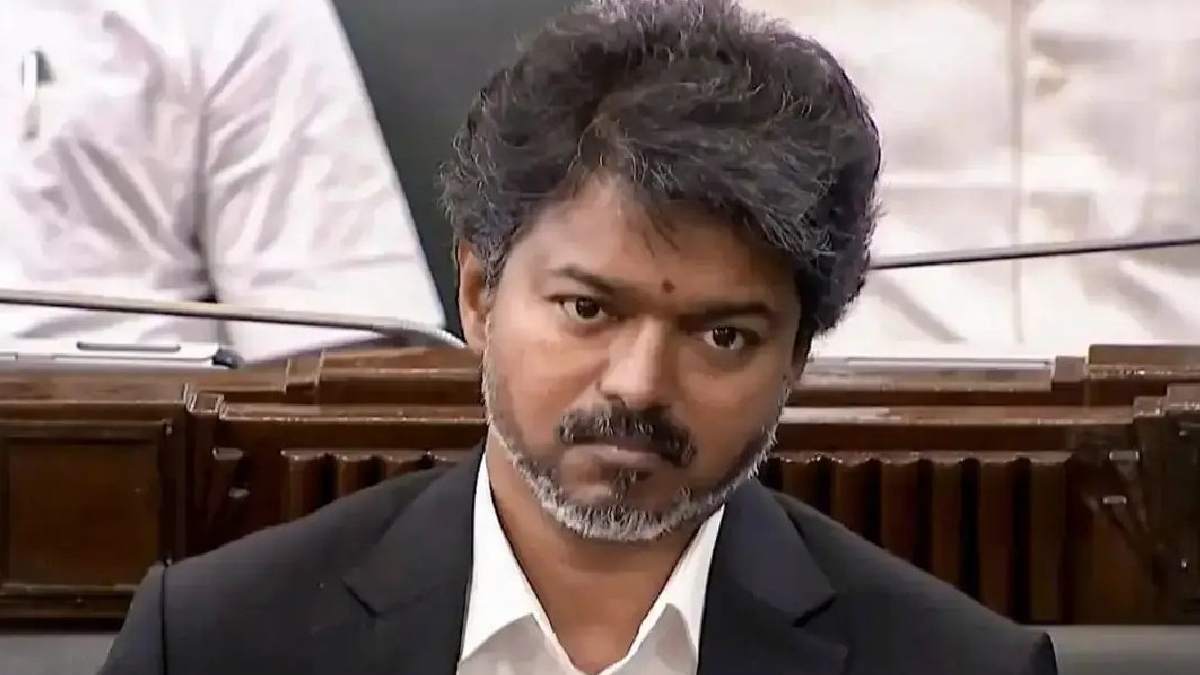
Political discussions in Tamil Nadu have been on a boil due to speculation that in the future there could be by-elections between 10 AIADMK legislators that could completely change the political landscape of Tamil Nadu and even potentially strengthen the chances of actor-turned-politician Vijay's Tamilaga Vettri Kazhagam (TVK) after the state's political future is also threatened.
The situation is still speculative and a lot of legal, constitutional and electoral reasons for the situation are still unknown but the debate has been gaining political interest in the political sphere prior to the next big elections next year.
And the speculation is that vacancies in Assembly constituencies could also affect the number of seats in the Tamil Nadu legislature. If by-elections are held in multiple constituencies simultaneously, political parties would see it as an opportunity to increase their seat count and show public support ahead of future state elections.
TVK, launched by Vijay with the aim of establishing the party as a major political alternative in Tamil Nadu, has gained immediate local attention and has received attention even from young voters and first-time supporters. While the party is still in the process of establishing its political organization across the state, its growing popularity has led analysts to closely examine its potential electoral impact.
The current political discussion focuses on hypothetical scenarios in which TVK might perform well if bypolls were conducted under certain political conditions. Elections are predicated on so many factors: voter turnout, alliances, campaign strategy, local issues, and political climate. There is no way to know the outcome of the elections before the election.
AIADMK remains one of Tamil Nadu’s main political parties despite its many organizational and leadership challenges in recent years. Any development with its legislators immediately draws widespread political attention since the party has long dominated state politics. But the DMK, as the dominant party in the Assembly, is still strong and has a social agenda; it is a strong organization with welfare orientation.
Political analysts point out that by-elections have much more to do with society than the specific constituency involved. They can be indicators of public mood, indicate governments and opposition parties’ popularity, and influence alliances before larger elections. Strong performances in bypolls are often interpreted as momentum-building exercises rather than indicative of future electoral performance.
TVK has brought new dimensions to Tamil Nadu politics. Vijay has always emphasized the notion of transparent governance, youth participation, social justice, education, employment, and public welfare. His entry into politics has raised the question among both his fans and opponents as to how his popularity as a movie star will translate into electoral success.
But any future by-election would likely be a battle between established parties like DMK and AIADMK and new political forces like TVK to demonstrate their grassroots organizing abilities. Electoral success is not only about popular support, but about booth-level structure, local management, campaign coordination, and voter mobilization.
The experts in constitutional law note that Assembly vacancies and subsequent by-elections are governed by established legal procedures. If there are vacancies, when bypolls are conducted, and how they affect the composition of the Assembly will be determined by constitutional provisions, the Election Commission of India's decisions, and other relevant legal procedures.
The political arithmetic of legislative majorities is also more complicated than headline numbers might suggest. Any discussion about a party winning a majority through bypolls needs to take into account the total effective strength of the Assembly, alliance equations, and post-election political developments. Therefore, speculative numerical predictions should not be interpreted as guaranteed outcomes.
Meanwhile, Tamil Nadu political leaders are preparing for the future elections as they have constructed a stronger political structure and expanded the reach of the organization, and are addressing the problems of voters. Welfare policies, economic development, employment, infrastructure, education, and governance will be the most vital topics in upcoming political campaigns.
Public interest in TVK's political journey continues to be high as Vijay slowly transitions from cinema to active politics. The party is seen as a new alternative to mainstream politics since supporters view the party as a potential new alternative, while critics argue that electoral credibility can only be established through sustained grassroots engagement and actual election results.
As political discussions continue, analysts are reluctant to make definitive conclusions based solely on hypothetical scenarios. Democratic elections are ultimately determined by voters, and each constituency has its own political dynamics that could affect the outcome.
Whether or not there are multiple by-elections, the current conversation reflects the changing dynamics of Tamil Nadu politics and the status of existing parties and new competitors to come in the near future as the state becomes increasingly political. In the coming months, we will probably see a clearer picture of the political landscape, alliance structures, and the role of TVK.