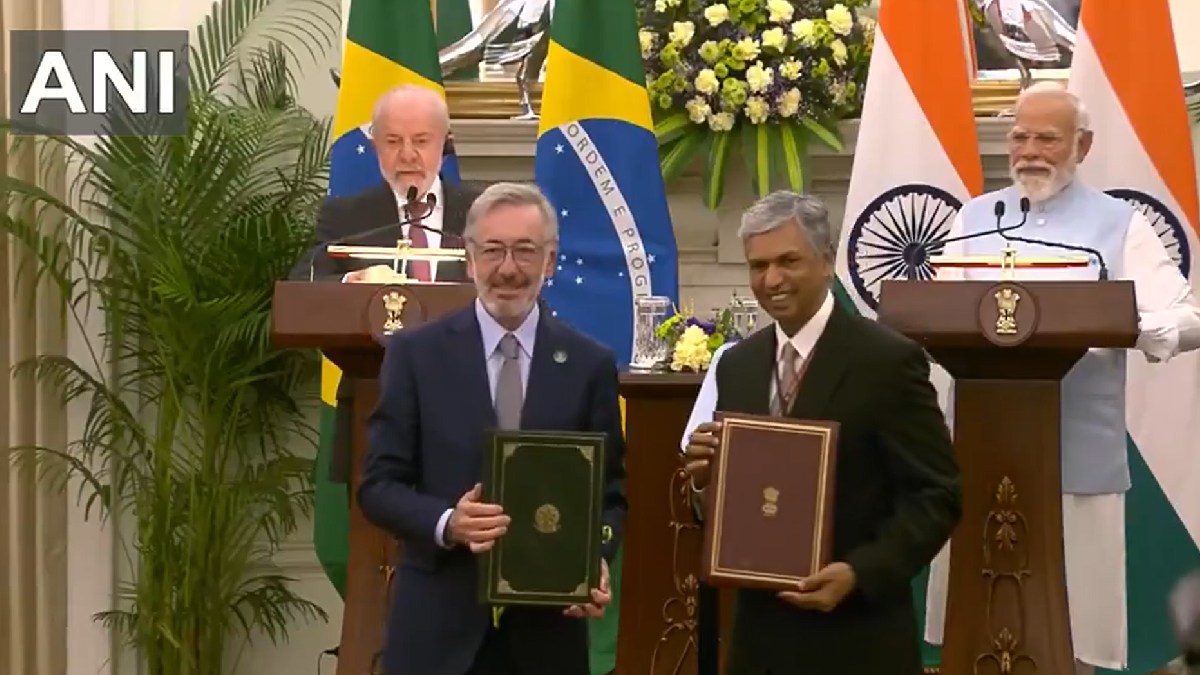
The South-South cooperation between the two countries would be further strengthened by India and Brazil formally agreeing on an ambitious bilateral trade target of $30 billion by 2030. The historic decision was made at the high-profile Hyderabad House in New Delhi on Saturday, February 21, 2026, between Modi and Brazilian President Luiz Inácio Lula da Silva.
A large jump from the $20 billion target is made up of a mutual faith in the growing economic partnership between the two nations, whose two sectors are trading together roughly $15.21 billion worth of goods. Central to this revitalized partnership is a groundbreaking agreement about critical minerals and rare earths, which Prime Minister Modi has called a “major step” in strengthening global supply chains and lessening reliance on single-source producers such as China.
Given that Brazil is home to the second-largest reserves of these critical minerals in the world, it is well-positioned to be an important partner in powering India’s flourishing high-tech industries such as semiconductors, electric vehicles and renewable energy development.
The deal seeks to facilitate joint exploration, processing, and investment in mineral-rich regions that tap Brazil’s undeveloped mining prospects as well as India’s industrial power. Aside from minerals, the two leaders signed nine joint agreements that include a wide range of sectors including digital public infrastructure, healthcare, defense and MSME entrepreneurship.
The most notable activity was a joint action plan for a "Digital Partnership for the Future," which will cover artificial intelligence, supercomputing and blockchain technology. Also focusing on renewed attention to defense, discussions were scheduled to focus on Scorpene-class submarines maintenance and the growth of Brazilian aerospace giant Embraer’s Indian footprint as a part of a broader pivot to the broader Global South axis.

The timing of this summit is particularly important: both countries are now negotiating complex tensions in a world of trade between themselves. In their talks, at the close of this week's session, the leaders expressed sympathy for what they saw as the sudden change in U.S. trade policies.
On Tuesday the US Supreme Court voted against reciprocal tariffs to a large extent. By reaffirming their bilateral agreements, India and Brazil not only secure their own economic interests but are also strengthening the voices of the South and demanding a new balance in international relations.