India plans to roll out a huge giga-scale battery manufacturing and energy storage program to boost the country’s electricity grid and feed into its growing renewable energy sector.
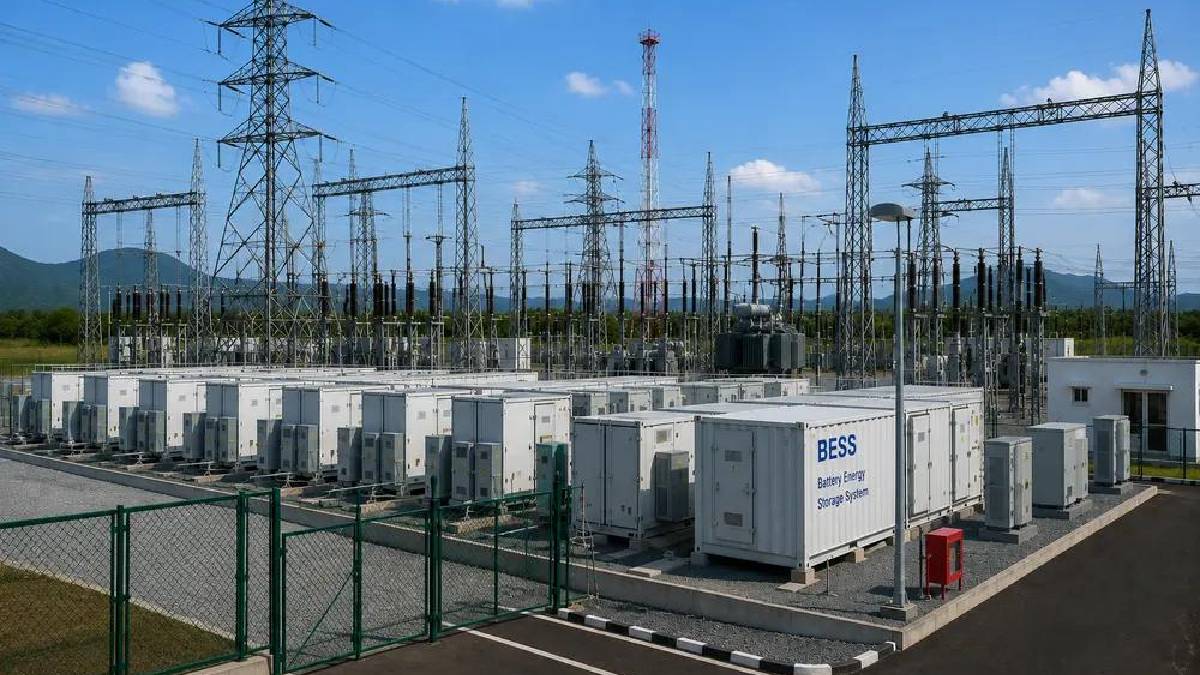
The policy would be supported by financial incentives and subsidies for large-scale battery storage projects for grid stability and in the absence of fossil fuel-based power generation.
The initiative comes at a crucial time when India is increasing the solar and wind energy capacity. Renewable energy production also depends on weather and climate, and it is difficult to balance supply and demand of renewable energy. Large battery storage systems are considered to be one of the best solutions to store the excess renewable energy during high generation hours and release it if demand increases.
The government will also give subsidies on the installation of giga-scale battery energy storage systems (BESS). The assistance will reduce project costs and increase private sector participation in the rapidly growing energy storage industry.
Battery Energy Storage Systems are key in current electricity networks. They help utilities maintain grid frequency, reduce power outages, integrate renewable energy sources efficiently and reduce reliance on conventional thermal power plants during peak demand hours. India is in a state of increasing electricity demand and energy storage is a key part of India’s long-term energy planning.
Industry experts say this subsidy scheme would dramatically boost domestic battery production and bring in new investment into the clean energy ecosystem. And it is in line with India’s commitment to become net-zero carbon emissions by 2070 and by increasing the share of non-fossil fuel energy sources in the national energy mix.
The government has already introduced several production-linked incentive (PLI) schemes for advanced chemistry cell manufacturing and will encourage companies to build battery manufacturing plants in India. The new giga-scale battery plan will complement these initiatives by creating demand for locally produced batteries and improving energy security.
Apart from renewable energy integration, large-scale battery storage can reduce electricity distribution costs. Stored electricity can be provided during periods of high demand and when power prices are high to make the grid more efficient.
This will also attract investment from domestic and international energy companies looking to penetrate India’s clean energy market. Battery storage demand could grow rapidly in the next decade as solar parks, wind farms, and hybrid renewable energy projects continue to grow across the country, analysts say.
Experts say falling battery prices, fast-paced technology and government policies have made grid-scale energy storage possible. India has one of the biggest power markets in the world and, therefore, is part of the global battery manufacturing and energy storage industry.
If implemented successfully, the giga-scale battery subsidy programme could improve India’s energy infrastructure, reliability of its power grid, speed up renewable energy adoption, and contribute to the country’s transition towards a cleaner and sustainable future in energy.