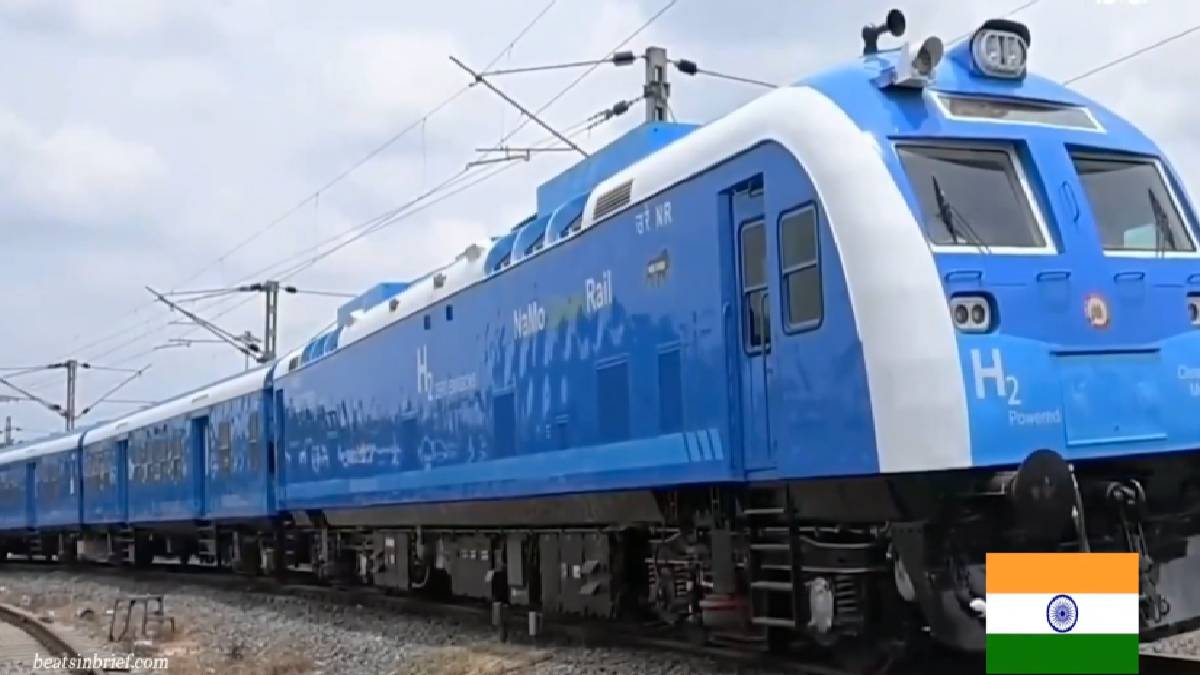
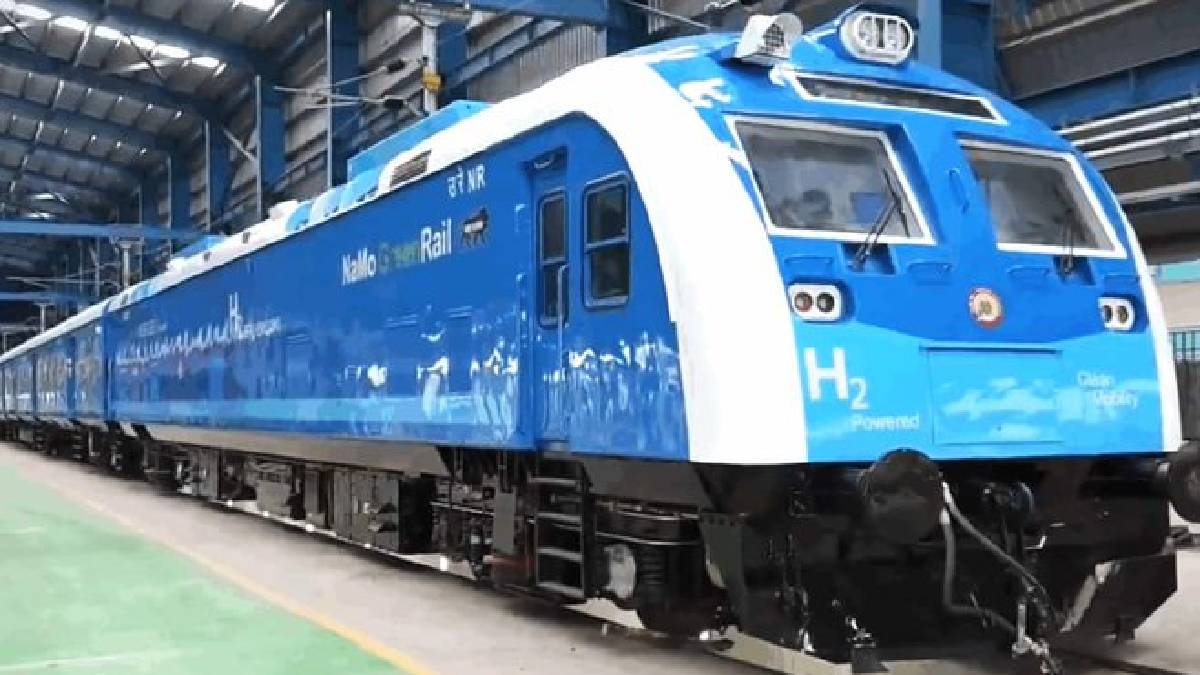
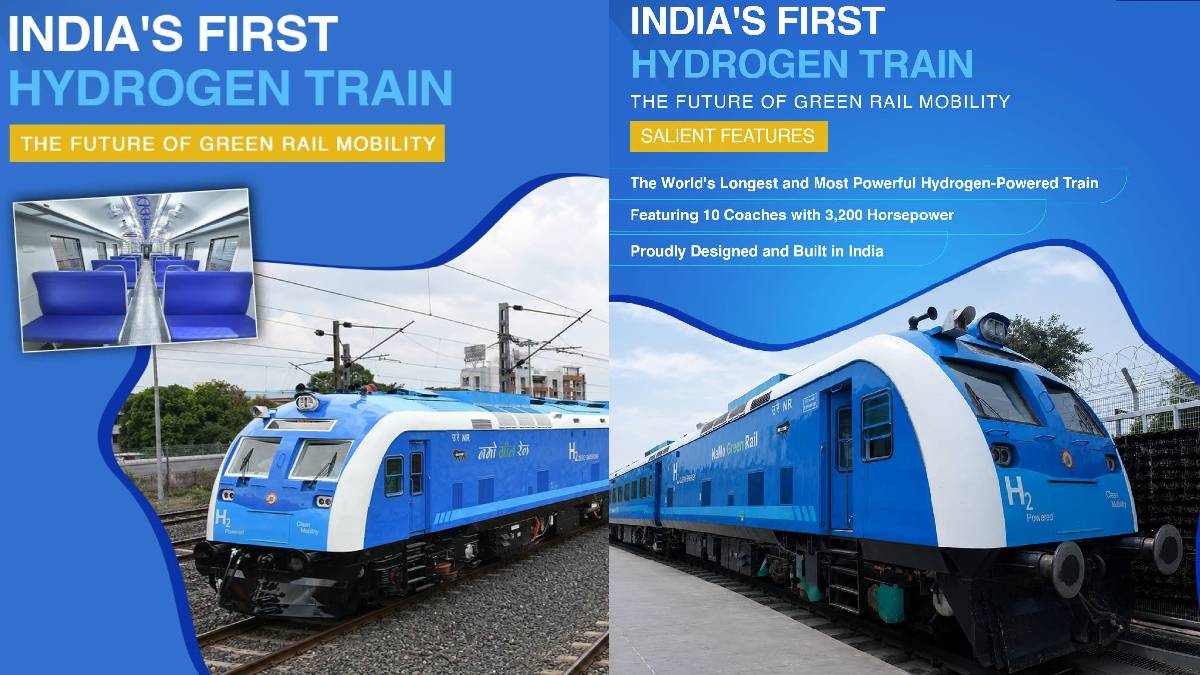
India has taken another significant step towards sustainable transportation, with its hydrogen-powered train successfully completing a 1,200-kilometre trial run in 10 days, demonstrating its progress in clean mobility and next-generation railway technology. It marks a significant milestone for Indian Railways as it works to reduce carbon emissions and dependency on fossil fuels.
The trial was conducted on the Jind-Sonipat route in Haryana, and the hydrogen-powered train demonstrated excellent operational efficiency and saved over 3,200 litres of diesel. The successful performance of the hydrogen fuel cell technology is gaining confidence as it can replace diesel passenger trains.
Unlike diesel locomotives, India's hydrogen train generates electricity on board with hydrogen fuel cells. Hydrogen reacts with oxygen in fuel cells to produce electricity that powers the train’s engine. The only by-product of this clean energy generation is water vapour, making it a true zero-tailpipe-emission transportation solution.
The train is equipped with 10 passenger coaches and two Hydrogen Driving Power Cars, producing a combined 2,400 kilowatts (kW) of power. The train has an efficient operation with less environmental impact and therefore much less noise and pollution.
A successful trial in this field is evidence of India’s commitment to adopt environmentally friendly technologies in its transport system. Indian Railways, one of the world’s largest rail networks, has been aggressively pursuing decarbonisation through electrification, renewable energy integration and now hydrogen-powered mobility.

Hydrogen trains are particularly suitable for railway routes in which electrification is not economically feasible. Instead of using overhead electric lines, hydrogen trains have hydrogen onboard and generate electricity whenever it is needed, which is flexible and good for the environment.
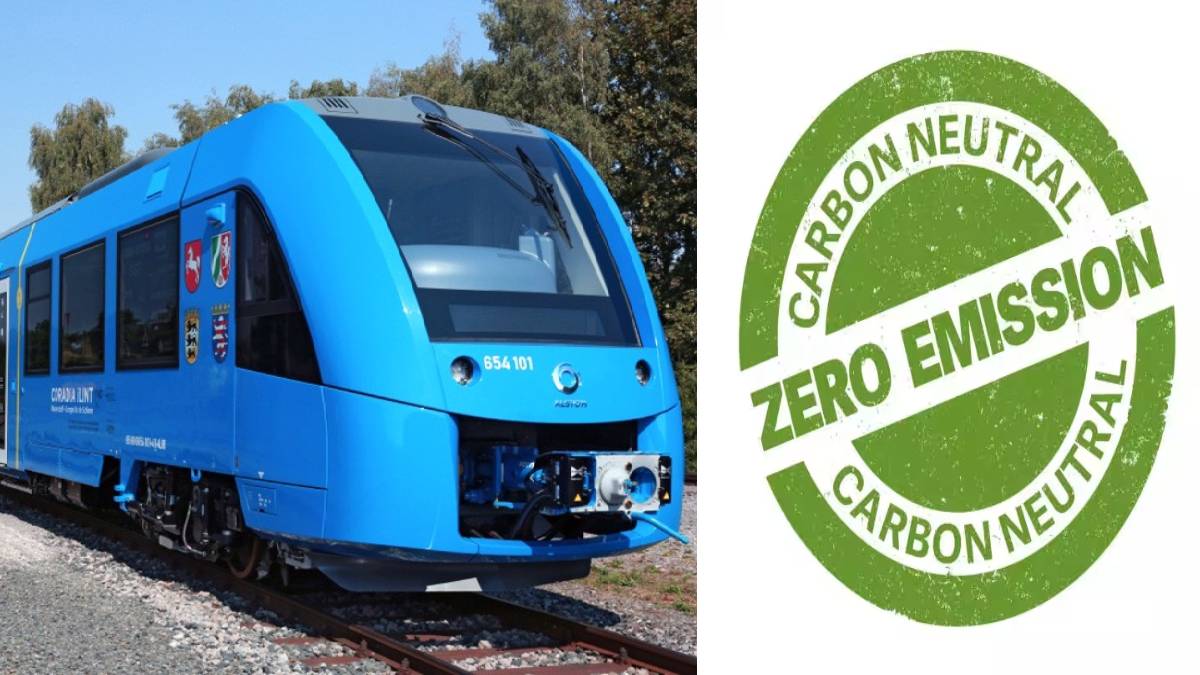
Hence, hydrogen-powered rail technology is gaining pace in the world as countries look for cleaner alternatives to diesel locomotives. Some European countries have already introduced hydrogen passenger trains on some routes, and India’s successful trial puts it among the growing number of countries investing in hydrogen-based transportation.
The savings of over 3,200 litres of diesel during a relatively short 10-day trial also underline the economic potential of hydrogen-powered operations. As hydrogen production becomes more cost-effective through renewable energy and government-backed initiatives under the National Green Hydrogen Mission, operating costs are expected to become more competitive.
The main advantage of hydrogen trains is quiet operation. Fuel cell-powered locomotives generate less noise and vibration than diesel engines, which provides better passenger comfort and less noise pollution for communities along railway corridors.
I think hydrogen technology can be a major player in the decarbonisation of routes that continue to rely on diesel locomotives for railway, railway experts believe. With India's vast network of railway connections that is spread over a wide range of geographical regions, hydrogen-powered trains could be a significant driver of electrification and help achieve the long-term climate change policy goals of India’s large railway network and reach that goal.
The next phase of testing will take place on the Delhi route, where engineers will test the train under different operating conditions and passenger loads. The successful completion of these trials will allow hydrogen-powered trains to be deployed in suitable railway corridors.
The development also fits in with India’s wider vision of becoming a global leader in green hydrogen production and utilisation. The government has been actively promoting hydrogen as a clean fuel for industries— heavy transport, shipping and now railways.
So, as India invests in sustainable infrastructure, the successful hydrogen train trial is more than just a technological milestone. It signals a fundamental shift in the public transportation system toward cleaner, smarter, and environmentally friendly transportation.
With innovation, supportive policies, and an expanding hydrogen infrastructure, India’s railway network is now getting closer to seeing zero-tailpipe-emission trains as a regular part of the national transport network. The successful 1,200-kilometre trial shows that hydrogen-powered rail travel is not something that is far from being a dream but a reality for one of the world’s largest railway systems.