Five years after the loss of its Earth-imaging satellite GISAT-1 during the failed GSLV-F10 mission, the Indian Space Research Organisation (ISRO) is preparing to launch its replacement.
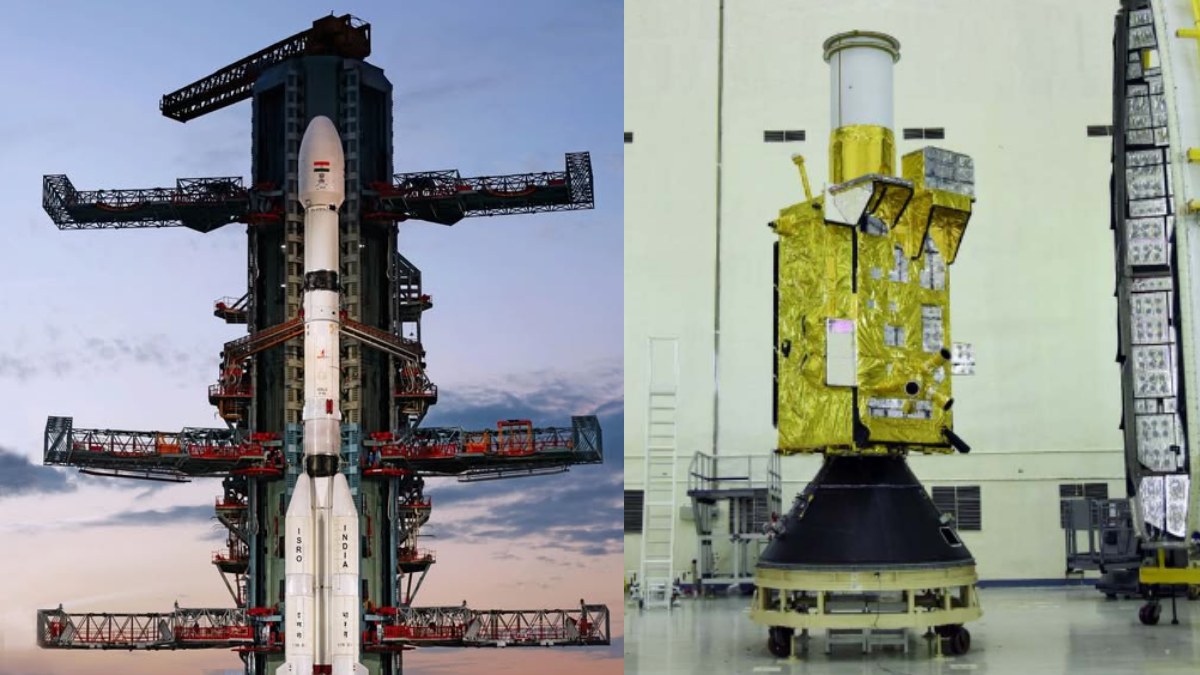
The new satellite is called GISAT-1A, and it will take off on September 4, 2026, from the Satish Dhawan Space Centre in Sriharikota. It will be an important event for ISRO after the recent failure in the launch.
GISAT-1A is designed to provide Earth observation and imaging capabilities. The mission will also help build India’s ability to monitor large areas of the country and provide images which could be used for disaster monitoring, agriculture, environmental studies and national security, as well as more.
What happened to the original GISAT-1?
The original GISAT-1, also known as EOS-03, was launched on August 12, 2021, on the GSLV-F10 rocket.
The launch appeared normal, as the rocket was in the early stages of flight. The mission was doomed when the cryogenic upper stage failed to perform in an ideal manner.
The satellite could not be placed into its intended orbit, and the mission was declared unsuccessful. ISRO later investigated what went wrong and conducted a detailed investigation of what went wrong.
The Failure Analysis Committee found that a leak in the Vent and Relief Valve (VRV) caused the liquid hydrogen tank pressure to fall. This affected the Fuel Booster Turbo Pump and eventually led to the failure of the cryogenic upper stage.
The failure meant India lost the 2,268-kg Earth observation satellite that was supposed to provide frequent images of areas of interest.
What is GISAT-1?
GISAT was designed to give India a different kind of Earth observation capability.
Unlike many remote-sensing satellites that travel around the Earth in lower orbits and pass over a particular location at intervals, GISAT was designed for a geosynchronous orbit.
This allows the satellite to remain focused on a particular region for much longer periods of time.
The original GISAT-1 had been designed to capture large patches of land many times a day. It could help to monitor events that quickly develop; natural disasters and other short-term changes that take place on the ground.
The satellite was also capable of carrying multiple imaging instruments such as multispectral and hyperspectral sensors.
These capabilities in the future could provide useful information about agriculture, forestry, water management, and environmental monitoring.
What is GISAT-1A?
GISAT-1A is the replacement satellite in the GISAT series. It is also known as EOS-05 and is being developed to provide Earth observation capabilities similar to those planned for the earlier GISAT mission.
The satellite is expected to enhance India's ability to obtain images of areas of interest quickly and repeatedly. This can be particularly useful during emergencies.
Satellite images can help to tell the authorities which areas of a major flood or cyclone have been affected. And they can also be used to gather information about changes in land, water bodies and other parts of the environment.
The capabilities of the satellite, therefore, can also be used beyond traditional mapping.
Why The September 4 Launch Matters
It is important to launch on September 4.
First, it is the second attempt to put a GISAT-class Earth observation satellite into orbit after the loss of the original satellite in 2021. Second, it comes after another difficult period for ISRO's launch programme.
The PSLV-C62 mission failed on January 12, 2026, and so the GISAT-1A launch is an important return to flight for ISRO. The government has recently cleared the launch of strategically important satellites that have been waiting at Sriharikota.
That makes the September mission closely watched in India's space programme.
How can the satellite help India?
Earth observation satellites provide information that can be used by several government agencies and organisations. One of the applications in disaster management is disaster management.
When floods, cyclones, landslides or other natural disasters arise, satellite images of disaster zones can give managers a broad view of affected areas. This can be used to assess damage and plan for rescue and relief operations.
Satellite imagery can also help agriculture.
Information on crops, land and water supply data can be used by the government to monitor agricultural areas and make better decisions.
Environmental monitoring would also be a very important application.
The satellite data will also allow for the tracking of forests, water bodies and other natural resources in the long term.
GISAT-1A could also have strategic applications because high-frequency Earth observation provides a way to monitor areas of interest more regularly.
The Long Road to GISAT-1A
The GISAT programme has had a long and difficult journey.
The launch of the original GISAT-1 mission was delayed even before its planned launch date in 2021. The satellite was originally scheduled to launch in 2020, but technical problems and the COVID-19 pandemic pushed the mission back.
After the eventual GSLV-F10 failure, ISRO investigated the cause and worked on improving the relevant systems.
The new GISAT-1A is now the next step in the programme.
The experience from the earlier failure is also important because the findings from the investigation helped ISRO identify the technical problem behind the GSLV-F10 failure.
What happens after Launch?
If the September 4 mission goes ahead as planned and GISAT-1A reaches its intended orbit, ISRO will begin the process of checking and commissioning the satellite.
The spacecraft will need to complete its initial orbital operations before its imaging systems can be used for regular observations.
The satellite will then become another important part of India's growing Earth observation network.
India already operates several Earth observation satellites with different capabilities. These satellites provide data for agriculture, disaster management, environmental monitoring, mapping and other applications.
GISAT-1A will add another capability by focusing on frequent imaging of large areas.
A Second Chance for GISAT
The upcoming mission is more than another satellite launch for ISRO.
It is, in fact, a second chance for a programme that suffered a major setback five years ago.
The loss of GISAT-1 in 2021 was caused by a technical problem in the GSLV-F10's cryogenic upper stage. ISRO's subsequent investigation identified the cause and recommended changes to improve the reliability of the system.
Now, with GISAT-1A ready for its planned launch, ISRO is again attempting to put this important Earth-imaging capability into orbit.
The September 4 mission will therefore be closely watched; not only because of the satellite's applications but also as it is another step in India's efforts to strengthen its space-based Earth observation capabilities.
If successful, GISAT-1A could provide India with faster and more frequent images of large areas, supporting everything from disaster response and agriculture to environmental monitoring and strategic needs.
The mission is also an important opportunity for ISRO to demonstrate the reliability of its launch systems and move forward after the setbacks of recent years.