Tamil Nadu Chief Minister and DMK president M.K. Stalin has approached the Madras High Court seeking directions concerning the counting of Voter Verifiable Paper Audit Trail (VVPAT) slips in his Kolathur Assembly constituency during the 2026 Tamil Nadu Assembly elections.
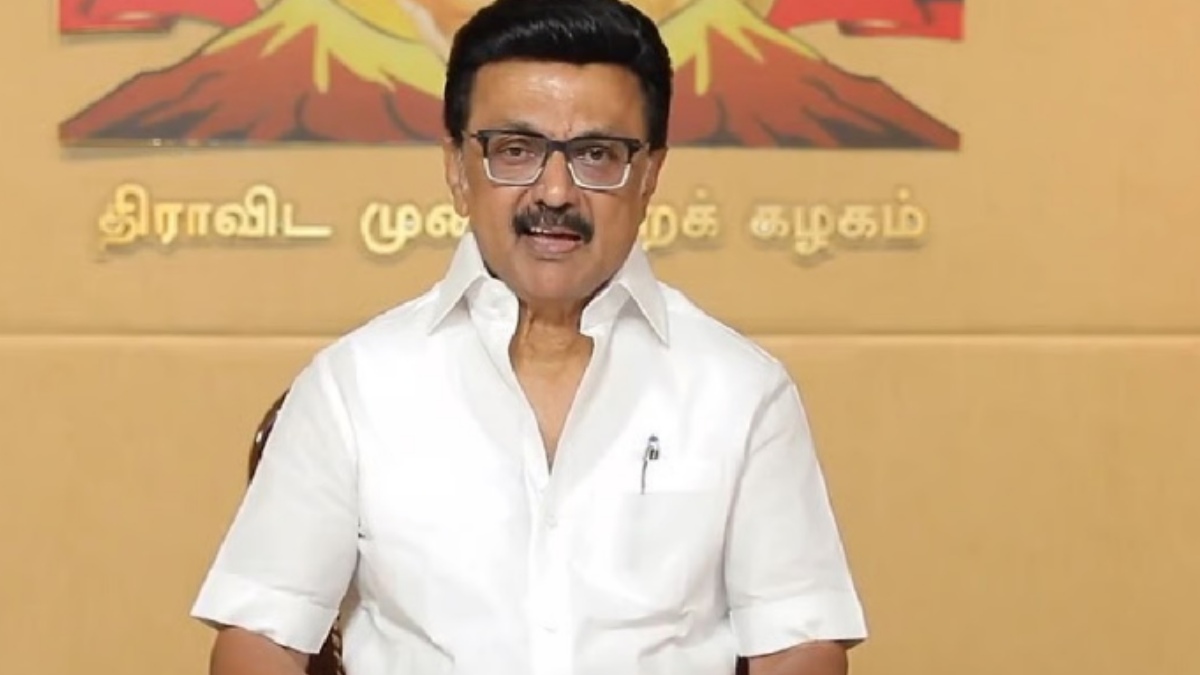
Stalin has asked for 100% counting of VVPAT slips from the constituency and has also asked the Election Commission of India to declare him the winning candidate based on the outcome of the election process.
The legal move has brought election verification and VVPAT counting into renewed focus ahead of the Tamil Nadu polls. VVPAT systems allow voters to check that their vote has been recorded for the candidate of their choice. Paper slips generated by the machines are secure and can be counted as part of the prescribed verification procedures.
Stalin’s petition on Kolathur is important since Kolathur has been a key political base for the DMK leader. He has represented Kolathur in the Tamil Nadu Assembly and has been in the political limelight since then. Any legal proceedings on the constituency will be subject to a lot of political and public attention.
The demand for 100% VVPAT slip counting would involve matching the paper trail with the electronic vote count across the constituency rather than using the sample-based verification process that election authorities typically follow. The petition puts the question of VVPAT verification before the High Court and might lead to wider discussions about electoral transparency and the procedures governing vote counting.
As the Election Commission of India is responsible for elections and the rules of counting and verification, VVPAT verification is carried out using established procedures such as the counting of slips collected from selected polling stations. Any change to the standard process would have to be made within the legal and constitutional framework of elections.
Stalin's request that he be declared the winning candidate is also an important part of the petition. A declaration of that would depend on the legal basis of the claim, on the election results and on the court's consideration of the issues raised in the case. Just filing a petition does not necessarily set an election result or automatically make a candidate victorious.
The development comes as political parties in Tamil Nadu prepare for a closely watched Assembly election. The 2026 polls are expected to create much intense competition among the state's largest political formations, with governance issues, welfare schemes, development and electoral strategy likely to be at the centre of the campaign.
Legal problems related to elections are not new in India, and candidates or political parties usually complain about counting procedures or the conduct of an election. Such petitions can be examined by the courts to determine whether they are credible or require judicial intervention.
The VVPAT issue has attracted great interest in India for the past several years. Proponents of more paper slips verification say that counting more VVPAT slips for elections will help to increase confidence in the electoral process. In the meantime, election authorities have developed procedures for balancing verification requirements with practical demands for conducting large-scale elections.
For Kolathur voters, the petition could make the constituency an especially closely watched seat during the 2026 election. Any Madras High Court directives on how election officials will approach the requested verification and the way in which elections are declared may have implications for the final results if the court decides to make its decision.
It is important to distinguish between a legal request and a confirmed judicial finding. Stalin has applied for appropriate relief through the court, but the outcome will depend on the proceedings before the Madras High Court and the response of the Election Commission and other relevant parties.
The petition also highlights once again the need for transparency in democratic elections. Electoral authorities should conduct polling and counting with transparency, verifiable and in accordance with the law. VVPAT technology is intended to provide an additional physical record for verification when it is required.
With the legal case going on, Stalin’s legal team’s arguments and the Election Commission’s responses will be the focus, and the court’s decision will be key. The case might become an important development in the discussion surrounding electronic voting, VVPAT verification and electoral transparency in Tamil Nadu.
For the DMK, too, the issue is political, since the party is preparing for the Assembly election. For the Election Commission, any judicial process concerning VVPAT counting will require careful consideration of established election procedures and applicable legal provisions.
Ultimately, the Madras High Court will decide how the petition should be dealt with. Until then, the demand for 100% VVPAT counting in Kolathur is a legal request rather than an established change to the election-counting process. The proceedings will be closely followed as Tamil Nadu moves toward the 2026 Assembly polls.