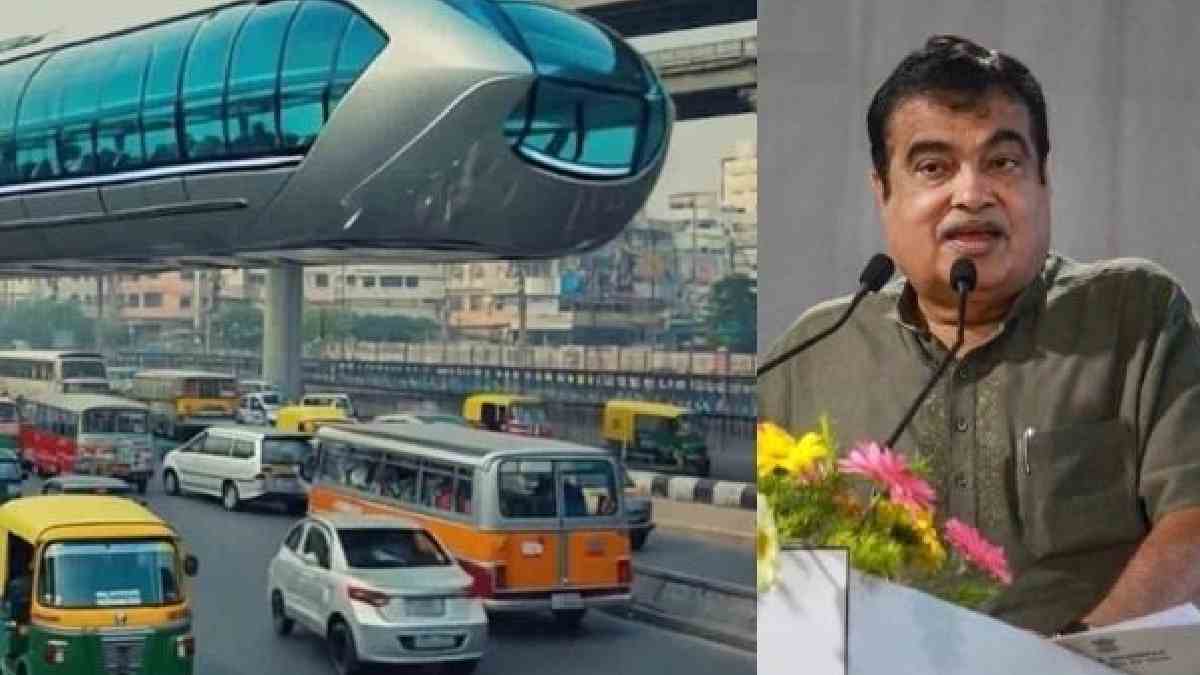
Union Minister for Road Transport and Highways Nitin Gadkari has reiterated that hydrogen is the “fuel of the future” as India takes another major step towards sustainable mobility by starting pilot trials of hydrogen-powered vehicles on 10 selected routes across the country.

That is part of the government’s wider strategy to reduce dependence on fossil fuels, cut carbon emissions and accelerate the transition to cleaner transportation.
Gadkari showed that hydrogen is an alternative energy source for India’s transport industry. Hydrogen-powered vehicles can be an important factor to achieve energy security and assist us when it comes to the country's environmental and climate objectives, he said.
The pilot project will assess the performance, efficiency, safety and commercial viability of hydrogen-powered vehicles in real-world Indian road configurations. The selected routes will allow us to test the technology in various landscapes, traffic and climatic conditions which will be useful in the future for large scale deployment.
Hydrogen is now one of the most promising clean fuels in the world. When hydrogen is used in fuel-cell electric vehicles, it reacts with oxygen to produce electricity and only water vapour is produced as the result. This makes hydrogen-powered vehicles a natural alternative to diesel and petrol-powered vehicles for long distance transport and heavy commercial vehicles.

Unlike battery-electric vehicles, hydrogen fuel-cell vehicles can be refueled in a few minutes and have longer driving ranges in general so are ideal for buses, trucks and intercity transport services. Scientists believe that hydrogen and battery-electric technology are complementary to each other as countries work to reduce greenhouse gas emissions.
India has been actively promoting green hydrogen through the National Green Hydrogen Mission which aims to make the country a global centre of the production, utilisation and export of green hydrogen. Green hydrogen is produced with renewable electricity through electrolysis of water, and carbon emissions are minimised during the production process.
The transport sector is one of the major contributors to carbon emissions in India. Rapid urbanisation, rising vehicle ownership and growing freight movement have led to the massive increase in fuel consumption in the last two decades.
The introduction of hydrogen-powered vehicles is expected to strengthen efforts to decarbonise road transport and reduce dependence on imported crude oil.
Gadkari has always advocated the adoption of alternative fuels like ethanol, methanol, biofuels, compressed biogas, electric mobility and hydrogen. He says diversifying India’s fuel mix can help it to be more energy independent, less polluted and provide opportunities for farmers and industries to develop and new technologies to develop.
The hydrogen vehicle trials would be conducted in close cooperation with government agencies, research institutes, automobile manufacturers, energy companies, and infrastructure providers. During the pilot phase, officials will monitor vehicle performance, fuel efficiency, maintenance requirements, refuelling operations and reliability.
The development of a sufficient hydrogen infrastructure remains one of the most challenging areas of this technology for widespread adoption. Hydrogen production plants, storage systems, transportation networks and refuelling stations need significant investment before it will be commercialized. Pilot trials will help guide the assessment of infrastructure capacity and operational challenges for such a technology to be realized.
Safety is also a key issue for hydrogen mobility. Modern hydrogen storage systems are equipped with advanced safety systems that are very safe, with high-strength storage tanks, leak detection systems, pressure management and safety systems, leak detection and pressure management systems as well as international testing standards. Experts say hydrogen technologies have already been thoroughly tested in decades of research and development and rigorous safety reviews on hydrogen technologies to be used in public transportation system development.
Several countries– Japan, South Korea, Germany, and the United States– are investing heavily in hydrogen technologies to support their clean energy transitions.
India intends to make use of its expanding renewable energy capacity to become a reliable producer of green hydrogen and create consumption in the domestic market for transportation, industry and power generation.
Hence, industry experts believe hydrogen could play a particularly important role in sectors where battery-electric solutions may not be practical solutions to the challenges of long-haul trucking, heavy-duty transport, mining equipment, and certain industrial applications that require high energy density.
The pilot project is also in line with India’s larger effort to curb greenhouse gas emissions and to achieve its long-term climate goals. Cleaner transport technologies will help in improving urban air quality and in sustainable economic growth.
While hydrogen mobility is still a new development in commercial terms, the continuing advancement of technology and falling production costs could allow it to be more competitive in the future. If pilot trials prove successful, public transport operators, logistics companies, and commercial fleet owners can more easily adopt it.
'Hydrogen future of transportation industry': Nitin Gadkari says trials under way on 10 routes pic.twitter.com/tKPweZT7wN
— WarMonitor (@WarMonitorINTL) July 10, 2026
As India's clean energy ambitions grow, the hydrogen vehicle trials on 10 routes in the country are a sign of progress towards sustainable transportation.
Gadkari’s vision for hydrogen as the “fuel of the future” is emblematic of the government’s long-term aim to build a better environment for transportation to move people and make the environment more clean, greener and energy-efficient to help the economy flourish.