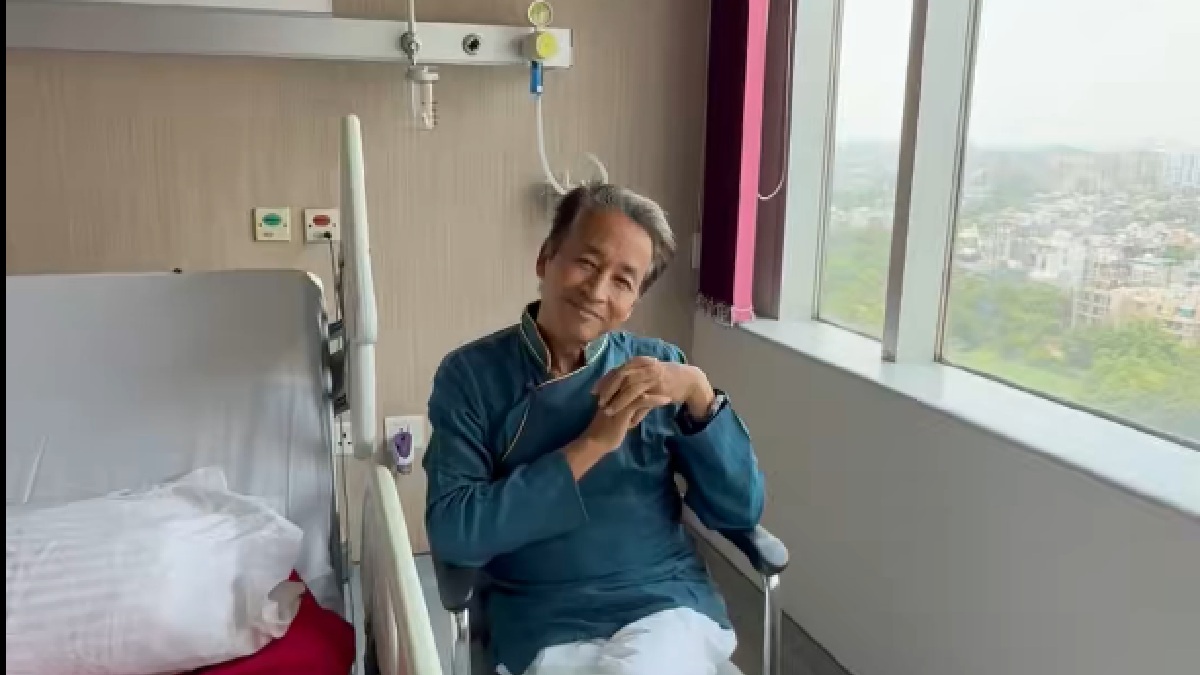
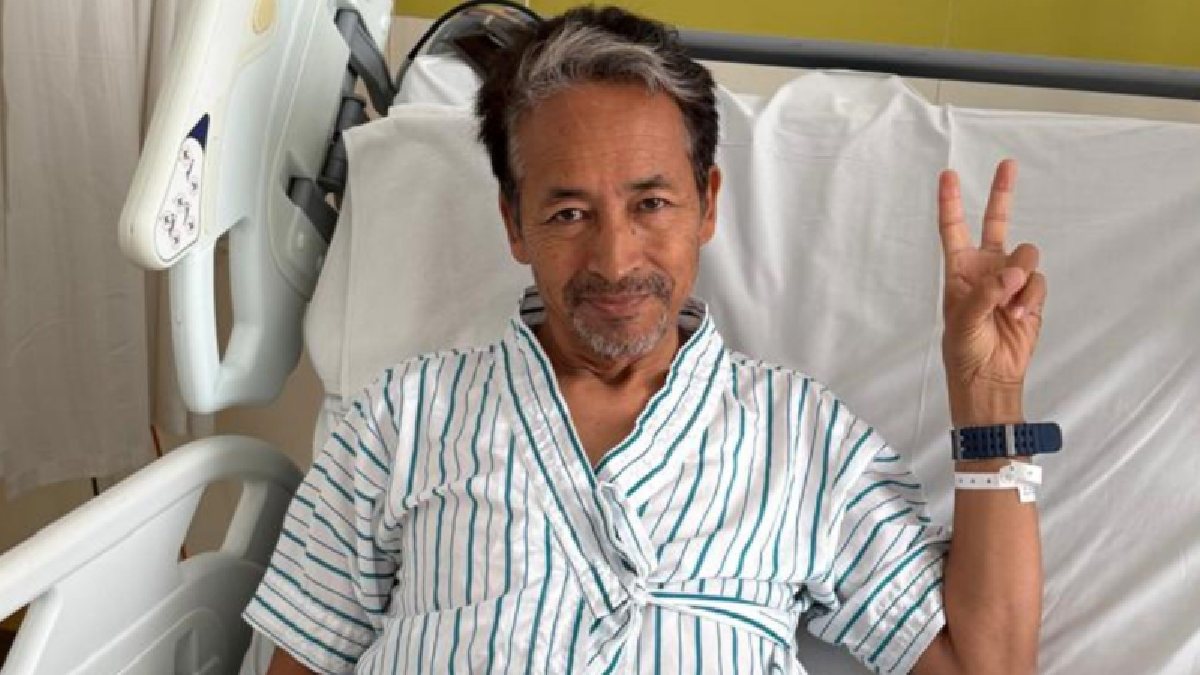
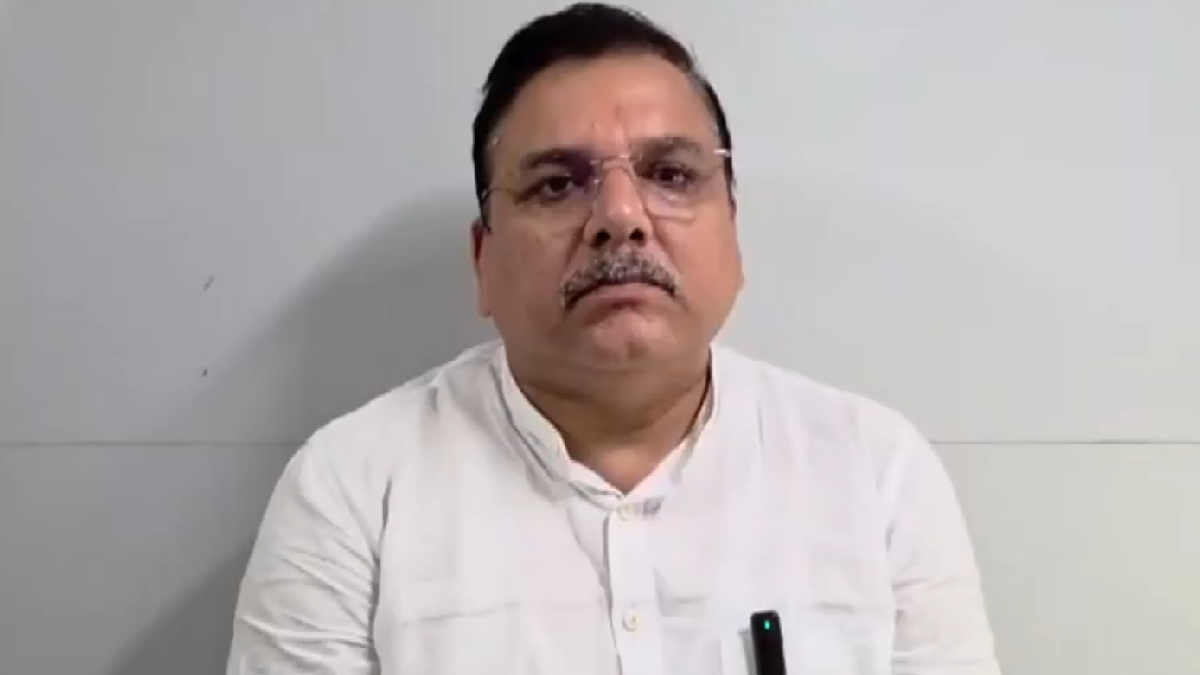
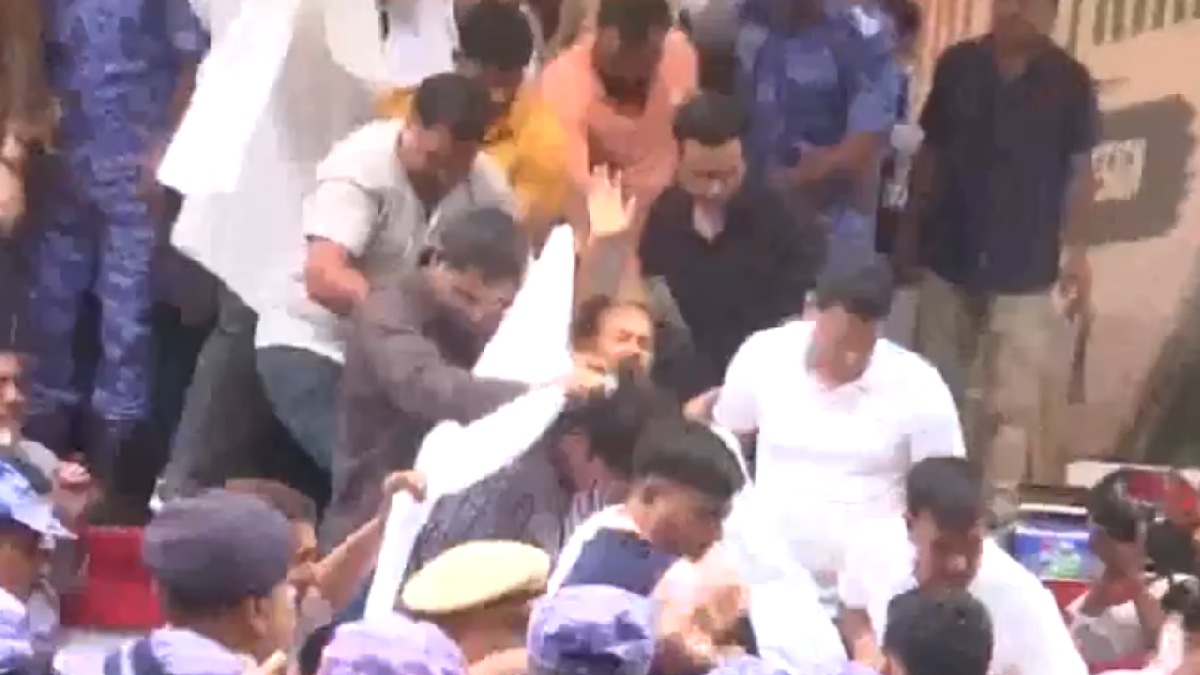
Sonam Wangchuk, activist and engineer, has made a new appeal to the government, expressing his willingness to end his fast if an official assurance is given. Wangchuk said that if such assurance is given, he will also appeal to the peacefully protesting students to temporarily suspend their movement and engage in dialogue with the government.
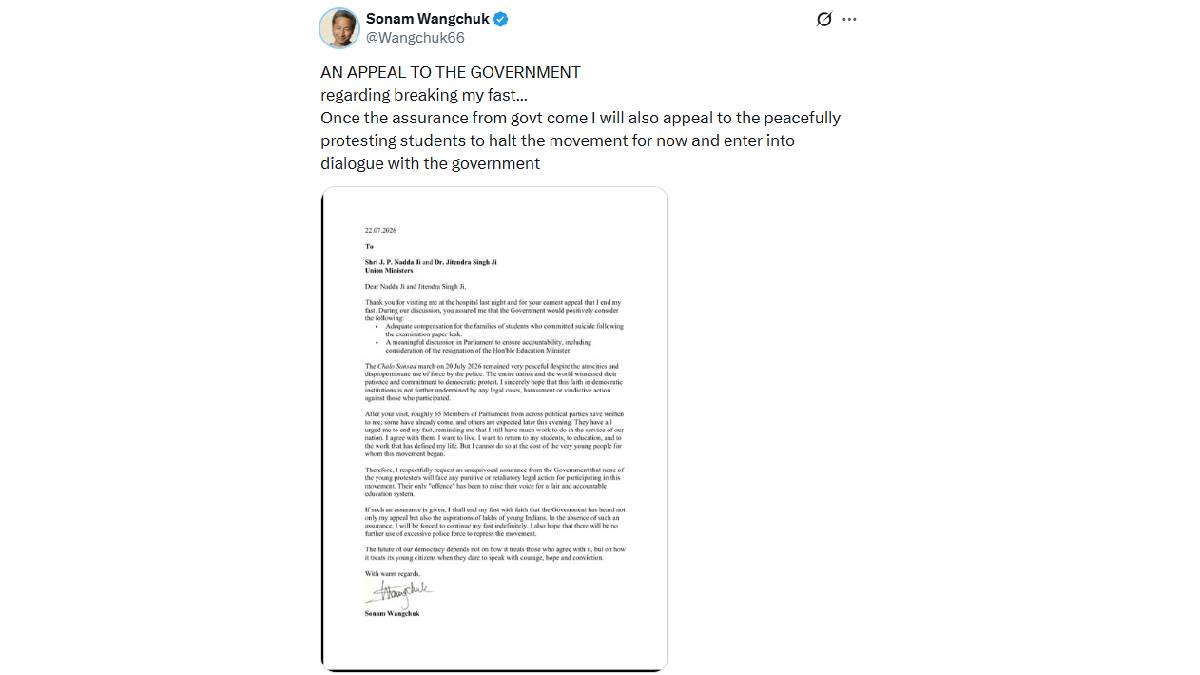
His statement is a significant step forward in the ongoing protests, showing a desire to work through a negotiated solution and to respect the principles of peaceful and democratic engagement. Wangchuk’s appeal makes clear that meaningful discussions between the government and the protesters can make a difference in addressing the concerns raised by students and other members of the movement.
In his post, Wangchuk wrote:
"An appeal to the govt regarding breaking my fast… Once the assurance from the government comes, I will also appeal to the peacefully protesting students to stop the movement for now and enter into dialogue with the government."
The message is Wangchuk’s attempt at creating a better atmosphere of dialogue rather than a fight. He has highlighted the importance of confidence-building measures that can bring both sides to the negotiating table through the end of his fast and a government guarantee.
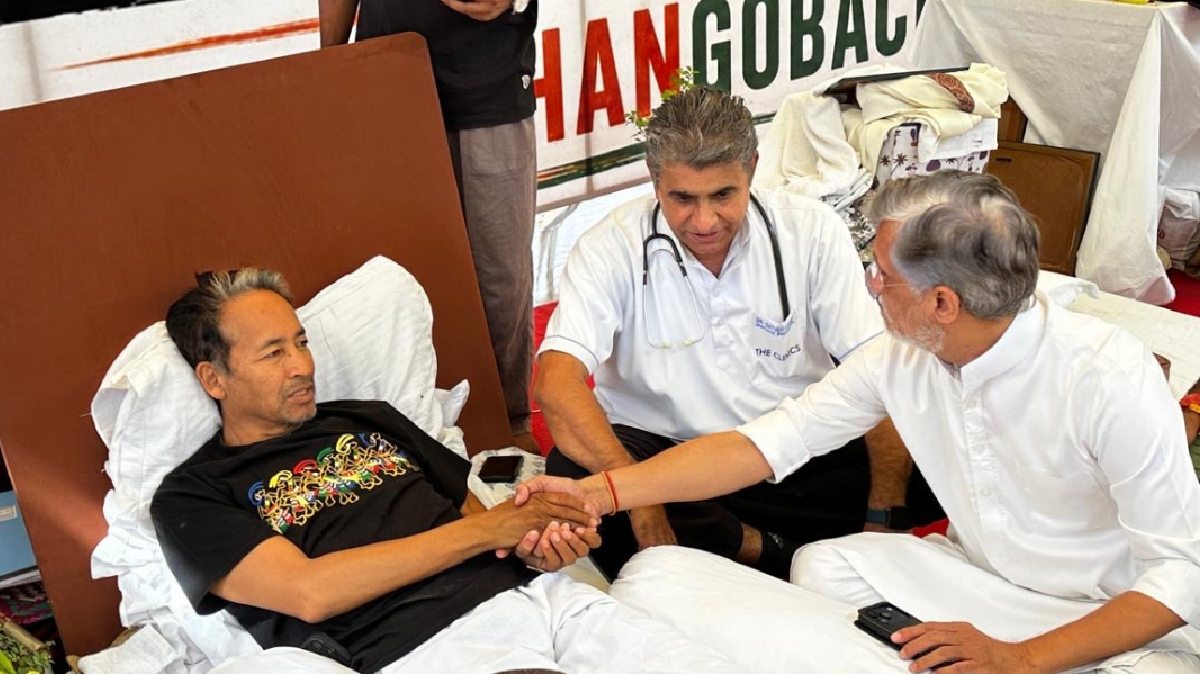
Wangchuk has advocated for peaceful civil protest and dialogue as a means of a solution for complex public problems. His latest appeal is in line with that approach and looks for a solution where the public is at the center of a solution, and the institution is at the center of something. The protests should be nonviolent, and conversations are required to achieve lasting results, he has said.
The appeal also comes at a time when student protests are still gaining national attention. Many students who have been protesting have felt that their voices need to be heard by policymakers, and Wangchuk’s statement attempts to fill in that gap when he suggests the government might put a temporary halt to protests in case the government is inclined to listen to students and see their perspective.
The government must offer a formal assurance that would help to make it more comfortable and open the door to dialogue and structured discussions. That might be a good idea for both parties to talk to each other and discuss any concerns and find practical solutions to be resolved without further escalation.
Wangchuk's proposal is remarkable because it places equal importance on responsibility from both sides. He is seeking the government’s assurance, but he is also asking the protesting students to stop their agitation and engage in dialogue. That is his larger message: that solutions should come from cooperation and mutual trust and are the basis of an open dialogue.
As things develop, the government will be kept in mind to see how it will respond and if it is willing to hold formal talks. If an assurance is received, Wangchuk has said that he will end his fast, and that he will urge the students to stop their protest and have dialogue.
The next few days, however, will be decisive to determine whether this appeal will result in renewed dialogue between government and protesters. No matter what happens, Wangchuk’s latest statement has to do with the fact that peaceful democratic processes, dialogue, and reaching a consensus of people’s views are still key to solving public problems.
His appeal has resonated with many who believe that open communication is the best way to approach differences. But whether this initiative actually works will depend on the willingness of all parties to have a substantive conversation and come to an agreement.