With the services economy as much as the other kinds of businesses (think IT exports, call centre/global capability hubs), change is so much closer to home; even our everyday lives have started digitization. When a service opens in Kerala, even the old jobs are being automated. Today you can book a coconut harvester the same way you can book a cab.
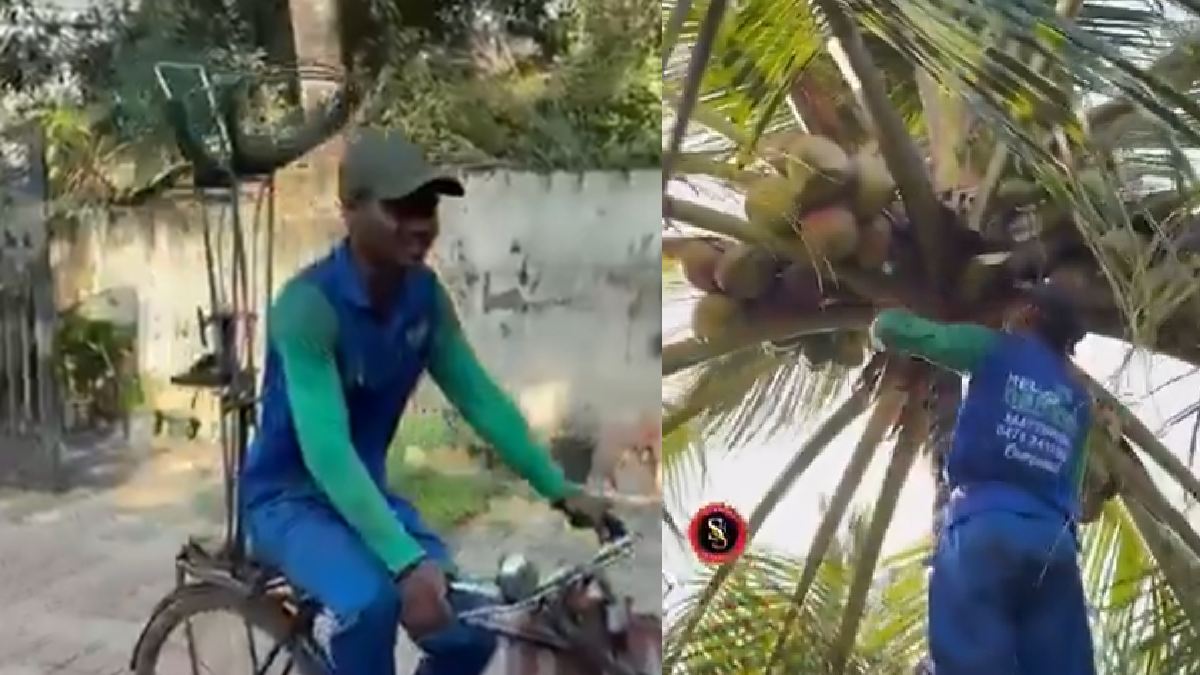
One can hire a qualified coconut harvester from an app. A uniformed worker arrives on a cycle and comes in the uniformed clothing and professional environment and leaves with an abundance of good care and support. He ascends a coconut tree, harvests coconuts, and does the job. With a reliable and organized service, it is more efficient and safer than the informal ones of the past.
The main idea is straightforward by nature and powerful: offer an affordable hyper‑local service that technology brings to life. Just as the ride‑hailing apps have changed urban transport in Kerala, we’re seeing how that platform is changing how people actually work on coconut harvesting.
One detail from a recent video stood out. The gentleman climbing the trees was not from Kerala but from Chhattisgarh. In India, his travels are a continuation of the wider trend in the field of labour movements in Chhattisgarh for decades, and for years workers from Bihar, Madhya Pradesh, and Chhattisgarh have long taken up jobs outside home in steel plants, foundries, and heavy industry. Now those same aspirations are coming up—and we might say more in tech-enabled services that are coming to mind too.
How mobility and adaptation are shaping India’s economy reflects this change. Workers are no longer limited to traditional industrial jobs. They are migrating into new service industries—with support from technology, training, and households.

This innovation is not only about convenience; this is integration. Migrant workers are welcomed in host states and contribute to local economies, bringing in jobs for their country. Technology is bridging gaps between tradition and modernity, in terms of local labour needs versus national ones in which no jobs are always in local supply.
The service also shows the extent to which India’s digital economy does not only involve global IT contracts. It is about changing everyday tasks whether booking a cab, ordering food, or now harvesting coconuts.
Kerala’s coconut harvester booking service is a symbol of the changing Indian economy going far. It is traditional and modern and means new opportunities for labour migrants and it tells stories for aspirations in new fields. But host communities like these services are to be looked to as their opportunities in their environment and community and continue to support not just lifestyles in the context of their host community but also their social involvement.