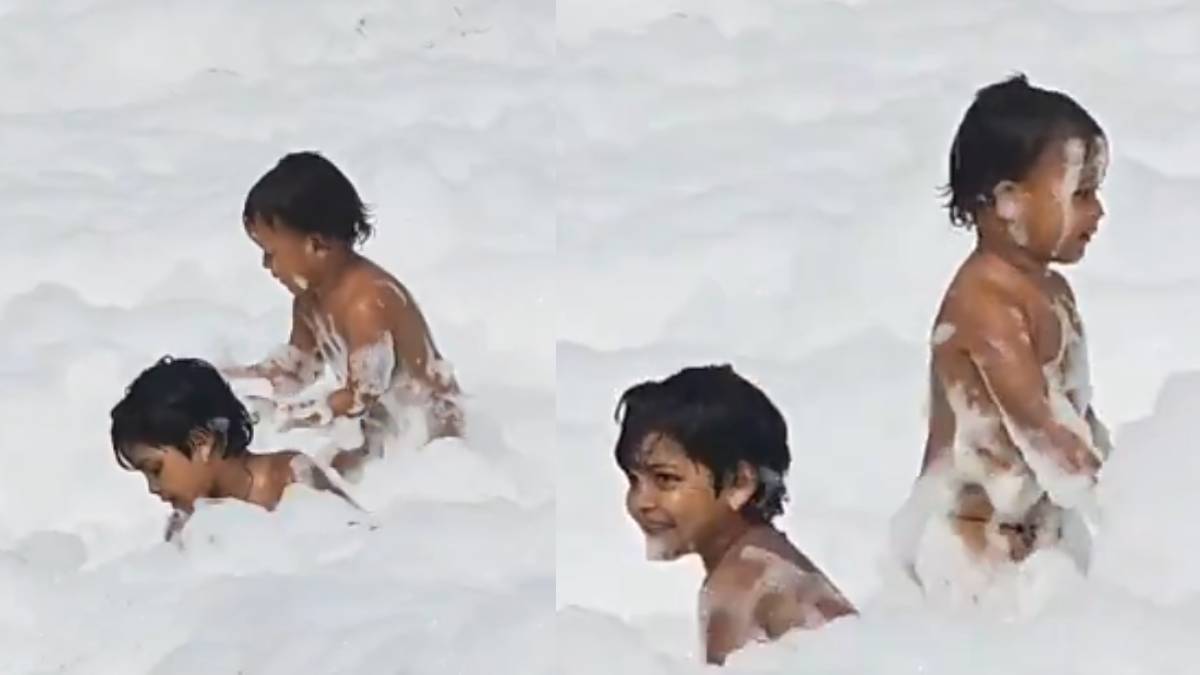
In a scene from Kalindi Kunj, Delhi, and it is heartbreaking, two children were seen playing in thick white foam that covered the surface of the Yamuna River. At first, it resembled snow or bubbles from a fancy fun event. But the foam was, on the surface at least, toxic industrial waste hazardous chemicals released by nearby factories into the river. The children, ignorant of the danger, were reveling in that froth, in what they believed was harmless froth. This shocking scene and the viral image of it raises major public health, pollution, and safety issues concerning people who live in close proximity to a river.
The white foam that Yamuna sees is not a typical natural phenomenon. Its formation occurs when untreated industrial waste, detergents and sewage are combined with the river water. These chemicals react and create thick layers of foam especially during winter when water flow is low and pollution levels high. This foam is high in toxic chemicals such as ammonia and phosphates that can lead to skin irritation, breathing issues and long-term health problems. Despite frequent warnings from environmental experts, the foam continues to seep out every year, particularly in areas like Kalindi Kunj and Okhla.
Kalindi Kunj shock: Children unknowingly play in toxic industrial foam dumped in Yamuna. pic.twitter.com/M001JFQ8um
— The Tatva (@thetatvaindia) February 2, 2026
Kalindi Kunj pictures of two shirtless children, smiling and oblivious, playing in the foam are a stunning sight to behold. They have white, thick bubbles all about them, nearly waist-deep. They clearly don’t know the foam is toxic. This moment is not just disturbing, it's symbolic. It demonstrates how pollution has become so normal even that children consider it as part of their playground. It also shows how few families live in the vicinity of polluted areas; they are not aware of that and do not have any protection. Not just playing in foam like these children are, they are playing in poison.
Toxic foam might lead to very serious health problems. If it touches skin, it can produce rashes or burns. If inhaled, it can cause coughing, asthma or other breathing problems. Long-term exposure can impact the liver, kidneys and even brain development in children. To expose kids to this raw material without any warning signs, safety protocols and adult supervision is a public health care failure and environmental inaction. It’s not only about pollution it’s about neglect.
The foam in the Yamuna is the result of uncontrolled waste from factories, illegal dumping, and bad sewage disposal. Pollution control has been slow to catch up and has been slow to act (and very ineffective) despite court orders and a string of government pledges. Environmental campaigners have been loud on the wall for years, they have been calling for stronger and tougher action against polluting industries, and better treatment of sewage. But the river will keep on struggling because without rigorous enforcement, the river cannot help but suffer and so, too, won’t the people who live with respect to it.
It is a wake-up call for this incident. Here are some urgent measures officials must take:
- Stop industries from discarding waste into the river.
- Improve the Yamuna's sewage treatment and water flow.
- Put up signs and barriers near polluted areas.
- Educate local communities, especially children, on the dangers of toxic foam.
- Provide clean and safe recreational facilities to children in low-income areas.
Children playing in toxic foam can be shocking. Not only is that terrifying and shocking, it is also a vivid image of how far pollution is now entrenched in our daily lives. It serves as a symbol of how deeply pollution has infiltrated our lives. It shows the innocence of children and the failure of adults to protect them. Kalindi Kunj is not the only place where this happens. Across India, rivers are being polluted, and communities are being exposed to harmful chemicals. We continue to put future generations’ health in jeopardy if we don’t act today. And let this moment be more than a viral image. May it be the turning point an exhortation to clean our rivers, protect our children and take charge of the world we leave in its wake.