Trump has once again attracted international attention because of a meme he posted on social media aimed at Italian Prime Minister Giorgia Meloni just ahead of a crucial NATO summit.
The timing of the post has been significant. With NATO leaders scheduled to discuss important European security and defense spending, global political problems, and so much else, Trump’s decision to amplify a politically charged meme has become a talking point across social media.
Such political memes have become a familiar part of modern digital marketing campaigns, but posts involving world leaders have a far greater diplomatic significance. Trump's social media activity has thus raised questions about how political messaging, international relations, and the role that online media platforms are playing in shaping public discourse.
A Viral moment before a high-stakes summit
The meme, which circulated widely online before being reposted by Trump, appeared to mock or criticize Giorgia Meloni in a humorous and satirical format. As is so often the case with viral political content, reactions were heavily divided.
The post was claimed by supporters as political satire protected by free expression, and memes have become a standard part of contemporary political communication.
Critics, however, worried that the publication of such content before a NATO meeting was not the right time to publish such a piece, so that it could take the focus off the real issues and diplomatic cooperation at stake.
Within hours, screenshots of the post spread on social media platforms, where hashtags corresponding to both Trump and Meloni started trending in several countries.
Political and Diplomatic Context
Giorgia Meloni is one of Europe’s most prominent conservative politicians now. Italy’s Prime Minister has been involved in discussions about NATO, European security, migration, and economic policy as well.
Donald Trump remains one of the most influential figures in American politics, and not only has he held government office, but his social media activities are so omnipresent that he is a part of news cycles in the United States and world media, and the political debates as well.
As both leaders are prominent figures in the broader conservative political landscape, the meme had an extra edge that raised questions about whether it reflected a larger political disagreement or was simply a joke on the Internet.
At the time the post was posted, there was no official indication that it would affect diplomatic engagement between the United States and Italy or the wider NATO agenda.
Social Media is now a big part of politics globally
The incident is just another example of how digital platforms have transformed political communication. A single public social media post from a high-profile politician can quickly become world-class news, changing public conversation beyond the very core of the social media space, the public sphere, and the world.
Political memes have evolved from internet humor into effective communication tools that reinforce narratives, mobilize supporters, and shape media coverage. But critics say that they can also oversimplify complex issues or fuel unnecessary polarization.
For world leaders and influential politicians, every online interaction is now closely examined, especially at times of intense international attention (such as big diplomatic summits), among world leaders and politicians, now more than ever.
Public Reactions
Public responses were indicative of the polarization of politics.
Some users praised Trump for being willing to engage in trending online conversations, and such a meme, they said, was a harmless political satire.
Some argued that leaders should put diplomacy and dialogue first before the talks were held on world security and international cooperation.
Political analysts observed that viral online moments often overshadow meaningful policy discussions, and it is getting harder and harder for big international summits to focus solely on governance and strategic decision-making.
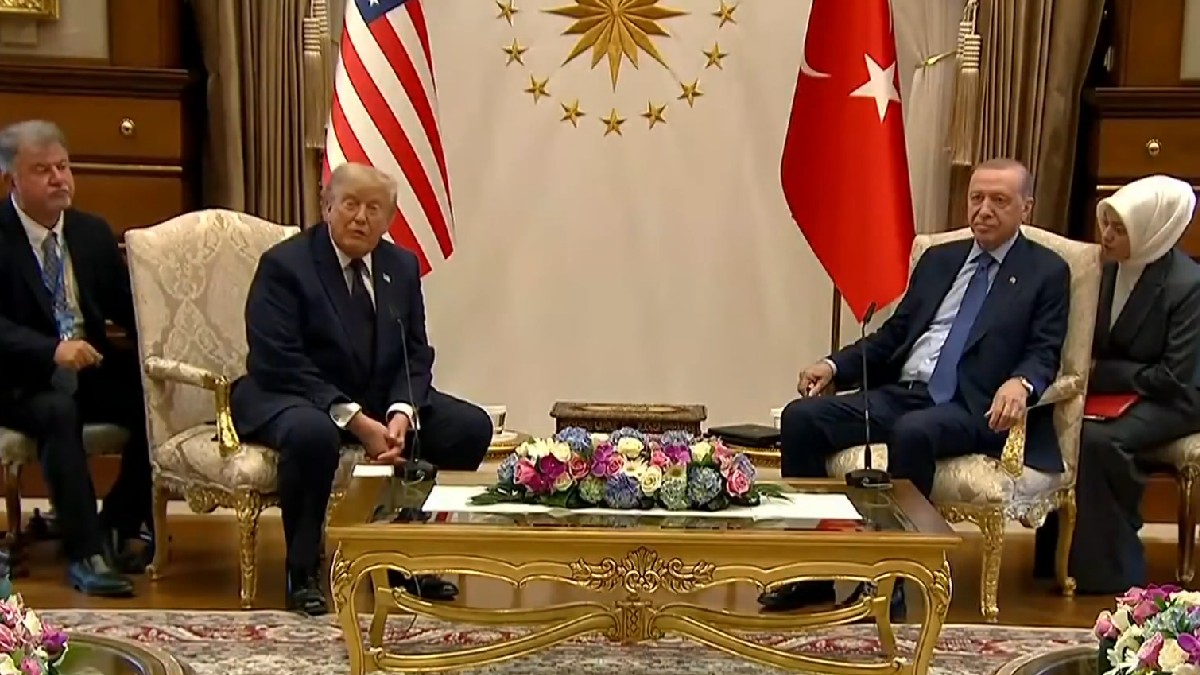
🚨 HOLY SMOKES. President Trump just OBLITERATED NATO, basically calling them freeloaders who barely deserve his presence if it weren't for Turkey
— Eric Daugherty (@EricLDaugh) July 7, 2026
"ITALY turned us down. GERMANY turned us down. FRANCE turned us down."
"We WEREN'T TREATED WELL."
"I was VERY disappointed with… pic.twitter.com/cESu8wIrw3
Looking Ahead
Despite the online controversy, the focus is firmly on the NATO summit itself and the leaders will be answering questions on defense cooperation, regional security, military preparedness, and new geopolitical issues in the region and beyond.
The degree to which Trump’s social media posts have long-term political repercussions is uncertain. But the episode is a sign of how digital communication and international diplomacy are becoming increasingly intertwined, in which a single meme can become part of the global political debate.
And social media will remain a powerful force in politics and diplomacy as political campaigns and diplomacy continue to evolve in the digital era, and in both public opinion and international narratives.