In order to protect the academic environment of schools, the Uttar Pradesh Basic Education Department has restricted the entry of YouTubers, media personalities, content creators, and other unauthorised people in the government-run and aided schools. This was the first such move taken to ensure continuous learning in Ballia district and is now followed up with similar measures in Agra to protect teachers' dignity and professional image.
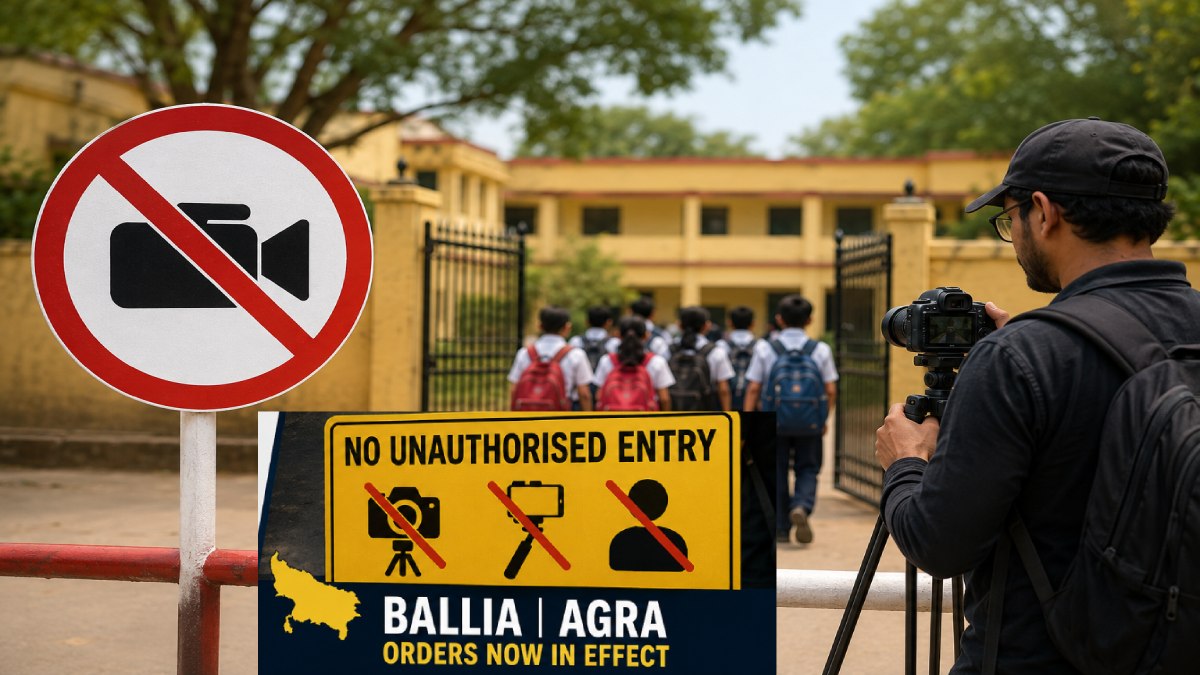
According to officials, the order was issued by Ballia District Basic Shiksha Adhikari (BSA) Manish Singh on August 7. It states that outsiders (who want to create YouTube channels and social media channels, etc.) will not be allowed to enter school premises or take photos and videography without permission from the competent authority. It is believed that uncontrolled access to schools has resulted in disruption in class activities in schools and a lack of monitoring of teachers and staff by authorities.
The main objective of the order to the students is to foster a conducive learning environment and to prevent disruption in the school environment during school hours, Singh said as he spoke of the decision yesterday. He stressed that educational institutions need to serve the purpose of teaching and learning as opposed to being vehicles for unauthorised writing of content and that educational institutions should not become a place for copying and selling, which is not where a student can create something, the professor said, and the teacher need not be threatened with recording and viral social media, he said.
The move follows an incident in the Bairia region of Ballia district in which a social media channel was reported to be circulating a video of a teacher arriving late to school. Online, the video generated much discussion about accountability in education and teachers. But the officials said that such incidents can sometimes be a partial picture and can unfairly damage educators’ reputation without providing the full picture. That incident may have also contributed to the administration’s move to control access to school campuses.
Authorities have also expressed concern that some YouTubers and social media users are negatively affecting the public perception of professional journalism. Singh also said unauthorised content creators often go freelance and do not follow journalistic guidelines or verify information before posting videos online. That means misinformation or false stories are propagated quickly in schools and teachers’ lives.
The restrictions do not completely prohibit media coverage of schools. Authorised journalists and media staff will still be allowed to visit educational institutions, but only after approval from the District Basic Shiksha Adhikari or the concerned Block Education Officer. This is to balance transparency and order and discipline in schools.
A similar directive was already issued by the Agra district, in which the Basic Education Department had banned YouTubers, content creators, social media influencers, and other outsiders from entering more than 2,400 primary schools. Under the Agra order, any photography or videography done on school premises needs prior written approval from a competent authority. The directive was issued by District Basic Shiksha Adhikari Rakesh Singh on 30th July 2026.
Education officials in Agra say the decision was necessary because unauthorised visitors often come into schools and make social media content that disrupts classes that are supposed to be focused on learning. Better regulation will make schools safer and more focused, the administration thinks.
The new rules have been met with mixed reactions among educators. While many educators have welcomed the move, saying it will minimise unnecessary disturbances, shield staff from unfair online criticism and make the work process transparent, some of the proponents of transparency maintain that oversight and accountability should remain the primary focus. But education authorities maintain that the regulations are not to cover up wrongdoing but rather to establish a structured system to track school activities.
Digital content creation has become increasingly popular across India, and the decision taken by the Uttar Pradesh government is indicative of more than just that, but also of a broader principle to balance transparency, accountability, privacy, and the smooth functioning of educational institutions. How similar measures might be taken in other states is to be seen, but the development of it has already set off a nationwide conversation about how social media should be used in schools.