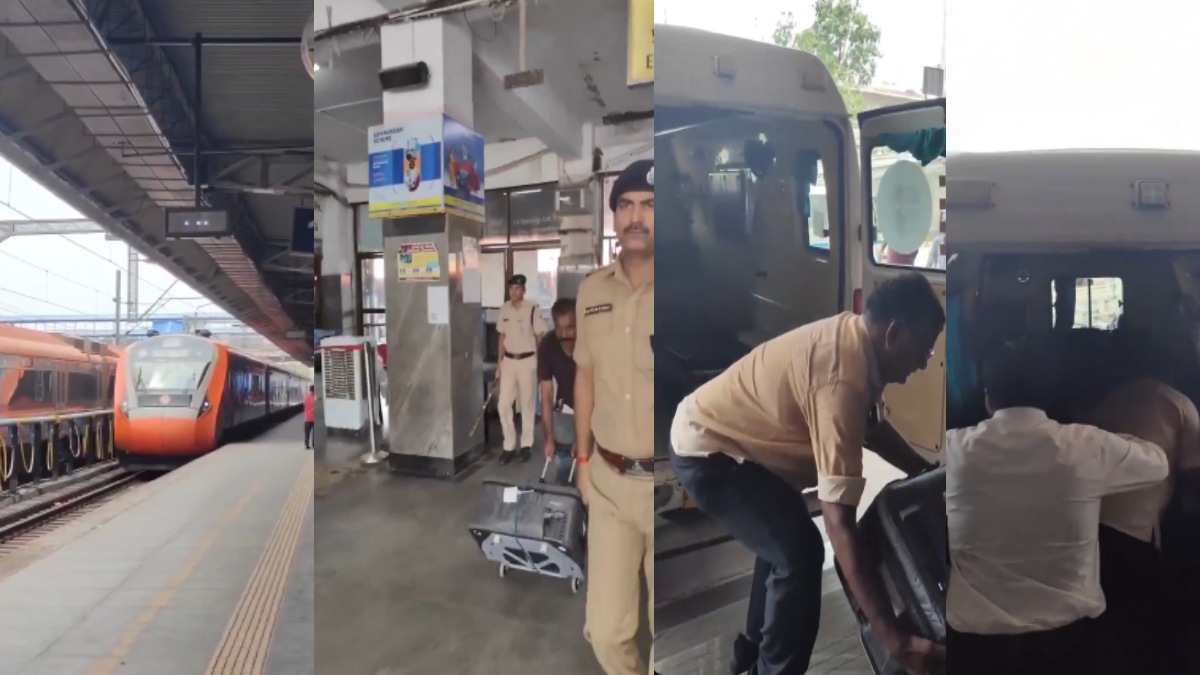
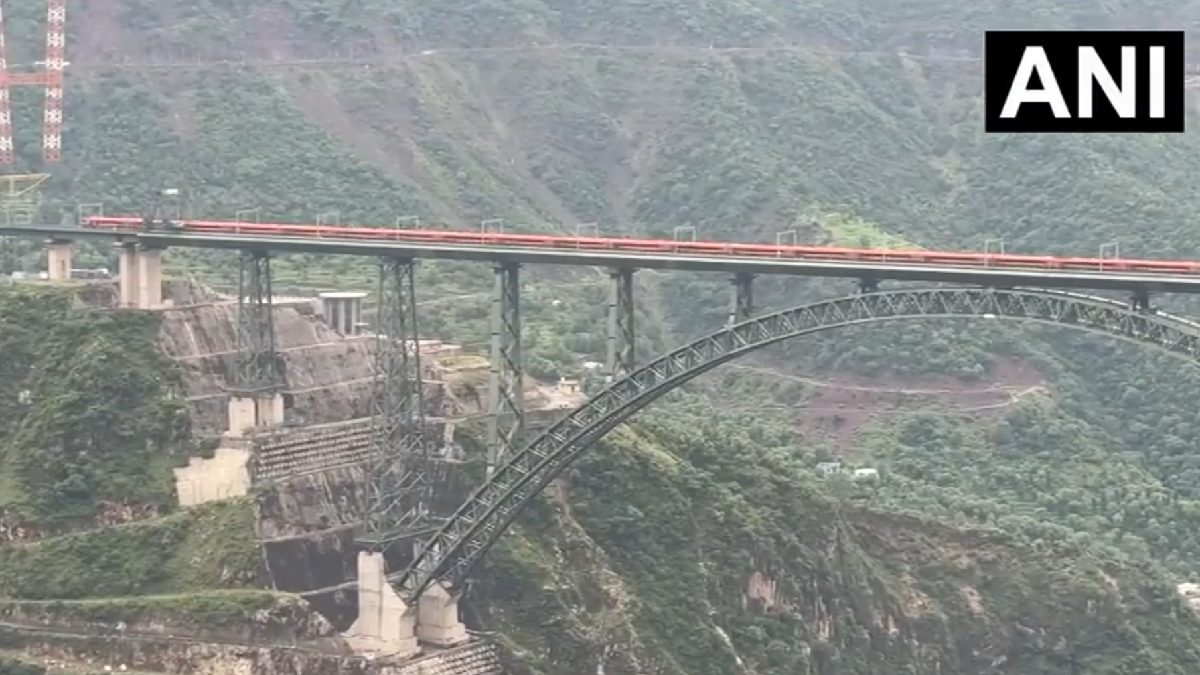
Indian Railways has achieved another major milestone in its efforts to better connect Kashmir Valley, with a Vande Bharat train achieving 100 kmph speed on the iconic Chenab Bridge. The progress was made after the railway authorities increased the permitted speed limit on the 111 km Katra-Banihal section after all safety checks were completed and operational compliance had been ensured.
The speed upgrade is also in line with the speed limits set up on different parts of the route. The trains can travel at rates of around 85 kmph and 75 kmph on the selected parts of the route. Increasing the speed to 100 kmph is expected to reduce the journey time and make rail travel between Jammu and Kashmir Valley much faster.
The Chenab Bridge is one of the most celebrated engineering symbols of the Indian railway network, with large numbers of people following it since it was built. High above the Chenab River, the bridge is a crucial part of the railway system for an all-weather rail link to Kashmir Valley. The sight of the Vande Bharat train crossing the great structure has also attracted huge attention on social media, and videos and photographs of the train journey have been widely shared.
The speed enhancement is especially crucial because the Katra-Banihal section is difficult to pass through mountainous terrain. The construction of a railway line in the region will take a lot of engineering skills, safety investigations, and careful control of curves, tunnels, bridges, and other challenging passages. The establishment of faster trains through the approval to increase the operating speed signals that the infrastructure is ready for use.
Uchit Singhal, the senior railway officer, said the benefit will be wide-ranging. Faster rail services can shorten travel time for passengers and help enhance the regional transportation efficiency. Connectivity is expected to facilitate tourism, trade, and the economy by making the movement between different parts of Jammu and Kashmir easier.

Tourism may be one of the sectors that will benefit from better rail connections. Jammu and Kashmir draws tourists throughout the year, and the Kashmir Valley’s landscapes, cultural heritage, and seasonal attractions attract tourists. Rail travel will be easier for visitors to and from the region.
The development will also benefit local populations and businesses. Better transport links can help in moving goods, boosting commercial activity, and linking smaller towns to larger markets. For residents, faster passenger services are a more convenient alternative to road trips, especially in mountainous areas where road travel can be affected by weather and terrain.
The Vande Bharat service itself has become a symbol of India’s struggle to make passenger rail travel faster and more modern. Its presence on the challenging Jammu and Kashmir railway line links high-speed train technology with some of the country’s most ambitious railway engineering projects. The train’s crossing over the Chenab Bridge, therefore, is more than a record achievement of speed; it illustrates the growth of modern railway development and the mountainous terrain of the Himalayan region.
#WATCH | Reasi, J&K | Vande Bharat train runs at near 100 kms per hour speed for the first time on the world's highest Chenab Bridge
— ANI (@ANI) August 20, 2026
On the 111-kilometer-long new Broad Gauge rail section between Shri Mata Vaishno Devi Katra - Banihal under Jammu Division of Northern Railway,… pic.twitter.com/jE0wiRIBkw
The latest development is also part of India’s larger strategy to connect rail in Jammu and Kashmir. Regional railways have been developed in stages to overcome various geographical and engineering challenges. Bridges, tunnels, and viaducts have been built over rugged terrain to establish a reliable rail connection between Jammu and Kashmir Valley.
Passengers on an increase to 100 kmph too will have shorter journey times and more efficient services. The railway authorities, however, will still put safety at the heart of their operation, and speed limits will be based on infrastructure conditions, track characteristics, and safety assessments.
The Vande Bharat train crossing the Chenab Bridge at 100 kmph has become a landmark of Indian Railways in terms of the progress and development made through connecting the hilly region to the railway network and to the other industries. As the railway infrastructure in Jammu and Kashmir is evolving, quicker and more connected services could also change travel in the area.