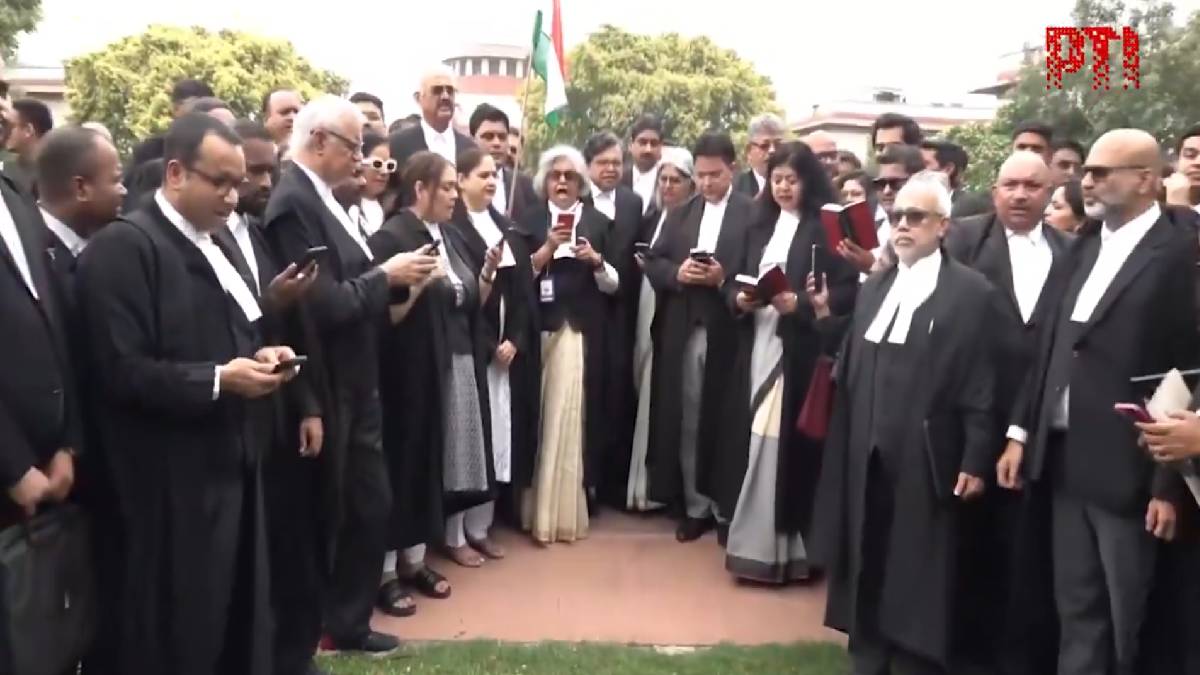
The Supreme Court hearing regarding Carnatic musician TM Krishna’s petition on Vande Mataram was punctuated by a heated courtroom exchange Monday when Solicitor General Tushar Mehta referred to “Naxalites” during his arguments. That made senior advocate Muralidhar, who is representing Krishna, flinch and a row erupted in court.
The court was on the verge of hearing a challenge to the Centre’s direction to enact Vande Mataram including all six stanzas of the song to be sung on one of the occasions. This petition makes it clear that citizens should be required to sing the National Song and if they fail to do so then they could face punishment.
Mehta told the bench that decision-making should be done through Parliament and constitutional institutions. In that context, he added, “Decision-making is done by Parliament and not the way Naxalites want.” Muralidhar immediately objected to the terminology and asked the Solicitor General to withdraw the reference.
Muralidhar contended that the expression was inappropriate and a distraction for the proceedings. He also pointed out that the petitioner should not be described in such terms and courtroom decorum must be maintained. Mehta declined to withdraw the statement and repeated his position that his reference was intended to contrast constitutional decision-making with actions of people who do not believe in constitutional institutions.
The Solicitor General also made clear that he was talking about constitutional decision-making and not personally labelling the petitioner. He said he wanted to highlight that legislative decisions must be made through constitutional mechanisms not violence or extra-constitutional means.
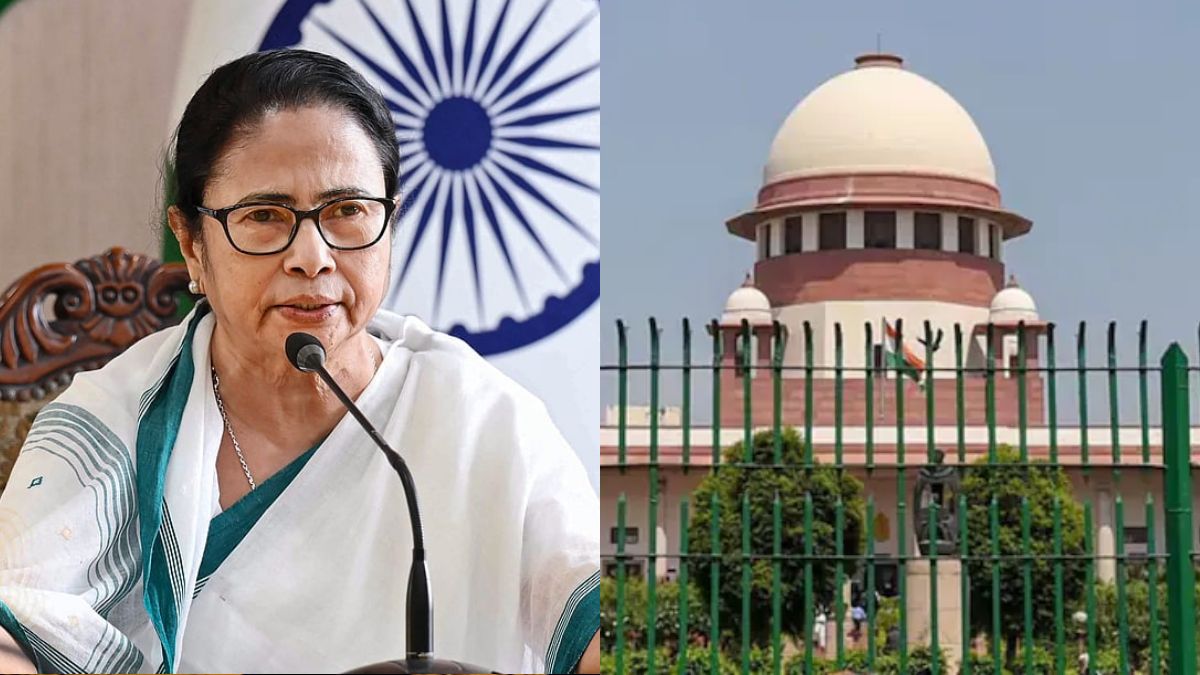
Justice Bagchi intervened in the exchange. Senior advocate Sanjay Hegde also said, simply having a particular view or thinking something different does not make someone a Naxalite. The conversation eventually turned to the larger issue of constitutional courts and the legal system.
Justice Bagchi stressed the legitimacy of constitutional courts and law courts in comparison with extra-constitutional or “Kangaroo” courts. He added that even those accused of serious crimes (terrorism) go through court and due process is fundamental to the constitutional system.
In addition to the courtroom fight, a larger issue before the Supreme Court is the legal status and compulsory rendition of Vande Mataram. Krishna’s petition challenges the Centre’s directives and questions whether citizens can be compelled to sing the National Song, particularly when portions of its longer version contain religious imagery.
Krishna has claimed that four of the six stanzas contain references to Hindu deities and religious imagery. The petition says compelling citizens to sing those parts may put a strain on secularism, personal liberty and freedom of conscience. The challenge therefore involves national symbolism and fundamental constitutional rights.
Muralidhar also claimed that the National Song is not clearly defined in the current law and that an official memorandum cannot force citizens to participate. The petitioner argued that the issue is of such high importance that it must be as much that people must have to participate and where it can lead to a punishment has to be made compulsory and must it be based on the law?
The Centre, meanwhile, opposed immediate judicial intervention. Mehta asked the bench not to issue notice at this stage, fearing that it would give rise to a “sensation”. The court said it would not decide immediately whether Vande Mataram's National Song status should cover two stanzas or all six. But at this very moment, the immediate question before the bench is whether failing to sing the song can lead to criminal consequences.
The judges also referred to the Supreme Court’s 1986 ruling in *Bijoe Emmanuel v State of Kerala* which held that the Jehovah’s Witnesses faith were protected when three schoolchildren were expelled for not singing the National Anthem even though they were respectful in doing so. The judgment was significant because it recognized freedom of conscience and respectful behaviour towards the National Anthem.
The current proceedings are also being brought about as Parliament passed amendments to the Prevention of Insults to National Honour Act, 1971. The amendment was passed in July and became law in August 2026, extending Section 3 of the legislation to Vande Mataram. Those who try to prevent the singing of the National Anthem or National Song or cause disturbance at an assembly that is singing it will face up to three years in jail, or even a fine (if any).
The government has claimed that the amendment was proposed in view of Vande Mataram having statutory protection against deliberate disruption similar to the protection already made available to the National Anthem. And the government has also pointed to the song’s historical significance during India’s freedom struggle.
The Supreme Court has also asked the Centre to state its position within two weeks. The evidence is expected to be in the balance between national symbols, statutory obligations, freedom of conscience and the constitutional limitations on compulsory participation. But the immediate focus, however, is not on the legal repercussions of refusing to sing Vande Mataram, but on the matter of whether two or all six stanzas are the National Song for every purpose.