The Visakhapatnam–Raipur Expressway is one of the world’s most ambitious highway projects, and it will significantly improve the connectivity between the east coast of Andhra Pradesh and the central Indian state of Chhattisgarh. As work is taking place in the forest’s thick layers and its engineering scale is increasing, so is the question of economic development and environmental conservation.
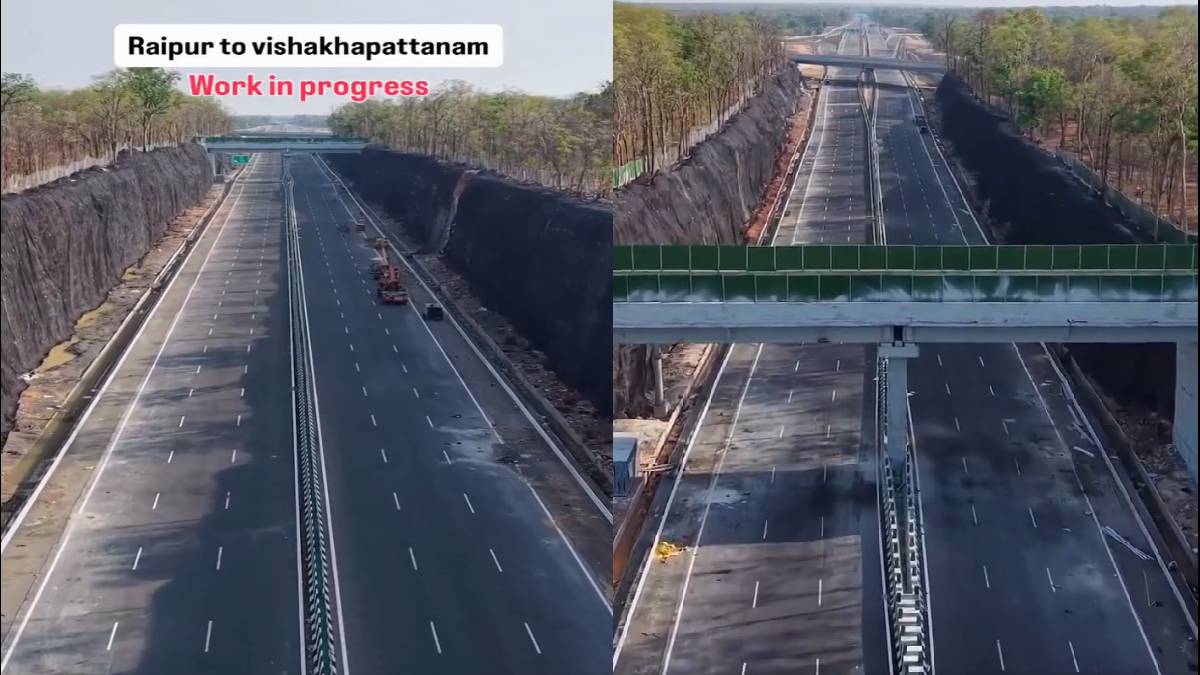
The expressway is expected to become a major transportation corridor and reduce travel time between Visakhapatnam, one of India’s busiest port cities, and Raipur in Chhattisgarh. Once completed, this route will improve the transport of goods, passengers, and industrial cargo in the coastal ports and between the mineral-rich interior of central India.
🚨 Visakhapatnam - Raipur expressway construction in between a forest. pic.twitter.com/Y4F2hxZCKN
— Indian Tech & Infra (@IndianTechGuide) July 15, 2026
A significant aspect of the project is the construction happening on forested terrain. Engineers are using advanced construction techniques to navigate difficult landscapes with minimal impact on the surrounding ecosystem. The construction of highways through the forest requires careful planning of slope stabilization, drainage systems, wildlife, and environmental protection (e.g., for long-term ecology).

The expressway is anticipated to help in terms of logistics efficiency. Industries in mining, steel production, manufacturing, agriculture, and exports will benefit from quicker transport to ports and industrial hubs. Reduced travel times can lower transportation costs and therefore increase the reliability of supply chains, and hence regional economic competitiveness.
The expressway for people living in remote districts along the corridor could be an extraordinary piece of infrastructure. Better road connections often lead to better access to health care, education, employment, and government services. Farmers may be able to get more products to larger markets, and tourism in beautiful forest and tribal areas will be greatly improved.
Environmental issues from building infrastructure through ecologically sensitive areas always come up. Forests support wildlife and biodiversity and are vital for climate regulation. Highway projects of this magnitude need to be evaluated and have to be approved by various agencies before construction even begins. Wildlife crossings, underpasses, overpasses, compensatory afforestation, erosion control, and environmental monitoring are now standard features of modern highway development.
The project also underlines India’s larger initiative to expand its national highway network through huge infrastructure efforts. Connectivity between ports, industrial corridors, and landlocked regions would also help lift economic growth and reduce logistics costs. Expressways are being built with controlled access, better safety features, wider carriageways, and higher travel speeds than conventional highways.
Workers get a lot of help with technology and construction equipment from modern construction equipment and engineering, and can do it well, even in the hardest situations. From large bridges and reinforced embankments to precision earthmoving and advanced surveying systems, the project is indicative of the growing capabilities of India’s infrastructure sector.
During construction, safety is also a priority. They’re working to make sure that workers, contractors and the government are working with the traffic management, construction monitoring and engineering standards to ensure long-term durability and secure operation once the expressway is open to the public.
With India investing in new transportation infrastructure, projects like the Visakhapatnam-Raipur Expressway show the country’s desire to connect economic centers and improve regional accessibility. The successful completion of the corridor could lead to new opportunities for commerce, tourism, and industrial growth across Andhra Pradesh and Chhattisgarh.
The project is a reminder that infrastructure development and environmental stewardship have to go hand in hand. Correct and sustainable planning, construction practices, and continuous ecological monitoring will be required to ensure that such better connectivity does not come at the expense of the ecosystems through which the expressway passes.
If implemented with sustainability at its core, the Visakhapatnam–Raipur Expressway has the potential to be a model for modern infrastructure development that is in harmony with environmental responsibility, along with the long-term vision of inclusive and sustainable economic growth in India.