
Karnataka has seen a fresh wave of speculation over possible defections in the political landscape after state BJP president B.Y. Vijayendra said 25 Congress legislators in the state government, including ministers in the state cabinet, would be ready to join the BJP if assembly elections were held immediately.
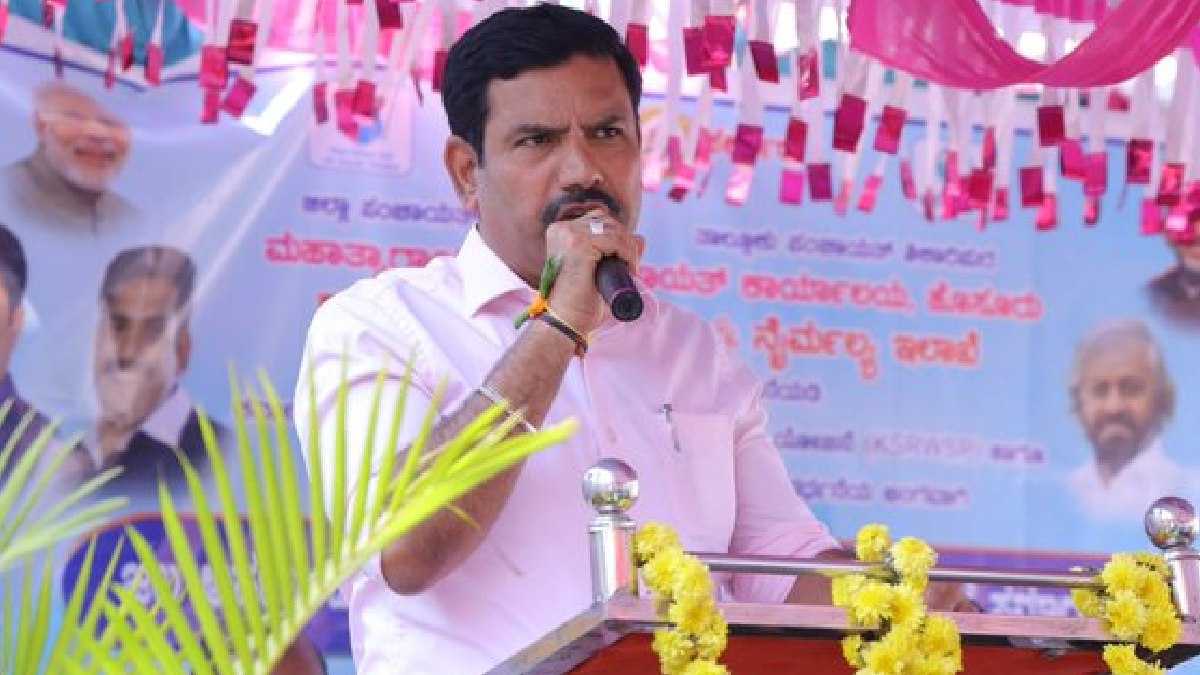
The statement made on October 12 and published by several media outlets on October 13 has led to a heated dispute between the ruling Congress and the opposition BJP. Vijayendra claimed that anger in the Congress was causing some legislators to rebel against the party's leadership and that, in reaction to this, the Congress had created an atmosphere of unrest and many lawmakers might consider switching.
But his claim is political, and there has been no public version of 25 Congress MLAs leaving the party. Chief Minister D.K. Shivakumar responded with a challenge and called upon the BJP leader to induct the alleged defectors without delay if their claims were true. The exchange has once again put into sharp relief Karnataka’s long history of party switching, political bargaining and competing claims of legislative support.
What did B.Y. Vijayendra claim?
Vijayendra said 25 Congress legislators, including members of Shivakumar’s Cabinet, would join the BJP if elections were announced the next day. But he said the BJP did not need to poach Congress legislators, but the political environment of the ruling party was favourable for it. As well as other political issues such as sting operations targeting Congress leaders and internal discord over political leadership in the party and its politics.
Vijayendra accused some Congress leaders in the party of using “questionable methods” for getting political positions, including ministerial posts and the Chief Minister’s office. But the BJP state president did not publicly give a list of the 25 legislators or provide any independent evidence that they had agreed to join his party. Without specific leaders stating their intent or formal political developments, the number should be viewed as an assertion by the BJP leadership rather than a defection plan given the situation.
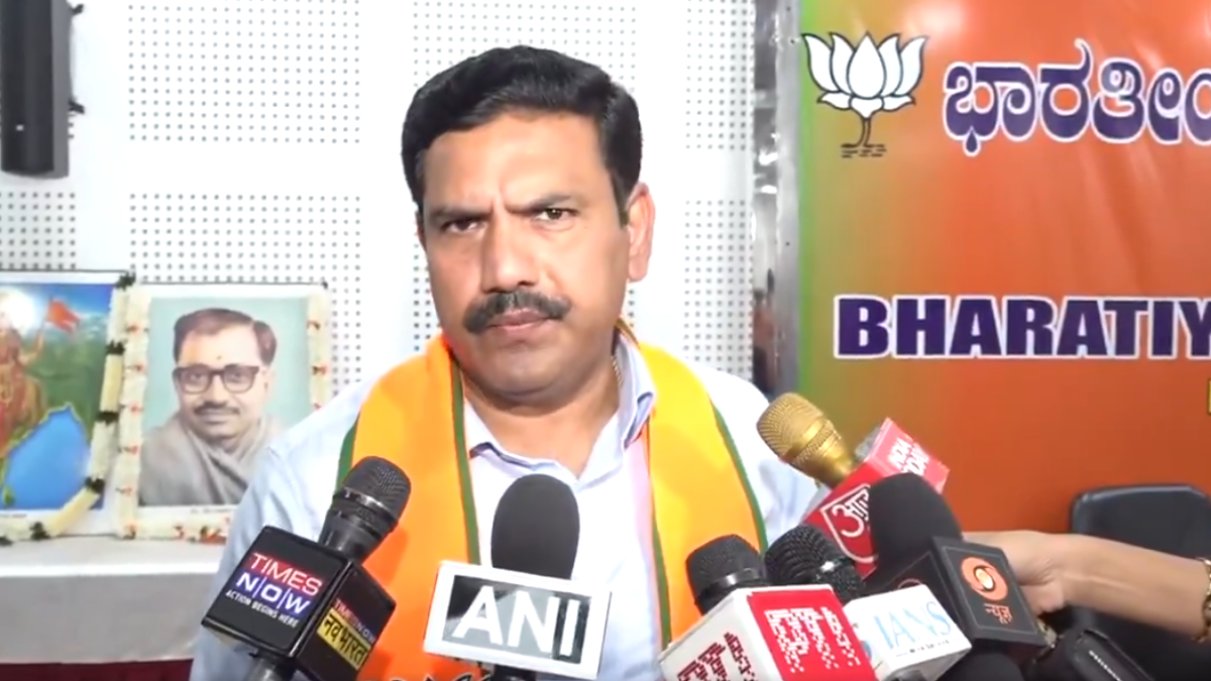
D.K. Shivakumar Challenges BJP to Act
Shivakumar dismissed Vijayendra's claim and told him that the BJP should welcome the alleged legislators at once, not make public statements against them. His reply seemed to question the credibility of the BJP leader's claim and put political pressure on the opposition.
Shivakumar also mentioned cross-voting in the Rajya Sabha, and attacked the BJP and the Janata Dal (Secular), or JD(S) party, saying that the opposition parties should look at the conduct of their legislators instead of only talking about alleged unrest within Congress. In this episode, the political messaging is played with the prospect of defections. At this point, neither the BJP's claim about 25 Congress MLAs nor the claim that opposition legislators supported Congress should be interpreted as proof of a formal change in party allegiance.
Karnataka's history of Operation Lotus
The present controversy has brought back memories of Operation Lotus, a name which has come to be used in Karnataka politics for getting legislators to leave their own party and join the BJP to gain power. In fact, one of the most important moments was in 2019, when Congress and JD(S) legislators resigned from the coalition government led by H.D. Kumaraswamy.
Seventeen rebel MLAs were eventually disqualified by the Assembly Speaker, and the coalition government collapsed. Some of them joined the BJP, which formed the government under B.S. Yediyurappa. The episode showed how a relatively small number of legislators can change the balance of power in the state assembly when a government depends on a narrow majority or a coalition arrangement. It also put legislators’ conduct, the Speaker’s authority and anti-defection provisions at the centre of Karnataka’s political debate.
Why Defections Can Work in Both Directions?
Karnataka's political history shows that party switching is not limited to one political party. Leaders have switched from Congress, BJP and JD(S) in the run-up to elections, when they assess their ability to get tickets or win elections.
In the 2023 Assembly election, for example, some prominent leaders left BJP to join Congress and demonstrated how political migration can benefit different parties depending on local divisions, leadership disputes and electoral calculations. Legislators may switch because they dislike party leadership, don’t like ministerial appointments, or face constituency pressure or expectations about their political future.
The parties that get defectors might see them as a way to enhance their electoral position, and the leaders who leave can see their political future better. But defections can also cause tensions within the receiving party, particularly when new employees compete with old ones for election tickets and leadership positions. Karnataka’s political experience is why "two-way street" is a particularly relevant phrase: political loyalties can move in multiple directions, and the benefits are seldom a sure thing.
What does the Anti-Defection Law mean?
Any movement of sitting MLAs between parties would also have to be taken into account in the context of India's anti-defection law, which is laid out in the Tenth Schedule of the Constitution. It allows legislators to be disqualified if they voluntarily drop out of the party on whose ticket they were elected and vote against party directions without party permission, in line with the rules and exceptions.
A merger exception is available when at least two-thirds of a legislature party agrees to a merger with another party, but that depends on the facts and constitutional requirements. Just saying that legislators are willing to join another party does not necessarily mean a defection took place. And those decisions would have to be made in accordance with the law and laws in play. The rules are important because switching parties affects not only the number of legislators but government strength, opposition representation and the possibility of a confidence vote.
Political Speculation or sign of a bigger crisis?
For now, the claim that 25 Congress MLAs are prepared to join the BJP remains unverified, and no mass defection has been publicly established based on Vijayendra's declaration. However, the row illustrates the political significance of party unity and stable leadership in Karnataka. Congress leadership will be keen to prevent speculation about internal divisions from spreading, and the BJP will try to use it to claim that people are unhappy with the government.
The JD(S) is also in the opposition frame and is as much part of the state politics. Will the latest statements lead to actual party switching or remain in the political war of words? Until legislators publicly declare their positions or formal steps are taken, the figure of 25 should be considered a political claim, not a list of defectors. Karnataka’s experience shows that political loyalties can change, but the outcome of any such move depends on individual choices, party strategy, legislative numbers and constitutional rules.






Comments
Leave a Comment