China is showcasing a smart charging system for electric buses that eliminates the need for drivers or workers to manually connect a charging cable. The bus simply stops beneath a special overhead charging unit, and the system automatically connects to the vehicle.
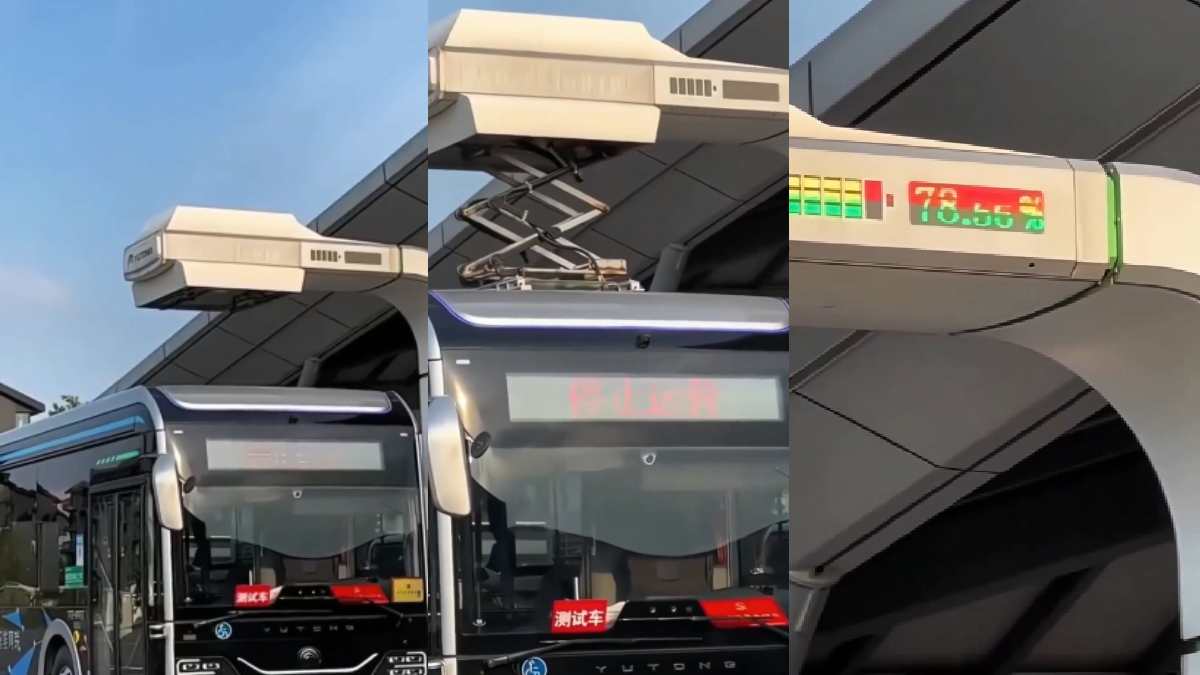
When the bus reaches the right charging position, sensors help to make sure that the bus is aligned with the charging equipment. A mechanical connector then lowers from the overhead unit and plugs into the charging point on the roof of the bus.
When the connector is firmly connected, the charging process starts automatically. When charging is done, the connector can be disconnected and move back up to its raised position, allowing the bus to leave and continue to travel.
The technology is different from wireless charging, as there is a “physical connection between the charger and the bus.” The main difference is that the plug-in process is automated and no person has to pull a charging cable around.
This approach could make charging electric buses easier to do at terminals, depots and in stopping points. Buses can recharge during scheduled breaks without staff having to reconnect and disconnect heavy charging equipment on a regular basis.
Automatic charging could also help transport operators manage large electric bus fleets more efficiently. With buses moving on fixed routes and returning to the charging points, the system can be integrated into regular operating schedules.
Chinese electric buses charging automatically. pic.twitter.com/roDOLUjHvO
— Yu Jing (@ChinaSpox_India) August 21, 2026
China has made enormous investments in electric public transportation, and new charging infrastructure is important as electric buses grow. Faster and more automated charging can minimize downtime and reduce fleet operations.
The technology also demonstrates how robotics and smart infrastructure are now being integrated with electric mobility in the same way. Instead of simply charging the connectors manually, the equipment can automatically put the connector in place and connect the electrical power.
For passengers, the process will appear simple arriving at the bus, parking under the charging unit, the connectors come down and plug into the bus and then charging begins.
As cities expand electric public transport systems, more automated plug-in systems like this could become a more common feature at bus stations and depots where electric buses can be operated in a more efficient way to move people through electric bus operations.